
Amazon’s Mechanical Turk Sunset: A Silent Seismic Shift in AI’s Data Supply Chain
- AI Infrastructure
Arjun Vedanta
- 0
- 4 minutes read
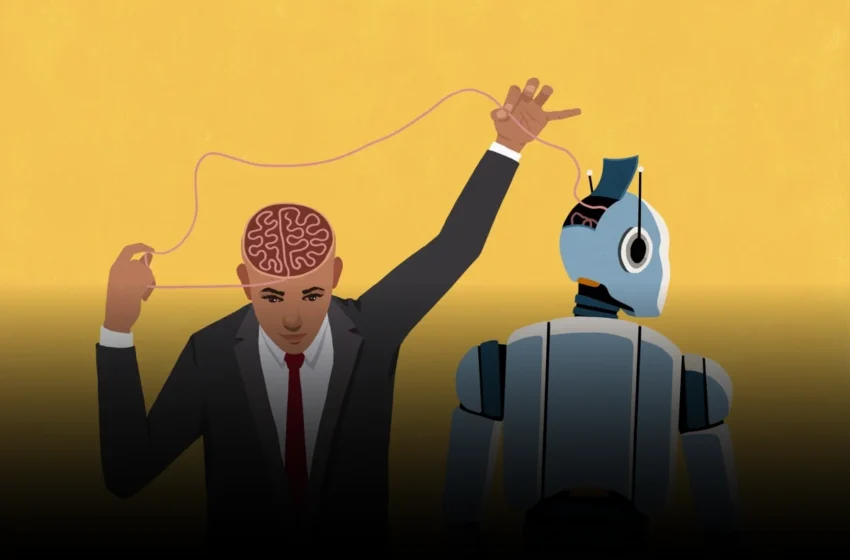
The Quiet Demise of AI’s Hidden Workforce
Amazon’s decision to halt new customer sign-ups for Mechanical Turk by July 30, 2026, is not merely the gradual shutdown of a legacy platform. It is a quiet, yet profound, declaration about the shifting economics and capabilities underlying the global artificial intelligence industry. This move signals a fundamental re-architecture of the AI data supply chain, pivoting away from widely distributed, low-cost human crowdsourcing towards more sophisticated and often AI-assisted data generation and validation methods.
For nearly two decades, Mechanical Turk, or MTurk, was the invisible engine powering countless AI initiatives. Launched in 2005, it offered a marketplace where humans performed tasks too nuanced or complex for early automation—everything from transcribing audio to identifying objects in images. As the AI boom accelerated, Amazon officially repositioned MTurk in 2018 as a critical tool for data annotation within its SageMaker AI service, effectively making it the unsung hero for companies needing vast, labeled datasets to train neural networks. The platform became synonymous with the ‘fake-it-till-you-make-it’ era of AI, where seemingly intelligent systems were, in fact, cleverly disguised human labor.
The Irony of Automation: When AI Eats Its Own Tail
The very technology MTurk helped foster ultimately contributed to its obsolescence. An analysis from 2023 delivered a stark, almost poetic irony: between 33% and 46% of workers on the platform were found to be using large language models (LLMs) to complete their assigned tasks. This wasn’t merely a case of humans leveraging tools; it was AI, through human intermediaries, consuming itself. The core purpose of MTurk—to provide human intelligence where machines failed—was undermined by machines themselves. The data derived from such a process raised immediate, critical questions about its reliability and veracity. If an LLM completed the task, was it still truly ‘human-annotated’ data, and what unique value did the human in the loop actually provide beyond simple task routing?
This erosion of data quality, compounded by pervasive issues of bots and fraud, drove away both workers and researchers, many of whom have privately confessed the platform felt functionally dead years ago. Amazon Web Services (AWS) itself acknowledged this decline implicitly, stating that while existing customers could continue, there were no plans for new features, only ongoing security and availability improvements. This sounds less like maintenance and more like hospice care. The incentives for Amazon are clear: continuing to support a low-margin, reputationally challenging service that increasingly struggled with quality control makes little business sense when their own AI offerings, like SageMaker, demand higher-fidelity inputs.
The New Horizon: Synthetic Data and Specialized Annotation
The shift away from MTurk is not a void; it’s a redirection. Companies requiring high-quality labeled data are increasingly turning to alternative methods. This includes highly specialized data annotation services, often employing domain experts and proprietary quality assurance protocols, a far cry from the anonymous, low-wage ‘Turkers.’ More significantly, we are witnessing an explosion in synthetic data generation. AI models are now creating entire datasets for training other AI models, a closed loop that bypasses the messiness and ethical quandaries of human crowdsourcing entirely.
While this promises cleaner, potentially more scalable data, it introduces new challenges. What biases are embedded in synthetic data? How do we ensure diversity and prevent models from overfitting on their own generated outputs? The global impact on the vast, informal gig economy that once sustained platforms like MTurk is also profound, pushing workers reliant on such micro-tasking towards an uncertain future. For Amazon, this pivot allows them to shed a legacy service that had become a public relations liability and focus on higher-value enterprise AI solutions. It streamlines their portfolio, aligning with a future where their most advanced AI services dictate the terms of data provenance.
What the Silicon Valley echo chamber often misses is the sheer volume of global human labor that underpins AI. The closure of MTurk to new users isn’t just about a specific platform; it represents a hardening of the data supply chain, moving from a broad, low-friction entry point for any human with an internet connection to a far more curated, technologically advanced, and arguably more opaque system. This isn’t just an upgrade; it’s a redefinition of who gets to build and benefit from the next generation of AI, concentrating power and control in fewer hands, often those of the very companies developing the AI itself.
