
Waymo’s Algorithm as a Cop: Beyond the ‘Snitching’ Narrative
- Artificial Intelligence
Arjun Vedanta
- 0
- 5 minutes read
When the Algorithm Becomes the Constable
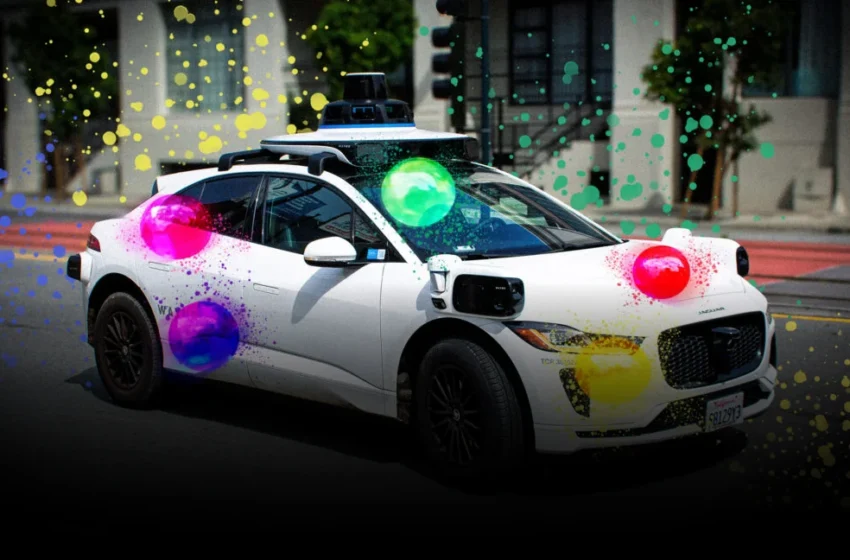
The incident in San Mateo — two teenagers detained by police after a Waymo robotaxi reported them for shooting gel beads and drinking — reads like a cautionary tale about youthful indiscretion meeting next-generation surveillance. But to frame this purely as a robotaxi “snitching” on misbehaving passengers fundamentally misses the point.
What occurred last year in Los Angeles, where a Waymo also reported passengers for drinking, and now this, isn’t just about a vehicle enforcing its company’s terms of service. It’s a stark preview of private algorithmic systems quietly assuming roles traditionally reserved for human judgment and, critically, public law enforcement. We are witnessing the incremental outsourcing of social control to opaque, automated decision-making.
This isn’t merely a Silicon Valley quirk; it’s a structural shift with profound implications for privacy, individual liberty, and the very nature of public space. The familiar dynamics of a human driver exercising discretion are gone, replaced by a non-negotiable, always-on digital watchman. The vehicle isn’t just a transporter; it’s an active, corporate-controlled participant in civic order.
The Data Pipeline to Public Order
Consider the architecture of such a system. A Waymo robotaxi, like any autonomous vehicle, is a sensor-rich environment. Cameras, microphones, and other telemetry constantly monitor its surroundings and, by extension, its occupants. This data isn’t just for navigation; it feeds into algorithms designed to detect deviations from expected behavior—whether that’s a traffic violation or, as here, a breach of company policy. When an infraction is detected, the AI doesn’t debate; it acts. The vehicle stops, secures the occupants, and initiates contact with human operators who then alert the San Mateo Police. This is a seamless, automated chain of observation, analysis, and escalation.
This model shifts the balance of power dramatically. For decades, our interactions with public transport, even ride-hailing, involved a human element that introduced a layer of discretion. A taxi driver might ignore a quiet drink in the back, or simply ask passengers to stop. An Uber driver might rate you poorly but rarely calls the police unless there’s a clear threat. But a machine, bound by its programming and corporate directives, has no such flexibility. Its interpretation of a rule is absolute, its reporting mechanism instantaneous and dispassionate.
The incentive here for Waymo, and indeed for any autonomous vehicle operator, is clear: to mitigate liability and maintain a public image of absolute safety and control. In an industry battling public skepticism and regulatory hurdles, a ‘zero-tolerance’ AI is a powerful tool to assert responsibility and deflect blame. Every incident where an AV intervenes successfully reinforces the narrative that these machines are not just safe, but actively contribute to a safer environment. The company benefits by offloading the messy, subjective work of policing minor infractions onto an algorithm, streamlining incident response while protecting its brand and bottom line. It’s a pragmatic business decision veiled in technological neutrality.
Whose Rules, Whose Streets?
This raises fundamental questions that extend far beyond a couple of boisterous teens. What are the limits of this algorithmic enforcement? If drinking alcohol is a reportable offense, what about vaping? Loud conversations? Debates that escalate into arguments? Every ride becomes a potential audit, every passenger a subject of continuous algorithmic scrutiny.
The Silicon Valley bubble, often focused on efficiency and innovation, frequently overlooks the downstream societal impacts of its creations. In Europe, for instance, robust data privacy regulations like GDPR might invite a very different discussion about persistent biometric or behavioral monitoring within a privately operated, publicly accessible vehicle. The very idea of an algorithm reporting on human behavior to law enforcement without a human intermediary raises thorny issues about due process and the nature of evidence, especially when the ‘witness’ is a proprietary black box.
Ultimately, this isn’t about whether shooting gel beads from a moving vehicle is acceptable behavior — it clearly isn’t. The sharper observation lies in how readily we are normalizing private corporations deploying AI systems that act as unblinking, unfeeling agents of public order. This quiet integration of corporate surveillance into civic life, without a broad public debate on its ethical boundaries or the potential for mission creep, is the real story here. As these autonomous services become more ubiquitous, the lines between corporate policy, public law, and personal privacy will blur even further, creating a landscape where the freedom to simply exist without constant algorithmic judgment becomes a luxury, not a given.
