
Valve’s Steam Machine Compatibility: A Deeper Flaw in its Living Room Strategy
- Tech
Arjun Vedanta
- 0
- 5 minutes read
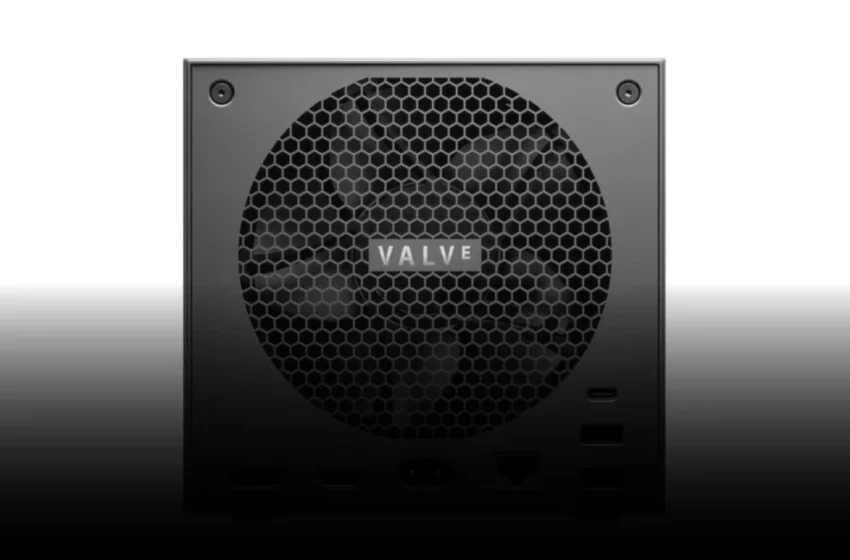
The Illusion of Console Simplicity Shattered
A month ago, Valve announced an expansion of its Steam Deck Verified program to the new Steam Machine, a move that seemed to signal a renewed push into the living room. But the initial rollout of compatibility ratings, marked by dozens of games stuck in a vague “still learning about” status, especially for titles that outstrip the portable Deck’s capabilities, is not just a minor delay. It exposes Valve’s enduring failure to forge a truly coherent and reliable gaming ecosystem outside the traditional PC desktop, despite years of trying.
For a company that touts hardware like the Steam Machine as a living-room console alternative, the phrase “still learning about” compatibility for an array of games that the Steam Deck simply cannot handle is profoundly damaging. Consumers seeking a plug-and-play experience—the very promise of a console—are instead greeted with an opaque, unpredictable system. Imagine booting up a PlayStation or Xbox to find a significant chunk of its advertised library in a perpetual state of limbo, potentially requiring manual configuration or simply not running well. The notion is absurd within those ecosystems.
Valve’s own documentation points out the ‘messy middle’ where a Steam Machine Verified badge would be most useful: games that load on SteamOS but exceed the Steam Deck’s 1200×800 resolution at 30 fps standard. These titles, often displaying ‘Unsupported’ on the Steam Store due to graphics settings limitations, are precisely where the more powerful Steam Machine should differentiate itself. Yet, for these critical games, Valve offers no clear guidance, merely a frustrating shrug. Valve seems to believe its users have infinite patience for technical limbo, overlooking the fundamental expectation of clarity and instant gratification that defines the console market. This isn’t just about a few missing badges; it’s about a shattered perception of reliability for a piece of hardware designed to compete in a highly curated space.
A Pattern of Unfinished Ecosystems
This isn’t Valve’s first foray into hardware with a fragmented software experience. Recall the initial launch of the original Steam Machines in 2015, which, despite offering varied hardware specifications, struggled immensely due to a nascent SteamOS and a limited native Linux game library. That ambitious initiative largely withered on the vine, teaching us that powerful hardware alone cannot carry an ecosystem if the software experience is not seamless and predictable. The Steam Deck, with its handheld form factor and SteamOS powered by Proton, succeeded by carving out a niche where minor performance quirks are more forgivable on a portable device, but its limitations are now evident when pushing toward a higher fidelity, living-room standard.
The underlying complexity of Proton, Valve’s compatibility layer, while an engineering marvel, introduces a layer of abstraction that requires constant testing and updates for every new game and patch. While commendable for making a vast PC library accessible on Linux, it’s also a constant game of catch-up. This inherent technical debt means that the “Verified” status is less a declaration of fact and more a snapshot in time, requiring continuous effort. When it comes to the Steam Machine, the performance bar is higher—1080p at 30 fps—and the expectation for consistent playability is amplified, yet the verification process appears to lag significantly behind the hardware’s capabilities.
Fragmented Vision, Fractured Market Strategy
So, why launch new hardware with such an apparent lack of readiness in its core user experience? The incentive for Valve seems multifaceted, though ultimately self-defeating in the console space. By expanding ‘Verified’ to Steam Machine, Valve appears to be leveraging the success and familiarity of the Steam Deck brand to market new hardware, benefiting from existing user trust. However, the current fragmented state of compatibility ratings indirectly serves to funnel users back to traditional Windows PCs for a guaranteed, high-performance experience, thereby reinforcing Valve’s dominance over the broader PC gaming market through its Steam platform, irrespective of hardware. This framing subtly shifts the burden of compatibility onto the user, or implies that the technology is inherently ‘complex,’ rather than acknowledging a strategic oversight in delivering a fully integrated product.
This hesitation to fully curate and guarantee the Steam Machine experience against a higher performance threshold demonstrates a strategic tension. Valve wants to offer open-ended PC gaming in a console-like package, but it consistently prioritizes the open-endedness over the console-like certainty. This approach stands in stark contrast to Microsoft’s Xbox or Sony’s PlayStation, which invest heavily in rigid quality assurance and clear compatibility guidelines, fostering consumer confidence. Valve’s method leaves a significant market gap for third-party mini-PCs or even custom Linux builds that can theoretically run these more demanding titles, but without the streamlined user experience Valve purports to offer. Until Valve commits to the relentless curation and clear communication required for a true console competitor, its Steam Machines will remain a niche curiosity, constantly outmaneuvered by platforms that prioritize predictable playability over potential performance.
