
Sheetz’s VMware Exodus: A Warning Shot for Broadcom and Enterprise IT
- Software
Arjun Vedanta
- 0
- 5 minutes read
The Invisible Squeeze on Global Infrastructure
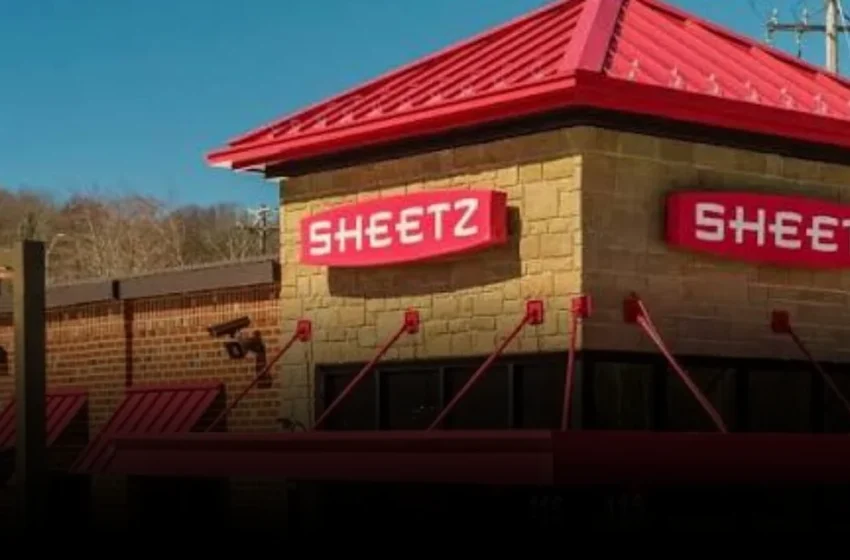
The US convenience store chain Sheetz, operating 838 locations, is undertaking an 11,000-virtual machine migration away from VMware. This isn’t just an IT anecdote about a regional retailer; it’s a profound, publicly visible symptom of deep unease rippling through the enterprise software landscape, directly attributable to Broadcom’s heavy-handed stewardship of VMware. When a company whose core business is coffee and gas pumps finds itself overhauling its entire distributed server infrastructure, it signals more than just a preference for new technology; it screams a flight from perceived risk and rising costs.
For years, VMware was the ubiquitous, often unquestioned, backbone of enterprise virtualization. Its vSphere hypervisor ran everything from bank data centers to university labs, offering stability and robust management. Then Broadcom acquired the company, a move that initiated a period of intense restructuring, immediately eliminating perpetual licenses in favor of subscription-only models and reportedly dropping thousands of smaller customers deemed unprofitable. The market, particularly outside Silicon Valley’s immediate gaze, recoiled. This wasn’t a subtle shift; it was a fundamental re-engineering of the economic relationship between vendor and customer.
Sheetz, a company that began deploying VMware across its 838 stores in 2019, finds itself now unwinding years of established IT infrastructure. Each location runs two Dell R440/R450-series servers, hosting 12 to 14 VMs. The stated plan, articulated by Scott Robertson, their infrastructure team manager, involves migrating these virtual machines to StorMagic’s SvHCI, a process already more than 600 stores complete at a pace of 200 per month. This isn’t a leisurely upgrade; it’s a decisive, rapid defenestration of a critical vendor, projected to conclude in just four months.
What’s rarely discussed openly, but consistently implied in these scenarios, is the financial calculus. Broadcom’s strategy, designed to extract more revenue from larger, strategic accounts, has evidently made VMware untenable for many others. It forces companies like Sheetz to either accept drastically increased operational expenses or embark on complex, expensive, and risky migrations to alternative virtualization platforms. The company’s announcement of this swift, large-scale migration serves as an open letter, broadcasting to the market the painful but necessary choice it had to make.
Beyond the Datacenter: Edge Computing’s New Reality
The scale of this migration—11,000 VMs across hundreds of geographically dispersed locations—underscores a particular vulnerability in the edge computing domain. For retailers, manufacturing plants, or logistics hubs, the local server stack is mission-critical. It handles point-of-sale systems, inventory management, security cameras, and other operational technologies that cannot tolerate cloud latency or dependency. This decentralization makes these environments extremely sensitive to changes in licensing models and vendor relationships.
The shift to StorMagic SvHCI, a hyperconverged infrastructure solution, highlights a broader trend: companies seeking more cost-effective, often simpler, alternatives to traditional enterprise virtualization stacks. While VMware remains dominant in large corporate data centers, its grip on the distributed edge is proving more fragile. Competitors like Nutanix, Proxmox, and even open-source options are quietly gaining traction, offering more flexible pricing and less restrictive vendor lock-in. For Broadcom, this should be a worrying sign: losing the distributed edge often means losing future growth and mindshare, even if the immediate financial impact from these smaller installations is deemed negligible.
This frantic pace of migration also begs a question about incentives. StorMagic, a direct beneficiary, naturally gains a significant case study. Sheetz gains operational autonomy and likely cost predictability. But the public announcement itself, timed and detailed, feels like a deliberate signal. It offers a blueprint for other Broadcom-disgruntled organizations, providing proof that an exit is not only possible but achievable at scale. The implicit message for CIOs globally is clear: you don’t have to tolerate the new regime.
The Long-Term Erosion of Trust and Talent
The broader implication extends beyond financial sheets and technical architecture. Broadcom’s approach to VMware, characterized by a rapid reshaping of its business model and a perceived disinterest in a segment of its established customer base, risks a profound and lasting erosion of trust within the enterprise software community. This isn’t merely about one customer leaving; it’s about altering the fundamental expectations of how critical IT infrastructure vendors should behave.
When IT professionals, like Scott Robertson, are compelled to dedicate significant resources to unwinding foundational systems, it siphons away talent and budget from innovation and business-specific development. The move by Sheetz, including the detail about transitioning two additional VMs per store from Windows 10 to Windows 11 as part of the migration, suggests a bundling of necessary upgrades with the vendor switch. This pragmatic consolidation underscores the substantial operational drag imposed by having to replatform.
This situation isn’t unique to Sheetz; anecdotal evidence from multiple continents suggests similar recalculations are underway. While Broadcom’s quarterly reports might show increased revenue per customer, the hidden cost is the deep-seated resentment and the quiet re-evaluation of long-term vendor loyalty. It reinforces the perception that enterprise software is often a market where customers are captive, rather than valued partners. The irony is, for a company that built its empire on ubiquitous virtualization, the very ubiquity that once defined VMware is now becoming a liability for Broadcom, as customers realize they have options, and are increasingly willing to exercise them.
