
The $857,600 Pen: What Aldrin’s Auction Reveals About Tech’s Fragile Grandeur
- Tech
Arjun Vedanta
- 0
- 5 minutes read
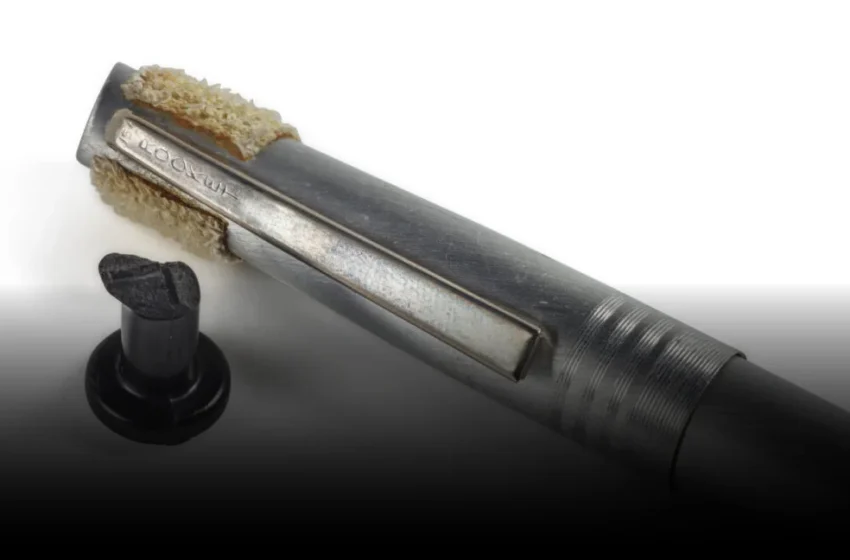
When Billions Met a Ballpoint
A dried-out felt-tip marker and a snapped-off piece of molded black plastic, jointly fetching $857,600 at a recent Sotheby’s auction, offer a blunt lesson in technological hubris. This isn’t just about the almost priceless value of spaceflight memorabilia; it’s about the uncomfortable truth that even the most monumental engineering achievements can hinge on a dollar-store tool and a glaring design oversight. The sale of these artifacts from Buzz Aldrin’s personal collection does more than commemorate a lunar return; it exposes the raw, improvisational edge hiding beneath layers of mission planning and calculated risk.
For those of us tracking global tech outside the insular glow of Silicon Valley, this auction illuminates a consistent, inconvenient truth: the gap between engineered perfection and operational reality. Here was Apollo 11, the apex of Cold War aerospace engineering, a triumph of national will and scientific prowess. Yet, its most perilous moment wasn’t a meteor strike or a software glitch, but a seemingly trivial fault: a broken circuit breaker switch, crucial for igniting the ascent engine that would lift Aldrin and Neil Armstrong from the lunar surface.
Aldrin’s quote, relayed back to Mission Control, captures the starkness of the situation: "The reason I’m asking is because the end of it appears to be broken off. I think we can push it back in again. I’m not sure I could pull it out if I pushed it in, though." The fix? A common felt-tip pen, used to depress the tiny, exposed circuit in place of the missing switch cap. This wasn’t some bespoke NASA tool, but a simple commercial writing implement, transforming into a mission critical system component in a moment of desperate improvisation.
The Engineering Blind Spot
This incident isn’t just a quirky anecdote; it’s a profound commentary on the inherent vulnerabilities of complex systems, a lesson often glossed over in the relentless pursuit of progress. Billions were poured into Apollo 11, involving hundreds of thousands of engineers, yet a single, small, plastic switch cap proved to be its Achilles’ heel. This scenario speaks volumes about human factors design—the discipline of designing systems with human capabilities and limitations in mind.
Why wasn’t this critical switch guarded, recessed, or redundant? The answer likely lies in the pressures of the space race legacy, where speed and unprecedented ambition sometimes superseded exhaustive scrutiny of every single component’s interaction with the human operator. We see similar patterns emerge even today in consumer tech, where sleek design sometimes triumphs over practical robustness, albeit with far less catastrophic potential consequences than being stranded 238,900 miles from Earth.
The ultimate irony is how Silicon Valley today champions "move fast and break things" in software, yet 57 years ago, breaking something nearly ended human lives, illustrating how a culture of swift innovation can still overlook basic design principles in mission critical systems. This isn’t innovation; it’s a testament to incredible human adaptability in the face of what should have been preventable. It underlines a structural implication often ignored: the inherent, sometimes deadly, fallibility built into even our grandest technological endeavors.
Beyond the Hero Narrative
The veneration of the "pen that saved Apollo" serves a dual purpose. For auction houses like Sotheby’s, it elevates a relic into a priceless piece of history, an object imbued with the very essence of human ingenuity and survival. More subtly, for the broader aerospace industry and its governmental backers, it romanticizes resilience in the face of systemic vulnerability, subtly shifting focus from potential design accountability to heroic improvisation.
But the real story isn’t just heroism; it’s a stark reminder that even the most advanced contingency planning cannot account for every unforeseen failure. What if Aldrin hadn’t had that specific pen? The incident highlights a fundamental contradiction: our aspirational future often rests on the most primitive solutions to unforeseen problems.
This is not to diminish the profound achievement of landing on the Moon and returning safely, but to demand a more rigorous, less romanticized view of technology’s deployment. As technology journalists and analysts, our role extends beyond celebrating breakthroughs to scrutinizing the messy, unglamorous realities of their implementation. The Aldrin pen auction is more than a headline about a collectible; it is a palpable piece of evidence for the persistent friction between technological ambition and the practical, often imperfect, realities of its operation.
