
NASA’s Newest Astronaut and the Ghost of Bureaucracy Past
- Artificial Intelligence
Arjun Vedanta
- 0
- 4 minutes read
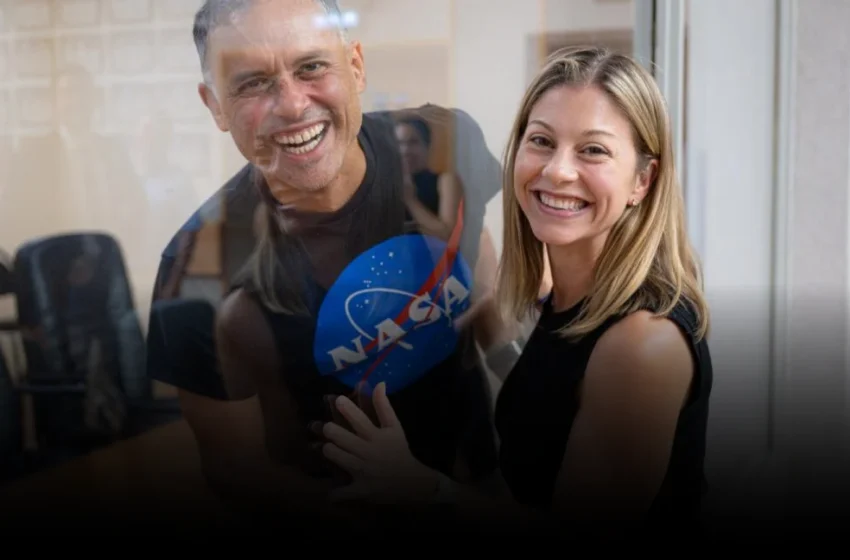
The Price of Persistence in State Space
Anil Menon’s eventual ascent to astronaut status, after a grueling nine-year odyssey marked by four rejections, is heralded as a triumph of individual resilience. It is. But for international observers, Menon’s journey also serves as a stark, if unintentional, indictment of the institutional inertia still gripping traditional space agencies like NASA. While the narrative celebrates one man’s unwavering dream, it inadvertently exposes the growing chasm between state-sponsored space exploration’s talent acquisition and the nimble, outcome-driven models rapidly defining the private aerospace industry.
The agency’s selection process, a marathon of applications and interviews, is designed to identify the absolute best. Yet, Menon’s repeated failures to secure a spot, despite his evident medical and operational expertise as a flight surgeon, raise fundamental questions about the efficacy and adaptability of a system that takes nearly a decade to recognize exceptional talent already within its orbit. One must question what, precisely, changed to finally greenlight Menon, or whether the system simply wore itself down to an inevitable ‘yes’. The original article frames this as Menon’s personal hurdle, but the deeper implication is about the hurdles NASA itself erects and the opportunity costs it incurs in the process.
Commercial Speed vs. State Selection
Consider the parallel universe of commercial space. Companies like SpaceX do not typically operate on nine-year recruitment cycles for critical roles. Their talent pipelines are aggressive, often poaching engineers, designers, and even test pilots from defense contractors and traditional aerospace, valuing demonstrable impact and rapid iteration over prolonged vetting. The incentive for these private entities is not merely a feel-good human interest story; it is about accelerating development timelines, meeting launch windows, and proving commercial viability in an increasingly competitive space economy.
While NASA certainly recruits from an incredibly deep pool of highly qualified individuals, the contrast in speed and flexibility is glaring. Elon Musk’s ventures thrive on a culture of ‘fail fast, learn faster,’ a mantra that seems anathema to the deeply entrenched, risk-averse bureaucracy of a government agency. This isn’t to diminish the rigor required for human spaceflight, but to point out that the *method* of selecting its human capital appears fundamentally misaligned with the pace of technological advancement and the demands of sustained, multi-destination space exploration that NASA itself champions.
The Global Talent Race Beyond Earth’s Orbit
The quiet truth is that while NASA struggles to modernize its human capital pipeline, the broader global space sector is engaged in an aggressive talent race. Nations like China and emerging space powers are not just developing their own rockets and modules; they are cultivating distinct talent pools, often leveraging different educational philosophies and recruitment strategies. The European Space Agency, for its part, has recently diversified its astronaut corps, actively seeking candidates with disabilities, a move that signals a proactive attempt to broaden representation and skill sets rather than simply refining an existing, slow-moving process.
One sharp, contrarian observation is this: Menon’s eventual acceptance might less be a testament to a system that finally ‘got it right,’ and more a pragmatic acknowledgement by NASA that it simply cannot afford to continue overlooking proven, internal talent when the demands of its Artemis missions and the competition from private aerospace — and other nations — are ratcheting up exponentially. NASA benefits from a narrative of individual perseverance, yet the underlying truth might be a quiet desperation to fill crucial operational gaps with immediately available, high-caliber personnel, regardless of how long it took them to get there.
Ultimately, Menon’s narrative is a profound personal achievement. Yet, viewed through a global lens, it becomes a crucial, if uncomfortable, case study in how state-run agencies will either adapt their human resource strategies to the tempo of the 21st-century space race or risk being outmaneuvered not just by private companies, but by the very talent they struggle to integrate.
