
India’s Vikram-1 Launch: More Than Just a Rocket, It’s a Geopolitical Statement
- Space
Arjun Vedanta
- 0
- 5 minutes read
The Global Race for Low Earth Orbit Just Got Crowded
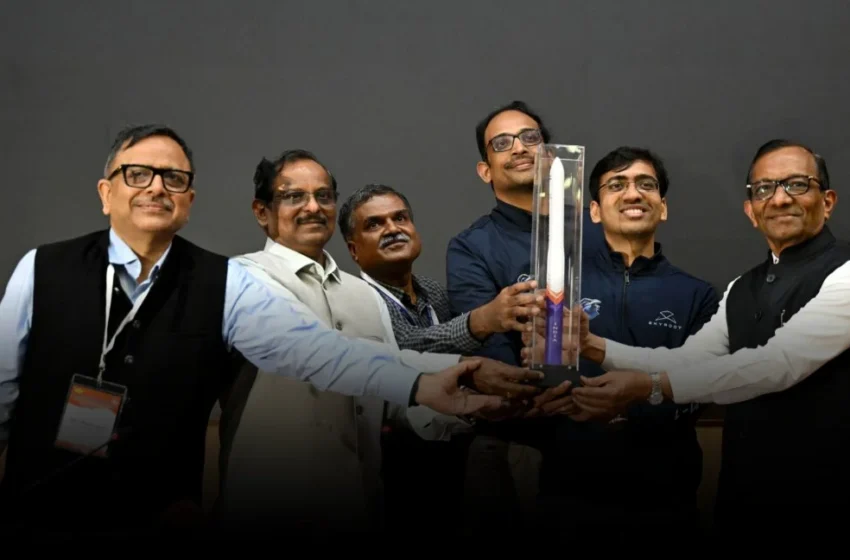
A 72-foot rocket, carrying a modest 770-pound payload capacity, lifted off from Sriharikota Island and successfully reached a 280-mile-high orbit last Saturday. On the surface, Skyroot Aerospace’s Vikram-1, India’s first privately-developed orbital launch vehicle, might seem like another incremental step in the global space race. But for anyone tracking the subtle shifts in international technology and strategic influence, this isn’t just about another rocket. It’s a calculated move to democratize access to space, fundamentally alter the competitive landscape for small satellite launches, and subtly challenge the long-held dominance of Western providers.
The successful debut, which Indian space officials lauded as a “grand success” despite a half-hour delay due to a last-minute technical glitch, signals a new era for India. It marks the formal entry of private Indian capital and innovation into a sector previously controlled by the state-owned Indian Space Research Organisation (ISRO). This isn’t merely about national pride; it’s about establishing India as a serious, low-cost contender in the rapidly expanding small satellite market—a market projected to be worth billions annually.
For too long, the narrative around private spaceflight has been dominated by the U.S. and, to a lesser extent, Europe. Silicon Valley reporters, focused on the antics of Elon Musk or the ventures of Jeff Bezos, often miss the quiet, persistent advancement happening elsewhere. The Vikram-1 launch, even with its relatively small scale compared to larger workhorse rockets, is an unmistakable signal that India intends to carve out a significant piece of the orbital real estate pie, not just as a consumer of launch services, but as a formidable provider.
India’s Strategic Play for Commercial Space Dominance
Skyroot Aerospace’s achievement isn’t an isolated incident; it’s a direct outcome of a deliberate policy shift by the Indian government to privatize segments of its space sector. This strategic pivot is designed to accelerate innovation, reduce launch costs, and, crucially, attract foreign investment. The “grand success” framing of the launch serves a dual purpose: it legitimizes Skyroot Aerospace as a viable commercial entity in the eyes of international investors and customers, while simultaneously showcasing India’s technological prowess and commitment to its burgeoning private space sector, thereby attracting more domestic capital and talent.
Comparing Vikram-1 to Rocket Lab’s Electron, often cited as the world’s most successful dedicated small satellite launcher, reveals India’s immediate competitive positioning. While the Vikram-1 is “somewhat larger” with its 72-foot height and 770-pound payload capacity, it signifies entry into a highly contested niche. This market segment, characterized by constellations of geospatial intelligence and IoT satellites, thrives on frequent, affordable, and flexible launch options. India aims to capture clients who are tired of waiting in line for larger, often government-subsidized, rockets.
This competition extends beyond mere payload capacity. It’s about the entire launch services ecosystem. India is leveraging its established aerospace engineering talent and lower operational costs to undercut traditional players. The question isn’t whether they can launch; it’s how quickly and affordably they can scale to meet demand from global companies seeking dedicated access to Low Earth Orbit. The implication for existing players, particularly those in the US and Europe, is clear: ignore India’s ascent at your peril.
The Unseen Costs of a Crowded Cosmos
While the emergence of new launch providers like Skyroot Aerospace promises increased access and lower costs for satellite operators, it also introduces a gnawing, existential problem: space debris. It’s easy to celebrate “democratization,” but a proliferation of small launchers from multiple nations also compounds the already critical problem of orbital debris, turning a perceived boon into a potential choke point for all space activities. Every new launch, every new satellite, adds to the already unsustainable junk residing in Low Earth Orbit (LEO).
The romantic notion of opening space to more players often glosses over the cold, hard physics of orbital mechanics and finite resources. As more countries and private companies enter the launch market, the likelihood of collisions increases, threatening not just individual satellites but the entire orbital environment. India, with its ambitious plans for space, will inevitably contribute to this problem, just as every other major spacefaring nation has.
The quiet ascent of India’s private space sector, exemplified by Vikram-1, is a fascinating and crucial development. It represents a bold step towards India asserting its technological and economic influence on a global stage, reshaping AI Infrastructure and how data is collected from orbit. But the real challenge for India, and indeed for the entire international community, will be to manage the inevitable congestion and debris that comes with a truly democratized, commercialized cosmos, before the promise of abundant access turns into an unnavigable minefield.
