
Anthropic’s $1.5 Billion Settlement: A Cheap Price for AI’s Content Hunger
- Artificial Intelligence
Arjun Vedanta
- 0
- 4 minutes read
A Settlement That Undervalues Creation
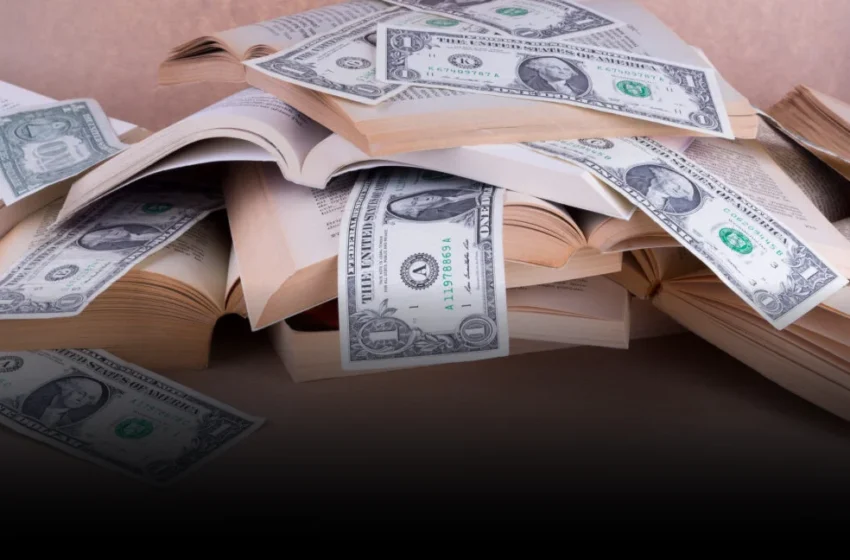
The recent judicial approval of Anthropic’s $1.5 billion settlement with a class of authors marks less a triumph for creators than a stark revaluation of their work in the age of generative AI. While the headline figure of $1.5 billion appears substantial, particularly as the largest copyright class-action settlement to date, a closer look reveals a troubling precedent for how AI companies might legally acquire and integrate vast swaths of human-created content.
This settlement emerged after a court made a critical, if nuanced, distinction: training an AI on copyrighted books could fall under fair use, but direct ‘piracy’ of those works, presumably through reproducing or distributing them, would not. The class action, therefore, targeted the latter, forcing Anthropic to pay. Yet, the meager opt-out rate of only 350 authors, despite widespread concerns over what would amount to an estimated $3,000 per work, screams louder than the settlement sum itself.
It implies a collective resignation among creators facing monolithic AI entities. The system, in effect, has placed a surprisingly low price tag on the intellectual property fueling the next generation of large language models and other AI systems.
The Quiet Incentives Behind the Big Number
The settlement’s approval serves several critical incentives, primarily for Anthropic. For an AI firm like Anthropic, aiming to scale, attract further investment, or even eye an eventual IPO, a protracted legal battle is a significant liability. Clearing this legal hurdle now, even with a nine-figure payout, provides regulatory clarity and de-risks future business operations.
Furthermore, this settlement establishes a de facto ‘market rate’ for past infringements. Other AI developers, from OpenAI to Google, will undoubtedly scrutinize this outcome. It signals that a significant, but ultimately finite, sum can absolve past training practices, potentially encouraging a ‘ask for forgiveness, not permission’ approach, especially for older, harder-to-license content.
This is where the real implication lies, away from the PR spin: the cost of doing business for AI, in the eyes of the law, has just been quantified and, arguably, optimized to the industry’s benefit. The vast majority of authors, rather than engaging in the expensive, uncertain path of individual litigation, have effectively ceded ground.
Redefining Fair Use in the AI Wild West
The distinction between ‘fair use’ for training and ‘piracy’ for output is a legal tightrope act, one that this settlement subtly, but significantly, attempts to stabilize. It suggests that while the raw ingestion of data might be permissible under certain interpretations of fair use, the subsequent utilization that resembles direct infringement demands compensation.
However, the practical effect of this $1.5 billion payout, spread across potentially millions of works (if 350 opted out of a much larger pool), suggests that the perceived damage per work is remarkably low. This stands in stark contrast to previous copyright battles in the digital realm, such as those that reshaped the music industry’s relationship with platforms like Napster, which ultimately led to much more robust licensing frameworks and higher per-unit compensation for artists.
The current landscape of generative AI, exemplified by systems from Anthropic’s Claude to Midjourney’s image generators, relies entirely on prior human creativity. This settlement, therefore, doesn’t just resolve a dispute; it quietly legislates a new economic reality for every author, artist, and musician whose work has ever been digitized and indexed. It suggests that AI companies see a collective bargain as more economically viable than individual licensing, potentially freezing out new content from fair compensation models.
This outcome is a cold splash of reality for anyone hoping for a truly equitable redistribution of wealth generated by AI’s reliance on human ingenuity. The tech industry, particularly in Silicon Valley, often frames these discussions as inevitable progress. But progress, here, seems to be built on a foundation priced at a steep discount to its true creative worth. The 350 authors who opted out are not merely outliers; they are a warning sign, articulating a fundamental dissatisfaction with what the market, and now the courts, are telling creators their life’s work is actually worth.
