
Hyundai’s Robot Denial Exposes Automotive Labor’s Unspoken Future
- Robotics
Arjun Vedanta
- 0
- 4 minutes read
The Corporate Disconnect of Present and Future Labor
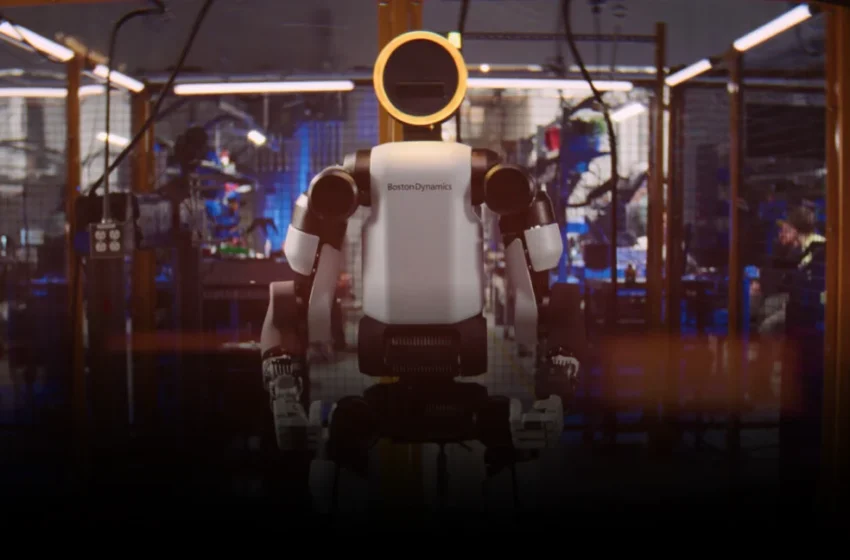
Hyundai Motor Company’s assertion that its ambitious humanoid robot deployment plans play no part in ongoing labor negotiations with striking South Korean autoworkers demands a closer, more critical look. The company claims current demands center purely on compensation—wage increases, bonuses, and retirement age extensions—firmly separating present industrial action from the specter of future automation. Yet, this public dismissal only highlights the automotive industry’s systemic failure to reconcile its long-term automation strategies with immediate labor stability and the inevitable future displacement of human workers.
This particular framing benefits Hyundai immensely. It shrewdly narrows the scope of negotiation to immediate financial terms, deftly sidestepping the far more complex and costly long-term questions of workforce transformation and re-skilling that advanced automation inherently demands. It’s a convenient narrative, designed to manage perception rather than address the underlying tension that defines this era of rapid technological integration.
The Ghost in the Machine: Automation’s Inevitable March
Hyundai’s stated goal to deploy humanoid robots in its US facilities by 2028 is not some distant science fiction; it is a concrete, strategic directive for global industrial robotics. To genuinely believe that a company investing heavily in such a timeline has no internal discussions or concerns about the future labor impact, even implicitly, is to willfully ignore the fundamental calculus of labor economics in advanced manufacturing. The union’s demands, while focused on immediate economic security, operate within a global context where automation increasingly looms over every employment contract.
This isn’t merely about South Korea’s robust unions; it’s a pattern repeated across developed economies. Automakers worldwide are quietly, yet aggressively, investing in **supply chain automation** and advanced manufacturing techniques. Companies like Tesla have long pushed the boundaries of highly automated factories, albeit with mixed results in initial deployments. The questions posed by humanoid robots extend beyond fixed robotic arms; they represent a flexible, adaptable labor force capable of tasks traditionally requiring human dexterity, directly impacting the negotiation leverage of human workers.
The idea that workers, keenly aware of their industry’s technological trajectory, are completely oblivious to the existential threat posed by such plans, is either naive or disingenuous. Their demands for extended retirement age, for instance, could be interpreted not just as a financial ask, but a quiet plea for extended employment runway in a sector rapidly changing its definition of ‘worker’.
A Global Lens on Labor’s Uneasy Truce
What Silicon Valley reporters, often caught up in the hype cycles of new tech, frequently miss is the slow-burning, yet profound, impact these technologies have on global labor markets. From Geneva to Singapore, the conversations in industrial policy forums and union halls are dominated by the precarity introduced by automation. This Hyundai situation is not an isolated incident; it is a microcosm of a larger structural problem, where industries postpone addressing the inevitable until it becomes a crisis.
Unions globally are grappling with an uncomfortable truth: negotiating for higher wages in the short term, while critical for their members, does not inherently secure their long-term employment against machines that require no wages, no benefits, and no retirement plans. The pressure on **workforce transformation** initiatives, **re-skilling** programs, and even the exploration of alternative economic models like elements of the **gig economy** for displaced manufacturing workers, becomes immense.
Hyundai’s denial, therefore, is not just a company statement; it’s a stark illustration of the uneasy truce between capital and labor in the age of advanced robotics. The silence on the robot question during active strikes is deafening, signaling a deferment of a critical conversation that will ultimately redefine the very nature of employment in the global automotive sector, with or without explicit union demands.
