
Link Satellite’s Orbital Snag Forces a Reckoning for Commercial Space Rescue
- Space
Arjun Vedanta
- 0
- 4 minutes read
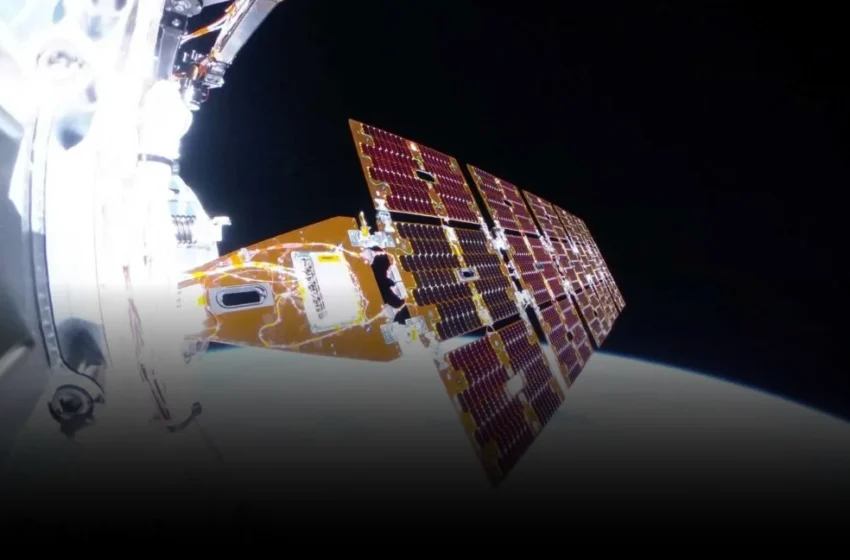
The Price of Agility in Orbit
Two reaction wheels offline, cold gas thrusters sputtering — the commercial Link satellite, barely a month into its mission, is spiraling, not just physically, but symbolically. Launched with the ambitious goal of rescuing NASA’s Swift gamma-ray telescope from a premature deorbit, the Link’s own troubles, announced by NASA, expose the fundamental tension between the cost efficiencies sought by space agencies and the inherent reliability risks when outsourcing critical, complex orbital mechanics to private ventures.
Katalyst Space Technologies’ Link was pitched as a nimble solution, a private sector answer to a public sector problem. Yet, the reported ‘attitude control issues’ leading to sporadic communications are a stark reminder that the vacuum of space remains an unforgiving domain. This isn’t merely a technical glitch; it’s a critical stress test for the burgeoning commercial space industry and its promise to deliver cheaper, faster solutions for everything from broadband constellations to orbital debris management.
NASA’s Lean Space Bet and Its Unforeseen Costs
For years, space agencies like NASA have increasingly leaned on commercial partners, driven by a compelling narrative of innovation and fiscal prudence. The argument is simple: private companies, unburdened by bureaucratic overheads, can develop and deploy technology with greater speed and at a lower cost than traditional government contractors. This model has seen successes, from SpaceX resupplying the International Space Station to proposals for lunar landers, fostering a competitive ecosystem that was once the sole preserve of national programs.
However, this embrace of lean space development comes with an unspoken caveat: risk. NASA’s statement, detailing “two of Link’s three reaction wheels currently are not operable” and “some loss of functionality in its cold gas thruster system,” points to vulnerabilities in core spacecraft operations. The immediate incentive for NASA’s move towards such partnerships is clear: stretching budgets further, accelerating development cycles, and stimulating a new market. Yet, the benefit to taxpayers, theoretically lower costs, is directly offset by the increased operational fragility demonstrated by incidents like Link’s.
The Steep Learning Curve of In-Orbit Servicing
The Link satellite was designed for in-orbit servicing, a specialized and notoriously difficult branch of space logistics that demands extreme precision and robust systems. This isn’t a simple launch-and-deploy mission; it involves rendezvous, proximity operations, and ultimately, interaction with another spacecraft – in this case, the valuable Swift telescope. The technical challenges associated with precise attitude control, especially when relying on a minimal set of components, are immense. Reaction wheels are foundational to spacecraft stability, and their failure, even partially, can cripple a mission.
This incident forces a skeptical look at the broader implications for space sustainability and mission assurance. While commercial agility excels in many areas, the promise that it can consistently deliver robust, high-stakes solutions for *every* type of mission, especially those demanding extreme reliability for critical national assets, remains a grand conjecture. The idea that a commercial venture could simply swoop in and fix a multi-million-dollar government asset, only to encounter its own fundamental operational issues, borders on the ironic. The complexities of orbital mechanics do not bend easily to startup schedules or venture capital timelines.
Redefining Risk in Public-Private Space Partnerships
The Link satellite’s predicament highlights a crucial policy discussion: at what point does the pursuit of cost-efficiency outweigh the imperative for mission critical reliability? For high-stakes endeavors like deorbiting valuable scientific instruments or preventing the creation of new orbital debris, the tolerance for failure is significantly lower. This isn’t simply about a single satellite; it’s about the precedent it sets for future public-private partnerships in an increasingly crowded and strategic domain.
Moving forward, space agencies will need to scrutinize not just the innovative proposals from commercial partners, but also their long-term operational resilience and contingency planning. The Link’s struggle could, paradoxically, be a necessary, albeit costly, lesson. It compels a more rigorous definition of acceptable risk for missions involving national infrastructure, reminding us that while commercialization can inject dynamism into space, it must not erode the fundamental principles of mission assurance. The spin of one small satellite might just force a much larger re-evaluation of how we approach the next generation of complex space operations.
