
The AI Deployment Paradox: Why Enterprise AI Remains a Human-Intensive Problem
- Artificial Intelligence
Arjun Vedanta
- 0
- 5 minutes read
The AI Deployment Paradox: More Humans, Not Less
The current AI boom isn’t an innovation wave; it’s a professional services boom in disguise. A Marc Benioff-backed startup, June, just emerged from stealth with $20 million, claiming it can automate the complex, manual process of integrating AI into corporate IT systems. This isn’t just a new tool; it’s a stark admission from the heart of Silicon Valley that enterprise AI, for all its grand promises, fundamentally struggles to scale beyond bespoke, human-intensive implementations.
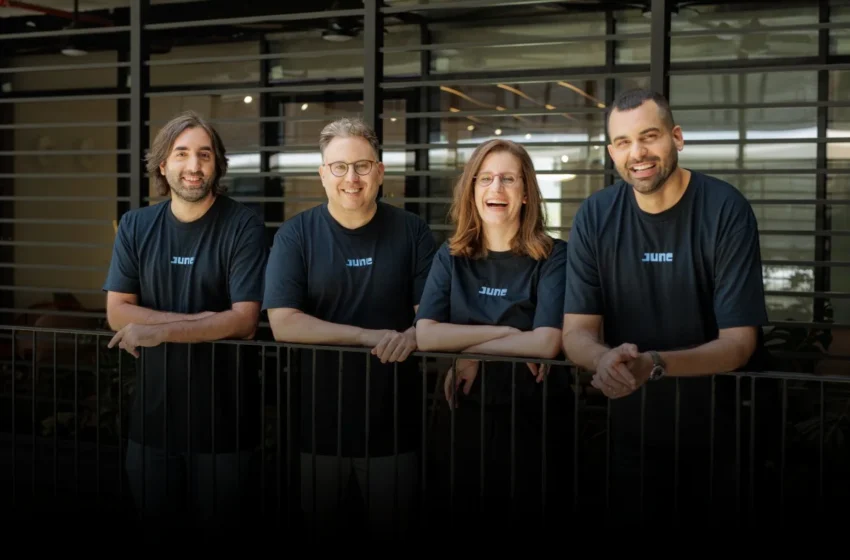
The founders of June — Efrat Rapoport, Ohad Hen, Barak Goldstein, and Idan Tsitiat — previously sold their company Bonobo AI to Salesforce in 2019. Their new venture directly addresses the “paradox” Rapoport identifies: “AI, paradoxically, increases the demand for professional services.” Large enterprises, eager to adopt AI agents, routinely hit walls integrating these advanced models with their decades of “technical debt,” fragmented data, and labyrinthine workflows.
They are hiring more “forward-deployed engineers” (FDEs) or consultants, essentially human middleware, to bridge the chasm between gleaming new AI capabilities and the messy reality of corporate operations. This reliance on human expertise exposes a core contradiction: the very technology pitched as a labor-saving marvel often demands significant human capital for its initial integration. The promise of ubiquitous AI automation runs headlong into the practicalities of legacy IT infrastructure.
Why Enterprise AI Remains a Custom Engineering Project
This isn’t just about technical glitches; it’s about the very nature of modern enterprise software. Companies like Salesforce, ServiceNow, and Workday have become indispensable infrastructure, but their deep integration comes with immense complexity. Any AI agent, no matter how sophisticated, needs to understand how ten duplicate database fields might all represent the same underlying reality to different teams.
It needs to navigate a corporate taxonomy built over years, often through acquisition and organic growth, that no single human fully comprehends. June’s proposition is to use AI to build the “roadmap” for AI deployment itself. It scans existing systems, identifies bottlenecks, and then automates the creation of optimized, agent-powered processes.
Paul Akinmade, Chief Strategy Officer at CMG, a major U.S. mortgage lender, exemplifies the problem. His team quickly adopted Claude Code but stalled for “weeks” trying to connect it to Salesforce, despite “meeting with architects” and “consulting everybody they could.” June, he claims, broke that deadlock, offering a clear view where previously there was only opacity.
The Untamed Chaos of Corporate Data and the Promise of Autonomous Integration
This entire scenario exposes the crucial flaw in the prevailing narrative of autonomous AI transforming businesses overnight. The Silicon Valley obsession with “shipping” models often overlooks the colossal integration challenge. Investors like Marc Benioff, Michael Dell, Aaron Levie, and George Kurtz, who poured $20 million into June without even a pitch deck, clearly see this as a foundational problem.
Their incentive is simple: if AI remains a professional services black hole, its broader market adoption — and thus the returns on their other AI investments — will be severely constrained. They are betting on an AI-powered pickaxe to mine the actual gold of AI value, which currently lies buried under organizational complexity. The truly skeptical observation here is that if AI is so intelligent, why can’t it figure out how to integrate itself into a standard enterprise environment without another layer of AI or human intervention? This isn’t just a deployment hurdle; it’s an indictment of the current state of “enterprise-ready” AI solutions.
What June proposes is a machine-driven approach to what has traditionally been a highly human, nuanced, and expensive consulting service. It promises to demystify the “black box” of AI deployment that Akinmade explicitly rejected, seeking an “easy-to-use tool” instead of more FDEs. If successful, June could fundamentally alter the economics of AI adoption, making it accessible to a much broader swathe of companies that lack the internal engineering firepower or the budget for continuous external professional services.
Yet, we must remember the historical precedent. Every major wave of enterprise technology, from ERP to cloud computing, has generated its own ecosystem of implementation specialists. While June aims to automate this layer, the underlying complexity of large organizations is not static. Business processes evolve, data sources multiply, and regulatory landscapes shift. This raises the question: Will June’s AI agents simply create a new form of automated technical debt, requiring another generation of AI tools to untangle?
