
Google’s HiLight: A Blinking Sign of AI Hardware Stagnation
- Artificial Intelligence
Arjun Vedanta
- 0
- 5 minutes read
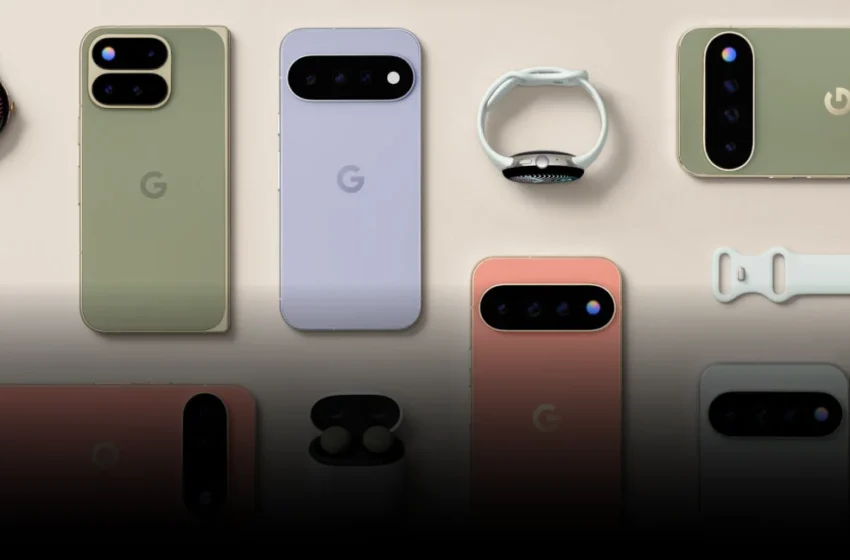
Google’s 2026 Pixel hardware reveals a company grappling with its identity in a maturing smartphone market, desperately seeking a tangible hook for its considerable AI investments. The marquee “innovation” on the Pixel 11 Pro, a notification light called HiLight – a ring of RGB LEDs around the flash assembly – is less a technological leap and more a stark admission. It tells us that despite vast resources poured into Gemini-powered AI, Google’s engineers still struggle to manifest truly differentiated, non-screen-based user experiences in pocketable hardware.
This isn’t just about a blinking light; it’s about the underlying strategy. Presented as an answer to the question of knowing when AI is listening without looking at the screen, HiLight feels like a feature designed to justify an AI push, rather than a genuine advancement in ambient computing. When the pinnacle of next-generation AI interaction on a premium device is a glorified notification LED from a decade past, the industry’s path forward looks less like innovation and more like frantic, incremental wheel-spinning.
The HiLight: A Retreat to Past Form Factors
The Pixel 11 series, alongside the Pixel Watch 5 and Google’s debut Pixel Tag, arrives with the usual promises of iterative improvements. Yet the decision to highlight HiLight — a feature lighting up specifically when you’re talking to Gemini, best appreciated with the phone face down — speaks volumes about the current state of AI integration in mobile hardware. It’s a return to the primitive signaling of earlier smartphones, which used single-color LEDs for missed calls or messages. Google’s version adds RGB capabilities and ties it to AI, but the core functionality remains fundamentally a visual cue, not an interactive paradigm shift.
This approach runs counter to the broader trend towards more subtle, context-aware AI interactions that should theoretically anticipate user needs or blend seamlessly into workflows without requiring overt signaling. Instead, Google offers a visual prompt, a digital “I’m listening” equivalent of a blinking light on an answering machine. It suggests a lack of confidence in AI’s ability to communicate its status implicitly, or perhaps, a concession that most AI interactions on phones remain transactional and require explicit user initiation and feedback.
Frankly, the most cynical observation is that HiLight exists primarily as a marketing talking point, a physical manifestation to signal “AI inside” rather than a deeply considered user experience improvement. It’s a shiny object to differentiate the Pixel Pro line from the base model, which remains unilluminated, creating a clear tiered offering for consumers who equate more lights with more advanced technology.
Stagnation in Smartphone UX Beyond the Screen
The entire narrative surrounding HiLight underscores a profound challenge facing all major smartphone manufacturers: how to innovate beyond increasingly powerful chips and improved camera arrays. With screens approaching peak resolution and refresh rates, and form factors largely settled, companies like Google, Apple, and Samsung are struggling to define the next frontier. AI, once heralded as that frontier, now often feels shoehorned into hardware that isn’t fundamentally changing how we interact with it.
Consider the broader landscape: Apple’s incremental iPhone updates, Samsung’s foldable experiments that haven’t quite captured mainstream imagination, and Google’s own Pixel line, which has consistently struggled for market share despite its software prowess. The industry is stuck in an incremental update cycle, where genuine breakthroughs in user interface or interaction are rare. This is particularly noticeable in how AI is being sold to consumers. It’s often presented as an invisible assistant, yet HiLight demands visible attention, a contradiction in its supposed utility.
The incentive for Google here is clear: maintain relevance in a hyper-competitive market and justify the premium pricing of its “Pro” devices. By attaching AI to a unique, visible hardware feature, however trivial, Google attempts to create an immediate, palpable difference for its latest Pixel phones, encouraging upgrades from older models or capturing market share from competitors.
The Global Implications of Silicon Valley’s Echo Chamber
From a global perspective, this fixation on features like HiLight looks less like forward-thinking design and more like a symptom of Silicon Valley’s self-referential innovation cycle. While US-based tech reporters often celebrate these nuanced additions as significant, outside of that bubble, the practical utility is questioned more acutely. Consumers in markets from Singapore to London, who are often more discerning about real-world value and less swayed by marketing hype, see through superficial differentiators.
The true value of AI in a smartphone should stem from seamless integration, predictive capabilities, and enhanced productivity that doesn’t require a blinking ring of LEDs to confirm its activity. This means advancements in on-device machine learning for personalized experiences, more robust privacy controls, and genuinely intelligent operating system features that adapt to user habits – often features that are difficult to visualize or market with a simple gimmick. The hardware-software integration should elevate the entire user experience, not just add another light to glance at.
The Pixel 11 and its HiLight serve as a potent reminder that while AI models like Gemini are incredibly powerful, the challenge lies not in their creation, but in their thoughtful and impactful deployment into the physical tools we use daily. Until then, we’ll continue to see companies default to the visible, the tangible, even if it’s merely a dressed-up ghost of a feature past.
