
US Army’s ‘Respawn’ Training Masks Harsh Realities of Drone Warfare
- Military Technology
Arjun Vedanta
- 0
- 4 minutes read
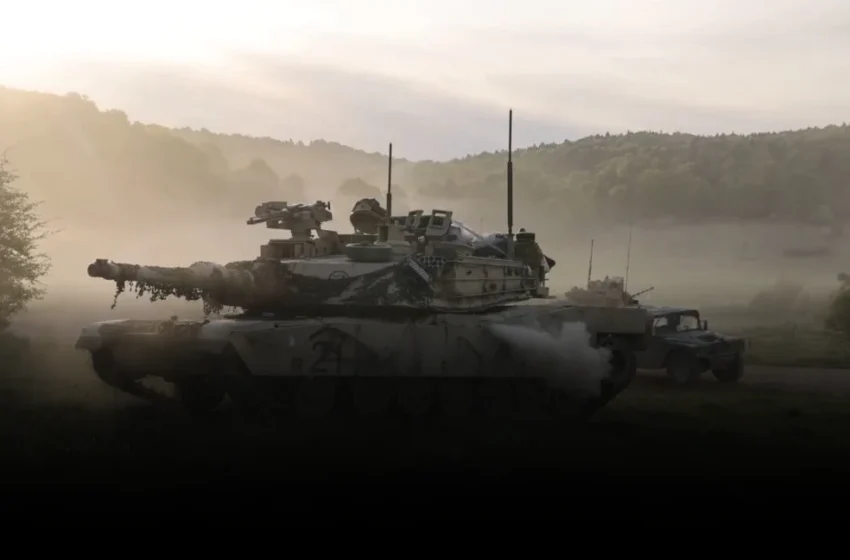
The ‘Respawn’ Paradox: Training for a War That Doesn’t Reset
A brigade of US Army tanks, supposedly the spearhead of modern ground warfare, was obliterated repeatedly by Ukrainian drone teams in a recent war game. The twist? These American soldiers were granted ‘respawns,’ a term borrowed from video gaming, allowing them to instantly re-enter the fray after their virtual destruction. This isn’t merely about a training exercise; it’s a stark, almost cartoonish, illustration of how profoundly the US military’s simulated learning environment now disconnects from the brutal realities of contemporary conflict.
During the semiannual Combined Resolve exercise, held from April 9 to May 10 in Germany, rotational deployments from Fort Hood, Texas, faced Ukrainian operators. These Ukrainian teams, drawing directly from live battlefield experience, easily spotted and ‘destroyed’ US armored vehicles through simulated bomb drops and kamikaze strikes. The speed of attrition was so high that US officials, speaking to The Wall Street Journal, confirmed the unprecedented use of respawn mechanics. While lauded as a critical learning opportunity, this practice inadvertently normalizes an impossible scenario, undermining the psychological and material gravity of actual combat.
Global Realities Versus Simulated Comfort
The lessons from Ukraine are devastatingly clear, but the West often interprets them through a filter of technological optimism or, worse, an anachronistic understanding of war. What US-based reporters, focused on the next gadget, often miss is the visceral impact of ubiquitous, cheap drones on personnel and morale. The ability to ‘respawn’ might accelerate learning tactical responses in a low-stakes environment, yet it fundamentally fails to ingrain the true cost of failure: permanent loss of life and equipment. This creates a dangerous institutional delusion where the lethality of modern, asymmetric drone warfare is subconsciously downplayed.
The current battlefields demonstrate that there are no ‘respawns’ for a Challenger 2 tank or a Stryker infantry carrier, let alone their crews. Ukrainian drone warfare has exposed the vulnerability of even advanced armor, making targets of vehicles designed for a different era of conflict. The US Army’s experience, where an entire brigade could be virtually wiped out multiple times, should not be seen as a mere technical challenge but as a foundational crisis in battlefield doctrine and materiel. The incentive here is to frame a harsh defeat as a valuable learning opportunity, allowing the US Army to present a setback as progress, thereby sidestepping uncomfortable questions about the rapid obsolescence of traditional armor in contested airspace and justifying future spending on counter-drone measures rather than a radical rethink of ground warfare itself.
The Looming Strategic Reckoning
The implications extend beyond just training. If a simulated Ukrainian adversary can so easily neutralize a modern American armored brigade, what does this say about readiness against a peer competitor? The current institutional response appears to be an acceleration of counter-drone technologies, electronic warfare (EW) capabilities, and more robust air defense systems. These are crucial, but they represent a defensive posture against a threat that has already proven its offensive potency. This isn’t about incremental upgrades; it’s about a fundamental shift in the risk calculus for ground forces.
The US military, like many large institutions, often struggles to adapt to genuinely disruptive changes. Its immense procurement cycles and deeply ingrained doctrines mean that what is learned on a German training ground in May might not translate into deployable solutions for years. The sharpest observation to be made here is that the ‘respawn’ button in military training, while facilitating iterative learning, is actually buffering the most important, brutal lesson: the finality of combat. The true cost of this disconnect will only be tallied when the ‘respawn’ button no longer functions and the lives lost are not virtual assets but actual people and critical hardware, reinforcing the strategic chasm between simulator and reality.
