
Ukraine’s Long-Range Strike: Unpacking the Global Space Implications
- Military Technology
Arjun Vedanta
- 0
- 4 minutes read
Targeting Russia’s Space Core: A Strategic Blow
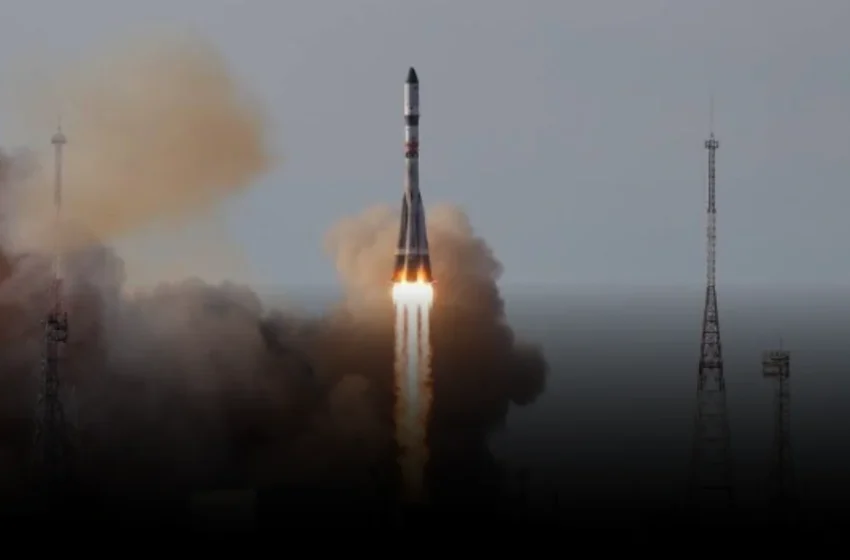
The reported Ukrainian strike on Russia’s Progress Rocket Space Center in Samara, a facility 900 kilometers from the front lines, transcends typical battlefield news. This was not a border skirmish or an artillery duel, but a surgical blow against the industrial bedrock of a major space power. When President Volodymyr Zelenskyy confirmed the attack, specifying the use of ‘Flamingo missiles’ against a site critical for ‘electronics production’ and the assembly of Soyuz-2 and Soyuz-5 rockets, the message resonated far beyond military strategists.
For years, the Progress Center, under the Roscosmos umbrella, has been an indispensable cog in Russia’s aerospace machine, churning out the workhorse Soyuz vehicles that have launched countless commercial and military satellites. Hitting this facility is a deliberate degradation of Russia’s capability to sustain its own military satellite constellations, crucial for communications and intelligence. It also impacts its diminished, yet still significant, role in global space launch services.
The sheer range of the strike — a 900 km reach into Russian territory — signals a profound evolution in Ukraine’s offensive capabilities, moving beyond tactical targets to strategic assets. This capability forces Russia to allocate more resources to defend its deep industrial infrastructure, straining an already overstretched military-industrial complex. The strike itself, a direct hit on critical aerospace supply chains, marks an uncomfortable escalation that the international community is only beginning to process.
The Unseen Fallout for Commercial Space and Global Supply Chains
Russia’s aerospace industry, despite sanctions and geopolitical shifts, remains deeply intertwined with the global commercial space sector. While Western nations have increasingly turned to private launch providers like SpaceX, Russia’s Soyuz rockets historically offered a reliable, cost-effective alternative for many developing nations and commercial entities. Damage to a facility like Progress exacerbates an already fragile aerospace supply chain, particularly for dual-use technologies where civilian and military applications often overlap.
Consider the production of sensitive electronics mentioned by Zelenskyy, components vital for both military satellites and commercial spacecraft. Every disruption at such a facility sends ripples through an interconnected global network, potentially delaying critical satellite deployments or raising costs for satellite constellation operators worldwide. This incident serves as a stark reminder of the global economy’s residual dependence on even sanctioned players for certain specialized components and launch segments.
The notion that the international space community can simply ‘decouple’ from Russia without significant short-term pain is a pleasant fiction, one that this strike brings into sharp, inconvenient relief. Companies building the next generation of broadband satellite constellations, or scientific missions relying on specific launch windows, are now forced to factor in a new, uncomfortable layer of geopolitical risk directly impacting industrial capacity. The pursuit of space resilience, once a theoretical exercise, is now an urgent, material necessity.
Beyond the Blast: Ukraine’s Calculated Message to the World
The timing and public confirmation of this strike by Kyiv are not coincidental; they serve multiple strategic objectives beyond mere destruction. Ukraine is clearly demonstrating its capacity to strike high-value, strategic targets deep within Russia, forcing a re-evaluation of Russian strategic assets and their vulnerability. This is a direct message to Moscow: the costs of this conflict are escalating, and no industrial stronghold is truly safe.
Furthermore, this public acknowledgment is an incentive for Western allies, implicitly demonstrating the effectiveness of sophisticated, long-range weaponry in Ukrainian hands. It makes a compelling case for continued, and potentially expanded, military aid, particularly for advanced missile systems. This framing benefits Kyiv by highlighting its evolving offensive prowess and its ability to inflict meaningful, systemic damage on Russia’s strategic industries.
This strike isn’t merely about degrading a factory; it is a profound geopolitical signal. It accelerates Russia’s isolation from the global space economy, complicating its ability to project soft power through space cooperation and forcing a rapid, painful re-calibration of the international space industry. The long-term impact on satellite development, launch availability, and aerospace supply chains will be felt for years, long after the immediate conflict subsides.
