
Climate’s Cruel Twist: Why Agricultural Tech Still Fails Farmworkers
- Tech
Arjun Vedanta
- 0
- 5 minutes read
The Warming Fields: A Chemical Reckoning
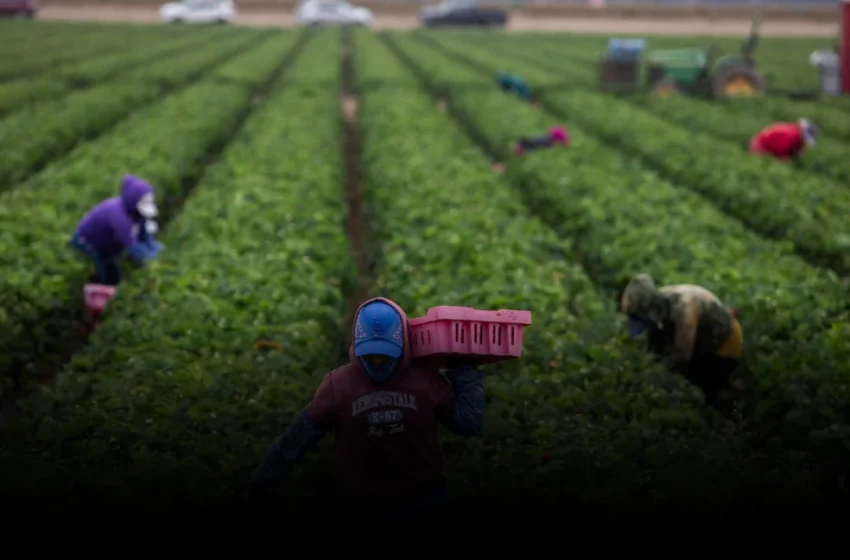
The conversation about climate change and agriculture often glosses over an ugly truth: the industry’s continued reliance on chemical warfare, even as a warming planet turns these tools into direct weapons against the very people working the land. For 2.4 million farmworkers across the US alone, this isn’t an abstract future threat but a present-day reality, where hotter temperatures make them exponentially more vulnerable to the pesticides designed to protect crops. This isn’t merely an environmental or labor issue; it’s a profound indictment of the agricultural technology sector’s priorities and the policy frameworks that enable them.
The science is unequivocal, yet often ignored by those far from the fields. Higher temperatures stress the human body, reducing its ability to detoxify harmful substances and increasing the risk of acute and chronic illness. Protective gear, essential for safety against chemical exposure, becomes a suffocating liability in extreme heat, forcing workers into an impossible choice between heatstroke and direct chemical absorption. Omanjana Goswami, a scientist at the Union for Concerned Scientists, bluntly states, “It is awful.” Her assessment, backed by growing research, points to increased skin absorption from sweat-opened pores and higher inhalation rates as evaporation intensifies. Crucially, heat also accelerates the chemical transformation of some pesticides into even more toxic compounds, turning a bad situation dire in a world experiencing ever-hotter growing seasons.
Innovation’s Blind Spot: Why Toxic Solutions Persist
This escalating crisis underscores a deep structural inertia within global agriculture, echoing practices from the 20th-century Green Revolution that prioritized chemical-dependent monocultures. For decades, the tech industry has promised precision farming, genetic modification, and advanced robotics as pathways to more sustainable and efficient food production. Yet, despite these innovations, the default solution for pest management often remains a heavy hand of synthetic chemicals. This reliance isn’t just about efficacy; it’s steeped in entrenched market dynamics, intellectual property lock-ins, and regulatory capture.
Manufacturers of agrochemicals, frequently subsidiaries of massive chemical conglomerates, have little incentive to push for truly green alternatives when their existing, profitable product lines are permitted, even encouraged, by policy and market structures globally. The venture capital ecosystem, focused predominantly on rapid returns and scalable software plays, also largely overlooks the slower, more capital-intensive development of bio-pesticides or complex ecological farming systems, viewing them as less disruptive and harder to exit. The investment in robust, non-chemical pest management systems—such as biological controls, integrated pest management (IPM) techniques, or sophisticated drone-based monitoring that pre-emptively targets issues without broadcast spraying—consistently lags behind the marketing spend for chemical alternatives.
A Global Agricultural Betrayal
The narrative often spun by Silicon Valley venture capitalists is one of disruption and progress, yet on the ground, in the fields from California to the Mekong Delta or the vast agricultural expanses of Brazil, the reality is starkly different. I find it particularly jarring that while we celebrate generative AI and virtual reality headsets, vast pools of capital and intellectual horsepower are not directed towards fundamental problems like worker safety in foundational industries, which remain stubbornly analog and dangerously chemical-dependent. This isn’t just a blind spot; it’s a deliberate turning away from complex, less ‘sexy’ problems that require long-term, systemic investment rather than quick-flip exits. European regulations, such as the REACH framework and specific bans on neonicotinoids due to their devastating impact on pollinator populations, have, while imperfect, pushed agrochemical firms to either adapt their offerings or face exclusion from significant markets.
This contrasts sharply with the often reactive and lobbying-influenced regulatory landscapes found in many other major agricultural nations, including the United States, where the immediate pressures of climate change are met with outdated solutions. In regions dependent on cash crops for export, the pressure to maintain yields often overrides worker protection concerns, leading to widespread adoption of inexpensive, high-impact pesticides even when local temperatures soar. The immediate human cost of this systemic delay is paid by those least able to afford it: the marginalized global workforce who harvests our food, sustaining injuries and chronic illnesses that disproportionately affect developing economies, creating a vicious cycle of poverty and poor health.
The current trajectory is unsustainable. As global temperatures continue their relentless climb, the hazards for farmworkers will only intensify, pushing agricultural labor into even more precarious conditions worldwide. This isn’t just a concern for humanitarian groups; it’s a direct threat to global food supply chains, destabilizing regions and increasing migration pressures. A workforce debilitated by chronic illness and acute exposure incidents cannot sustain the productivity required to feed a growing planet. Policymakers, agricultural researchers, and yes, even the tech titans who preach sustainability, must shift their gaze. The real innovation isn’t in making existing poisons slightly less harmful; it’s in designing farming systems that intrinsically reduce the need for them. Investing in genuinely integrated pest management, which combines biological, cultural, physical, and chemical tools to minimize risks, developing resilient crop varieties through non-GMO breeding techniques for specific regional climates, and deploying advanced robotics for precision applications of non-toxic biologicals are not futuristic fantasies. They are urgent necessities that have proven effective in various pilot programs and scaled initiatives globally, and the cost of ignoring them is becoming clearer with every rising degree.
