
The Gasolini AR1 and the Quiet Revolt Against Tech’s Bloated Excess
- Gadgets
Arjun Vedanta
- 0
- 5 minutes read
The Allure of the Anti-Product Economy
The tech world, much like the automotive industry, is suffering from a terminal case of maximalism. While Silicon Valley obsessively chases ever-larger funding rounds, higher valuations, and more complex AI models, a quiet counter-movement is gaining traction, much like the Gasolini AR1 turning heads far from the ostentatious spectacle of Monterey. At a moment when a single custom Ferrari can fetch $40 million and tech companies boast billion-dollar valuations for solutions to problems nobody really has, the emergence of a truly affordable, hand-built vehicle points to a deepening consumer fatigue.
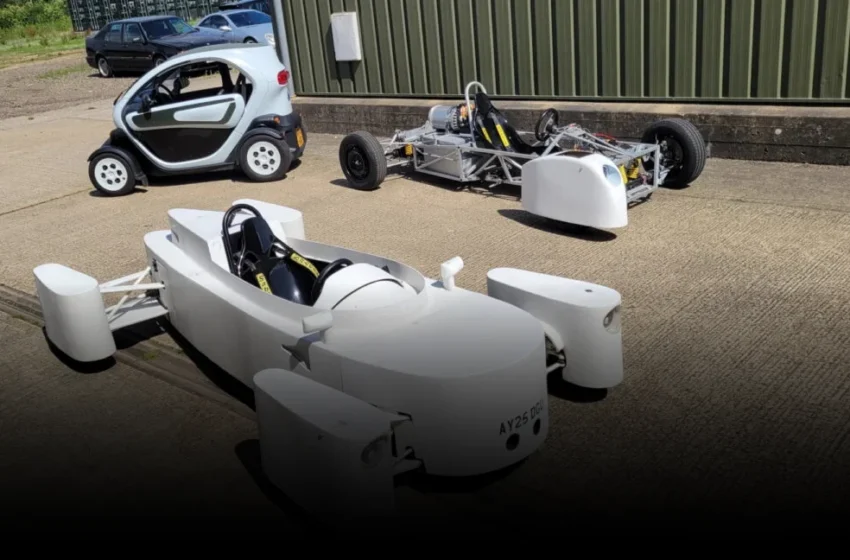
Robert Ely’s Gasolini AR1, recently showcased on Jonny Smith’s “The Late Brake Show,” isn’t merely a niche sportscar built from readily available components; it’s an emblem for a growing segment of the market that actively rejects bloat. This isn’t about Luddism; it’s about discerning value and utility over perpetual upgrades and planned obsolescence. Just as many users are now opting for older, more repairable smartphones over the latest sealed-unit flagships, or embracing open-source hardware projects, the AR1 represents a similar impulse in a different domain.
This is my contrarian observation: the relentless push for computational power, data-driven features, and “smart” everything, often delivered in closed ecosystems, has largely run its course as a primary driver of consumer desire. People aren’t just looking for more; they’re looking for enough, coupled with control and transparency. The Gasolini, with its sub-$7,000 price point and transparent mechanics, offers a tangible alternative to the dizzying, often opaque complexity of modern industrial products, both on and off the road.
From Walled Gardens to Open Garages
The UK’s comparatively permissive regulations for registering hand-built vehicles, which allows creations like the Gasolini AR1 to become road legal, offers a telling analogy for the open-source movement in technology. Here, the freedom to assemble, modify, and maintain one’s own apparatus stands in stark contrast to the locked-down digital environments prevalent today. Big tech companies—and increasingly, big auto manufacturers—invest heavily in crafting bespoke, proprietary platforms because they create powerful network effects and ensure vendor lock-in, which directly translates to predictable recurring revenue and reduced competition. This is precisely why announcements celebrating minor spec bumps in expensive, sealed devices generate endless press, overshadowing the quiet innovations happening at the grassroots.
The incentive structure is clear: a complex, integrated system with proprietary components and software means that every upgrade, every repair, every additional feature, funnels directly back to the original manufacturer. This strategy extends beyond simple profit; it’s about control over the entire user experience and, more crucially, the data generated within that experience. The Gasolini AR1, by contrast, thrives on interoperability and user autonomy, leveraging existing parts and an easily understood architecture. It doesn’t demand a subscription for heated seats or an over-the-air update to unlock horsepower; its value is inherent in its functional, modifiable design.
The Right to Repair, Reimagined
This dynamic mirrors the larger global push for Right to Repair legislation, a movement born out of frustration with expensive, unfixable gadgets. Whether it’s a smartphone or a car, consumers are increasingly aware that design choices are often dictated by corporate strategy rather than user benefit. The AR1, in its simplicity and repairability, embodies the spirit of this movement, demonstrating that high performance and engaging design don’t necessitate impenetrable engineering or exorbitant costs. It’s a physical embodiment of a desire for products that respect their owner’s agency.
Beyond the Hype Cycle: A New Form of Value
For too long, the narrative of progress in both tech and automotive has been dictated by the pursuit of the ‘next big thing’—faster chips, more megapixels, higher top speeds, ever-larger touchscreens. But this relentless cycle of incremental, expensive upgrades is yielding diminishing returns. People who follow TechCrunch and Ars Technica aren’t just looking for a new product announcement; they’re seeking insight into what fundamentally shifts the landscape. And often, that shift isn’t a top-down mandate from a multi-billion dollar corporation, but a bottom-up expression of user needs and creative problem-solving.
The Gasolini AR1 is not a mass-market disruptor, nor is it meant to be. It is, however, a potent symbol for a crucial re-evaluation of value. It prioritizes the driving experience, the craft, and the accessibility over the superficial metrics of power and prestige. This isn’t about going ‘back to basics’ in a nostalgic sense, but about forging a new path forward that values sustainability, democratized technology, and genuine utility. It suggests that the future of both personal transport and personal technology might lie not in endless escalation, but in thoughtful design, reparability, and a renewed focus on individual empowerment over corporate control. In a world saturated with digital noise and physical excess, sometimes the sharpest observation comes from what is deliberately simple.
