
The Hidden Costs of Wall Street’s New AI Futures Market
- Artificial Intelligence
Arjun Vedanta
- 0
- 5 minutes read
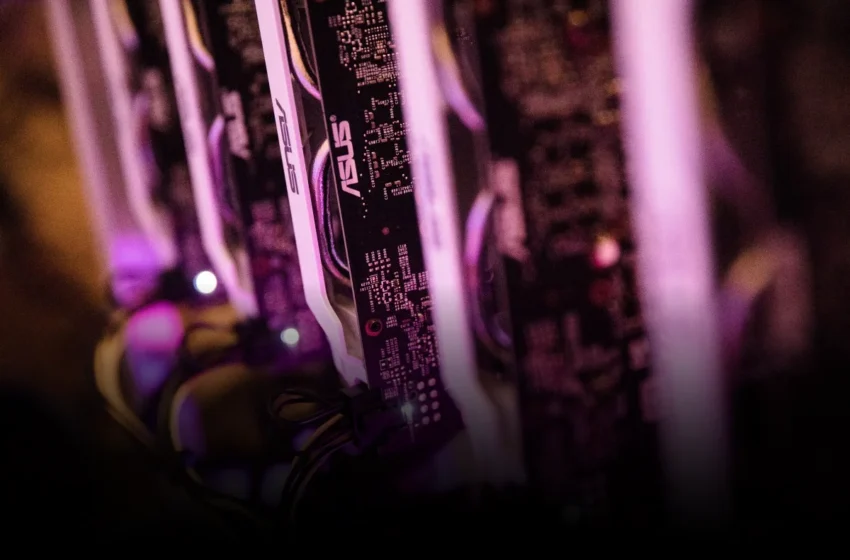
The Invisible Hand on AI’s Infrastructure
The latest innovation to emerge from the relentless AI buildout isn’t a new model or a faster chip; it’s a futures contract. Wall Street is preparing to price the very raw material of artificial intelligence – compute – as Silicon Data moves to launch GPU rental derivatives on the CME by October 5th. This isn’t merely about creating a financial instrument; it’s a profound redefinition of AI infrastructure, transforming a physical resource into a tradeable digital commodity, with implications far beyond simple risk management for tech giants.
Silicon Data’s recent $30 million Series A round wasn’t just another venture capital success story. It signaled the arrival of something more fundamental: the formal financialization of AI’s core engine. The stated goal, according to company head of research Steve Hou, is to establish a transparent reference price for GPU rentals, allowing firms to “hedge their exposure” against the volatile, multi-billion-dollar costs associated with AI development. This narrative casts Silicon Data as a market stabilizer, offering a much-needed mechanism to manage the “hundreds of billions of dollars a year” flowing into data centers and specialized hardware.
Yet, the introduction of a derivatives market for computing power represents a deeper, more systemic shift. It layers abstraction upon abstraction, taking the tangible silicon — the very essence of AI’s physical being — and rendering it into a speculative asset. What begins as a seemingly benign quest for market efficiency inevitably morphs into a new arena for speculative capital, placing the foundational building blocks of AI within the grasp of algorithmic trading and financial arbitrage.
The immediate beneficiaries are clear: large cloud providers, established AI labs, and financial institutions already adept at managing complex derivatives. They gain a new tool for budgeting and risk mitigation, solidifying their dominant positions. But what does this mean for the countless independent researchers and startups globally, those who rely on spot market access and agile resource allocation?
Derivatives, Disruption, and Disadvantage
The promise of stability, often touted by proponents of financial derivatives, rarely translates into equitable access. Historically, the commodification of essential raw materials, from crude oil to agricultural products, has introduced periods of intense volatility driven by speculation rather than fundamental supply and demand. Imagine a future where access to high-end Nvidia GPUs, already a bottleneck for many, is further complicated by price swings dictated by futures traders rather than actual innovation cycles or computational demand.
This development risks creating a significant structural disadvantage for emerging AI innovators, particularly those outside well-capitalized Silicon Valley ecosystems. Smaller AI labs in Singapore, research collectives in Berlin, or individual developers in Lagos, who rely on flexible, pay-as-you-go compute models, will now compete with financial behemoths placing bets on future GPU prices. The increased capital expenditure required to navigate a derivatives market, or simply to secure stable compute without hedging, elevates the barrier to entry at a critical juncture for global AI development.
The incentive behind this announcement is stark: it benefits the large-scale incumbents and financial players who thrive on predictable, hedged expenses and new trading opportunities. It’s an elegant solution for those with substantial financial engineering capabilities, solidifying their competitive moat against nimble, less capitalized rivals. This effectively channels the AI gold rush into established financial conduits, cementing existing power structures rather than democratizing access to foundational technology.
The True Cost of ‘Efficiency’ in AI
Silicon Data’s move to launch GPU futures on the CME is packaged as a leap towards efficiency and risk management in the booming AI sector. Yet, beneath this veneer of financial sophistication lies a fundamental tension. By treating compute as a pure commodity, susceptible to market forces distinct from its utility, we risk decoupling the actual value creation in AI from its underlying cost structure. The argument that “the data is telling a different story than the doom and gloom headlines about depreciating chips and stalled data centers,” as referenced in discussions with Steve Hou, might hold true for market stability. However, it sidesteps the question of who truly benefits from this newly imposed stability.
The contradiction is palpable: in pursuit of mitigating one form of risk – price volatility – we introduce another: the potential for market manipulation and reduced access for anyone not operating at scale. This isn’t merely a matter of financial plumbing; it is a strategic decision that could dictate the pace and direction of global AI innovation for decades. The capital-intensive nature of AI infrastructure is already formidable; adding layers of financial derivatives primarily serves to fortify the positions of those already well-funded.
Instead of fostering a more distributed, accessible AI ecosystem, this financialization pushes us towards a model where fundamental infrastructure is controlled, and its future price speculated upon, by financial markets. The implicit message is clear: if you can’t afford to play the derivatives game, you might struggle to build on the core resources. This trend, if it solidifies, will ensure that the most impactful AI breakthroughs continue to originate from those who can not only afford the compute, but also hedge its cost on Wall Street. It is a subtle, yet powerful, shift towards gatekeeping the very foundation of artificial intelligence.
