
Fairphone’s US Entry Exposes Big Tech’s Sustainability Charade
- Gadgets
Arjun Vedanta
- 0
- 5 minutes read
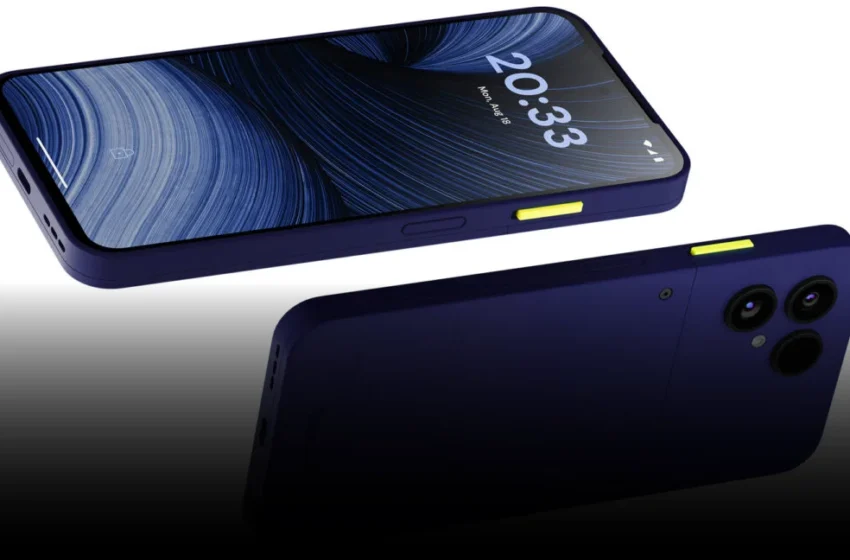
The Price of a Principled Handset
For a decade, the smartphone industry has sold us a narrative of sleek design advancements, each new iteration a fractional improvement over the last, encased in ever-more-fragile glass and sealed tighter than a submarine hatch. This week, the Dutch company Fairphone quietly launched its Gen 6+ in the United States, priced at $650. This isn’t a story about a new flagship challenging Apple or Samsung; it’s a story about a fundamental philosophical clash now landing directly on the shores of the world’s most consumption-driven market.
Fairphone, a name long familiar to European and Asian consumers, is built on a radical premise: a device designed to be repairable, with readily available spare parts and a transparent supply chain aiming for fair wages. Its Gen 6+, which boasts a removable battery and is half-made from recycled materials, lands at a price point where consumers might expect more bleeding-edge specifications. This very compromise, however, exposes the glaring contradiction between what the major manufacturers preach about sustainability and what their business models truly demand.
The phone’s specs – which won’t ‘blow you away,’ as the summary noted – are secondary to its purpose. The real significance of its US arrival is not its processing power, but the pressure it indirectly applies to an industry that has mastered the art of performative eco-consciousness. While Silicon Valley titans release polished environmental reports detailing carbon offsets and recycled aluminum, their core product strategy remains anchored to planned obsolescence and a relentless cycle of upgrades.
The Illusion of Eco-Consciousness
Major smartphone players, particularly those based in Cupertino and Seoul, have spent years positioning themselves as environmental stewards. They tout initiatives to use recycled rare earth metals, reduce packaging waste, and even achieve carbon neutrality across their operations. Yet, glance at their product roadmap or their repair policies, and a different truth emerges: devices are increasingly difficult and expensive for consumers to fix, parts are often proprietary or unavailable, and software updates are strategically timed to encourage new purchases.
This isn’t merely inconvenient; it’s an economic imperative for these giants. Their profitability hinges on an upgrade treadmill that pushes consumers to replace perfectly functional, albeit slightly slower, devices every two to three years. The environmental cost – the mounting pile of e-waste, the energy expended in manufacturing new components, the ethical quandaries in mineral extraction – is externalized, absorbed by the planet and the global South. Fairphone, by offering a phone that can run for ‘years’ and is serviced with ‘a single screwdriver,’ directly challenges this lucrative but destructive model.
The timing of Fairphone’s deeper US push is no accident. The nascent but growing ‘right to repair’ movement, gaining legislative traction in states like New York and California, has created a fertile ground for its message. While Fairphone itself is a niche player, its presence serves as a potent symbol and a constant reminder of what is actually possible when product design prioritizes longevity over disposability. It is a mirror reflecting the industry’s rhetoric against its reality, forcing an uncomfortable introspection for those who claim to champion a circular economy while actively undermining it.
A Niche Built on Principle, Not Power
Let’s be clear: Fairphone’s entry, even with its full line of accessories and replacement parts, will not fundamentally shift the market overnight. Its $650 price point places it in a competitive mid-range dominated by devices offering superior camera arrays, faster processors, and more premium finishes. These are the metrics consumers have been conditioned to prioritize, thanks to billions spent on marketing a specific vision of technological advancement.
However, Fairphone’s significance isn’t measured in market share or quarterly earnings. Its value lies in demonstrating a viable alternative, however small. It is a real-world proof-of-concept for a different way of doing business in consumer electronics. This approach resonates with a growing segment of consumers, albeit a small one, who are genuinely concerned about ethical supply chains, environmental impact, and device longevity – issues that often get lip service from the industry’s behemoths but rarely translate into core product design.
Fairphone’s success, even as a niche player, applies a quiet but persistent pressure. It asks uncomfortable questions of Apple, Samsung, and Google: If a relatively small Dutch company can design a modular, repairable phone with ethical labor practices, why can’t companies with trillion-dollar valuations and immense R&D budgets? The incentive for Fairphone is clear – market expansion and increased brand visibility – but the incentive for the industry to respond is less about competition and more about the increasing scrutiny from regulators and environmentally conscious consumers. Fairphone’s mere existence acts as a constant reminder that the choice for less repairable phones is a design decision, not a technological inevitability. This is the sharpest critique any product can offer against a dominant industry narrative.
