
Orbital Servicing Hype Meets Harsh Reality: The Swift Mission’s Quiet Failure
- Space
Arjun Vedanta
- 0
- 5 minutes read
The Quiet Failure of Orbital Servicing
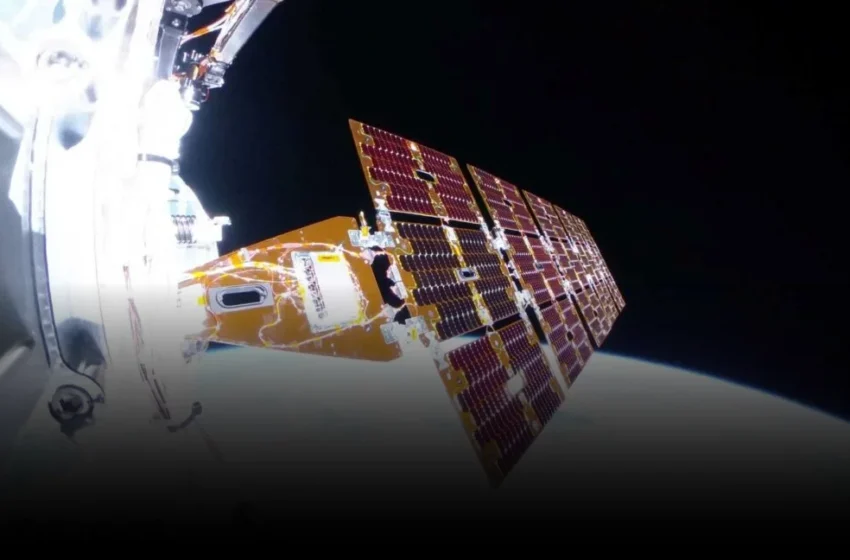
The quiet cancellation of the Link mission, intended to rescue NASA’s Neil Gehrels Swift Observatory, is not merely a technical snag; it is a stark reminder of the chasm between venture capital-fueled ambition and the brutal realities of operating in low Earth orbit. On July 3, the Link satellite launched with a clear, critical objective: to rendezvous with the Swift gamma-ray telescope, capture it with three robotic arms, and boost its orbit high enough to escape an uncontrolled reentry. That mission is now off, declared by Katalyst Space Technologies and NASA, citing “ongoing attitude control issues” with the refrigerator-sized rescue craft.
This failure punctures the pervasive narrative around On-Orbit Servicing, Assembly, and Manufacturing (OSAM) — an industry segment consistently hyped as the solution to everything from extending satellite lifespans to active debris removal. The ease with which this high-stakes mission was abandoned, despite the critical scientific asset at stake, reveals a deeper reluctance within commercial ventures to bear the full financial and reputational costs of high-stakes, long-duration orbital operations once initial technical hurdles appear. It suggests that while the promise of commercial agility is strong, the willingness to slog through unforeseen engineering challenges for a mission that doesn’t immediately scale is less so.
Katalyst, the startup leading this effort, stated Link remains alive and might still demonstrate its close-in navigation system. This pivot from rescue to mere demonstration feels like a face-saving measure, an attempt to salvage any perceived value from an orbital asset that failed its primary purpose. But for NASA, and for the scientific community relying on Swift, the implications are more immediate: a multi-million-dollar observatory is now closer to becoming yet another piece of uncontrolled space junk.
A Billion-Dollar Dream Meets Orbital Mechanics
The vision for OSAM is compelling. Proponents argue for a future where satellites are routinely repaired, refuelled, or even upgraded in space, drastically reducing the demand for new launches and mitigating the spiralling problem of orbital debris. Companies like Northrop Grumman have successfully deployed Mission Extension Vehicles (MEVs) for geostationary satellites, proving that some forms of satellite servicing are viable. Astroscale, a Japanese company, has made strides with its ELSA-d demonstration, showcasing debris capture technology in LEO. These successes, however, often involve less complex rendezvous and docking maneuvers, or smaller, purpose-built targets.
The Link mission, aiming to grapple and re-boost an existing, non-cooperative target like Swift, represented a significant leap in complexity for the commercial sector. The market for such capabilities is undeniably massive, projected to reach billions as satellite constellations proliferate. This is precisely why companies like Katalyst secure significant investment: the incentive is to position themselves as early leaders in a booming orbital economy that desperately needs sustainability solutions. But the reality is that the physics of orbital mechanics, the precision required for rendezvous, and the robustness needed for long-term thruster operations remain formidable barriers that well-funded startups routinely underestimate.
The failure of Link’s three xenon-fueled electric thrusters to maintain attitude control isn’t just a technical glitch; it’s a fundamental challenge to the commercial sector’s readiness for truly complex OSAM. It underscores that while launch costs have dropped, the cost and reliability of intricate on-orbit operations remain prohibitively high and unpredictable for anything beyond the most controlled scenarios. This pushes out the projected returns on investment for many OSAM ventures, quietly adjusting the timelines for when this dream can truly be realized.
The Untamed Frontier of Space Sustainability
Swift, an invaluable gamma-ray observatory launched in 2004, has provided critical data on phenomena like gamma-ray bursts, black holes, and neutron stars. Its impending uncontrolled reentry means a loss not only of a scientific instrument but also another addition to the ever-growing catalogue of orbital debris. Every failed mission, every uncontrolled re-entry, incrementally raises the risk of Kessler Syndrome, where a cascade of collisions renders parts of Earth’s orbit unusable. While Silicon Valley often celebrates the rapid iteration and entrepreneurial spirit of space startups, the international perspective, particularly from European and Asian space agencies, frequently highlights the critical need for a more robust, long-term, and proven approach to space sustainability.
What this incident really means is that the commercial sector, for all its vaunted agility and innovation, is still struggling with the foundational engineering required to make orbit a clean and functional environment. Relying on startups with innovative but unproven technologies for critical national assets might be seen as forward-thinking, but it also means accepting a higher, often opaque, level of risk. The industry’s reliance on increasingly complex, automated orbital maneuvers demands an unparalleled level of reliability and redundancy that the current commercial landscape frequently struggles to deliver. Until then, the promise of a sustainable, serviceable orbital economy remains more aspiration than operational reality, leaving critical assets like Swift to their own devices.
