
Robotics Decoupling: The Unseen Price Tag for US Research
- Robotics
Arjun Vedanta
- 0
- 4 minutes read
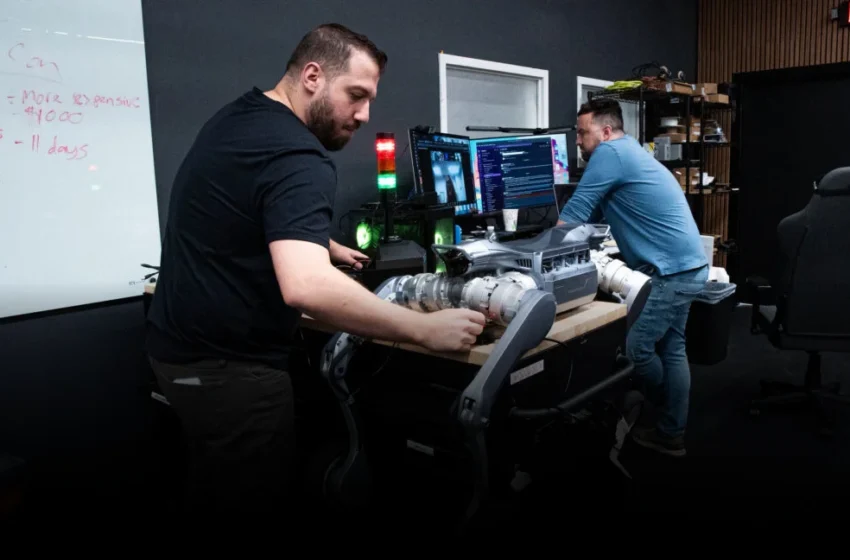
The news that RoboStore, a prominent US distributor of accessible Chinese-made robots, is shifting to domestic manufacturing on Long Island, New York, marks more than just a strategic business pivot. It is a stark symptom of a deeper, more troubling global trend: the accelerating balkanization of the technology supply chain, particularly in critical sectors like robotics. This isn’t merely a tale of a company adapting to new regulations; it’s an early indicator of how geopolitical tensions are quietly, yet profoundly, reshaping the fundamental pathways of technological progress.
The Invisible Cost of Supply Chain Reshuffling
For years, universities like Harvard and MIT, alongside tech giants such as Amazon, Nvidia, and OpenAI, quietly relied on an open global market for their foundational robotics hardware. Through distributors like RoboStore, they acquired affordable, functional quadruped and humanoid robots from Chinese firms like Unitree Robotics. More than 1,500 such units have been deployed across 150 US academic institutions and leading companies, feeding vital research and development. These weren’t exotic, bespoke machines; they were accessible, cost-effective robotics platforms that lowered the barrier to entry for complex algorithmic and mechanical experimentation.
Now, that established pipeline is being choked off. The US government’s intensifying scrutiny of foreign-made robots, ostensibly for national security, forces RoboStore to build its own. While the rhetoric often centers on securing domestic supply chains and preventing espionage, a more cynical interpretation suggests a convenient moment for protectionism. The sudden disruption undermines a functional system, and the immediate impact is a rise in hardware costs and a narrowing of accessible options for US innovators. Is the concern truly about embedded security risks, or is it an expedient means to force domestic production and prop up local industry under the guise of national security?
Innovation Bottleneck: When Accessibility Dies
The real consequence of this forced localization isn’t just a shifted manufacturing address; it’s a potential bottleneck in the pace of robotics innovation itself. Unitree’s models gained traction precisely because they were “affordable and popular,” enabling widespread experimentation and lowering the cost of failure in R&D cycles. When researchers, especially those in smaller labs or nascent startups, face higher price tags for essential robotics hardware, their ability to rapidly prototype and iterate is diminished. This directly impacts the vibrancy of the open-source robotics community, which thrives on accessible and interoperable platforms.
The incentive for the US government to pursue such a policy is multifaceted: bolster domestic manufacturing, ensure supply chain resilience, and mitigate perceived national security threats from rival nations. Yet, the timing and execution of these measures invariably benefit larger, established American robotics firms. By artificially restricting competition from affordable imports, these policies create a de facto market advantage for local producers, potentially at the expense of the very innovators they claim to protect. The immediate beneficiaries are not necessarily the end-users who now pay more, but rather the emerging domestic manufacturers who gain a protected market.
A Fragmented Future for Global Robotics
This isn’t an isolated incident; it’s a piece of a larger pattern of technological decoupling, mirroring trends observed in semiconductors and AI chips. The vision of a truly global scientific and technological commons, where researchers worldwide leverage the best tools irrespective of origin, is rapidly eroding. Each major power block now seeks to establish its own self-sufficient technological ecosystem, duplicating efforts and often producing less efficient or more expensive versions of what already exists elsewhere.
Such fragmentation carries a heavy long-term price. Collaborative innovation, often sparked by cross-pollination of ideas and shared tools, becomes more difficult. Instead of a global race to advance robotics, we risk a series of national sprints, each constrained by its own geopolitical tensions and limited resource pools. The world over, engineers and scientists are being asked to reinvent the wheel, or at least source a more expensive, geographically approved version of it. Ultimately, restricting access to diverse, cost-effective robotics platforms may secure national interests in the short term, but it risks slowing the collective human journey towards a more advanced robotic future, pushing progress further into the future. The promise of advanced robotics demands a global perspective, not an insular one.
