
Nvidia’s Infrastructure Play: A Vertical Grip on the AI Economy
- AI Infrastructure
Arjun Vedanta
- 0
- 7 minutes read
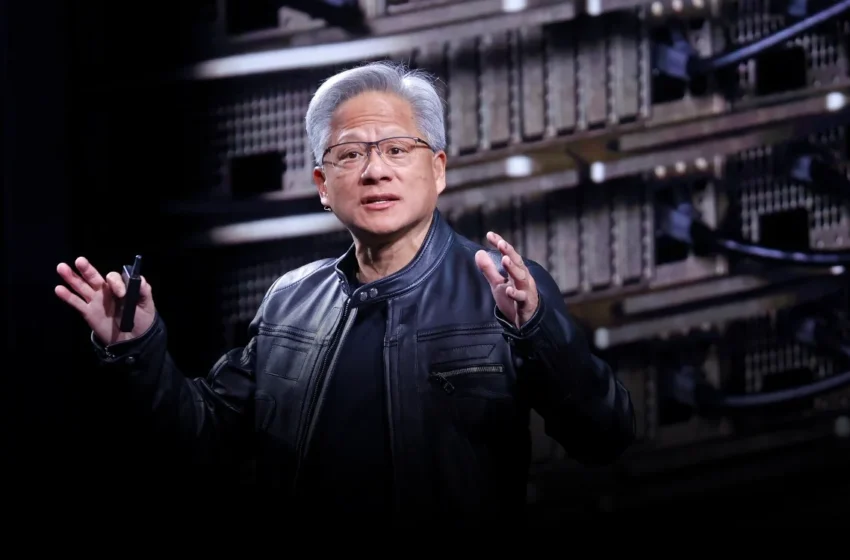
Nvidia is no longer content selling shovels to gold miners. It’s buying the land, building the mines, and perhaps even staking claims on the ore. The company’s recent partnership with Cloverleaf Infrastructure, a nascent data center development firm, is not merely another shrewd investment to “keep the AI flywheel spinning.” It signals a far more profound strategic pivot: Nvidia is aggressively moving to vertically integrate its unparalleled AI compute power with the foundational physical infrastructure required to deploy it at scale.
This isn’t about incremental growth; it’s about structural market transformation. The Wall Street Journal reports Nvidia’s investment in Cloverleaf could run to “several hundred million dollars,” adding to a $1.5 billion commitment made earlier this week to SB Energy, an OpenAI-linked data center project in Ohio. These are not small bets from a semiconductor company; they are statements of intent. Nvidia, the undisputed king of AI GPUs, is now also becoming a significant player in the construction and financing of the very data centers that consume its products, profoundly reshaping its role in the global tech ecosystem.
From Chips to Concrete: Nvidia’s Vertical Play
For decades, Nvidia operated primarily as a designer and seller of graphics processing units. Its customer base consisted of PC manufacturers, gaming console makers, and, more recently, hyperscale cloud providers and AI research labs. This model worked spectacularly well, especially as AI exploded, driving Nvidia’s valuation skyward on the back of insatiable demand for its H100 and upcoming B200 GPUs.
However, the global constraints on AI adoption are increasingly shifting from chip supply to power and physical infrastructure. Building a state-of-the-art AI data center — a veritable digital factory for intelligence — is an undertaking of immense complexity and capital. It requires vast tracts of land, reliable access to massive power grids, and specialized cooling solutions, not to mention the intricate networking and security layers.
This is precisely where Cloverleaf Infrastructure, founded in 2024 and backed by $300 million in its initial funding round, positions itself: as a critical intermediary between utility companies and data center operators, securing and preparing these pivotal sites. Nvidia’s minority stake in Cloverleaf, as reported by Reuters, changes the dynamic entirely. This isn’t just about ensuring a stable supply chain for its chips; it’s about controlling the conditions under which those chips operate.
This strategic manoeuvre hints at a future where Nvidia extends its influence far beyond silicon wafers. By becoming an investor and partner in infrastructure development, Nvidia is directly influencing where, how, and for whom these gargantuan AI compute farms are built. Consider the incentive: why now, and who benefits from this framing? Nvidia is swimming in immense profits — its market capitalization regularly exceeds that of entire national economies. Deploying these profits into fundamental infrastructure secures its long-term market dominance, ensuring that the bottleneck for AI development remains where it wants it: at the GPU level. The immediate benefit accrues to Nvidia, solidifying its position and potentially insulating it from future competitors who might struggle to secure the necessary physical foundations for their own AI ambitions. Its customers, particularly the large cloud providers who are also building their own AI infrastructure, benefit in the short term from accelerated data center construction, but could face a more formidable, vertically integrated competitor in the long run.
The AI Utility: A New Market Hegemon?
This isn’t just a simple investment; it’s a step towards becoming a vertically integrated AI utility. Imagine a scenario where Nvidia not only designs the best processors but also has a significant say in the data centers where they reside, perhaps even offering direct AI compute services. This blurs the lines between hardware vendor, cloud provider, and infrastructure developer. It raises questions about competition, market access, and the future shape of the AI industry.
For context, consider the original cloud wars, where Amazon Web Services, Microsoft Azure, and Google Cloud built vast empires by owning the compute, storage, and networking layers. Nvidia is now moving to own the foundational layer beneath even these hyperscalers, at least for AI workloads. This creates a fascinating tension: many of Nvidia’s largest customers are also its most significant competitors in the broader AI infrastructure space.
Microsoft, Google, and Amazon are all investing billions into their own custom AI chips and data center architectures. Nvidia’s direct infrastructure investments could be seen as a pre-emptive strike, locking in its ecosystem advantages. The narrative often spun in Silicon Valley suggests a benevolent hand guiding the industry forward, but this is a bare-knuckle fight for control of the next technological frontier. Nvidia’s move into infrastructure is less about altruism and more about fortifying an unassailable position in the AI compute stack. By accelerating the buildout of data centers globally, Nvidia ensures a captive market for its high-margin GPUs, while simultaneously gaining strategic insight and potential control over the next generation of AI services.
Global Implications: Beyond Silicon Valley’s Gaze
From Geneva to Singapore, the implications of this strategy resonate differently than they might within the insular world of Silicon Valley. For emerging tech hubs in Southeast Asia, the Middle East, or even Europe, access to state-of-the-art AI infrastructure is a geopolitical necessity. If a single dominant player begins to control not just the chips but also a significant portion of the pipes and power that deliver AI, it centralizes immense power.
This could accelerate the digital divide between nations that can afford to build or attract such infrastructure, and those that cannot. The global tech landscape has always been a battleground of standards and ecosystems. Nvidia’s pivot amplifies this. Its partnership with Cloverleaf and investment in SB Energy are not isolated incidents but part of a calculated, multi-pronged effort to ensure that the global AI economy runs on Nvidia’s terms, from the semiconductor foundry to the server rack, and eventually, to the end-user application.
This level of vertical integration, uncommon for a pure-play hardware company, suggests that the market for AI compute is evolving into something akin to a utility, where access and control of the underlying grid are paramount. The question for governments, regulators, and other industry players outside the immediate orbit of Nvidia’s financial prowess is clear: What does it mean when the most critical component supplier also becomes a major landlord and developer for the digital economy? The era of “picking winners” in AI infrastructure might be over; Nvidia appears determined to simply be the infrastructure, setting a new precedent for market power in the age of artificial intelligence.
