
The Tech Industry’s Blind Spot in the Looming Western US Water Crisis
- Tech
Arjun Vedanta
- 0
- 5 minutes read
The Mirage of Tech-Driven Solutions in a Drying West
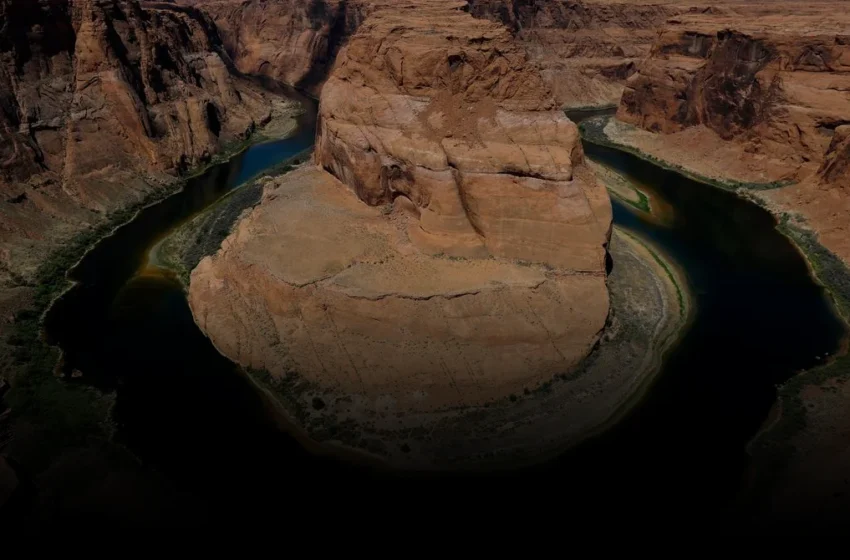
As Lake Mead and Lake Powell, the two largest reservoirs in the United States, teeter precariously close to “deadpool” levels – 1,039.6 feet and 3,519.4 feet respectively, as recently observed – the usual tech narrative of disruption and innovation falls silent. Forty million people across seven states depend on the Colorado River, and while a record-breaking El Niño might offer a temporary hydrological reprieve, climate scientists like Zeke Hausfather caution that its impact on the critical Upper Basin snowpack is modest at best. Daniel Swain points out that even abundant precipitation will be intercepted by drying soil or re-evaporated into a thirstier atmosphere, rather than replenishing the system effectively. This isn’t just a weather story; it’s a stark revelation of where our celebrated technological prowess seemingly hits a wall.
The tech industry, often lauded for its capacity to tackle “hard problems” from space travel to complex AI, has conspicuously failed to engage with the fundamental challenge of essential resource management at scale. Billions are poured into venture capital for everything from instant grocery delivery to metaverse platforms, yet the looming crisis of potable water for a significant portion of a G7 nation is met with a collective shrug. This is not for lack of sophisticated engineering capabilities, but rather a profound absence of economic incentive; solving deeply entrenched public infrastructure issues, especially those requiring massive capital and long-term societal shifts, rarely generates the exponential returns demanded by tech investors. The lack of disruptive financial models for water infrastructure means innovation capital largely bypasses it, leaving it to underfunded public utilities and contentious political haggling.
Political Drift and the Digital Distraction
The urgency of the physical crisis in the Colorado River Basin runs parallel to a political one, as a century-old compact governing water rights expires at the end of this year, leaving states scrambling and federal intervention increasingly likely. John Berggren of Western Resource Advocates puts it bluntly: “People have talked about the Colorado River crisis for decades—we’re now in it.” While policymakers in Denver and Sacramento grapple with allocating diminishing resources, the public narrative, often shaped by tech media, remains fixated on the latest smartphone or AI chatbot. This persistent digital distraction obscures the foundational vulnerabilities beneath our interconnected societies.
We talk endlessly about “smart cities,” yet these visions rarely prioritize robust, climate-resilient water infrastructure over sensor networks and connected streetlights. Existing technological solutions, such as desalination or advanced wastewater recycling, have been around for decades. Yet, they remain largely niche applications due to their immense energy demands, high operational costs, and often significant environmental footprints, underscoring a market failure to deliver economically viable, scalable options. The incentive structure here is inverted: it’s easier to debate abstractions than to invest in dirty, expensive, but utterly essential, physical infrastructure. The sharpest observation is this: for an industry that prides itself on disruption, its greatest failure may be its inability to disrupt the very systems that sustain human life itself.
A Future Defined by Fundamental Scarcity, Not Abundance
The El Niño phenomenon, even at its “ridiculously strong” current manifestation, as Daniel Swain describes it, is a temporary atmospheric blip against the inexorable tide of climate change. Projections indicate the Colorado River’s flow could shrink by as much as 30 percent by 2050. This is not a problem solvable by software updates or a new consumer gadget. This demands profound shifts in agriculture, which accounts for the vast majority of water usage in the West, urban planning, and complex interstate and international resource economics. It calls for innovation in areas like precision agriculture, leak detection for aging water infrastructure, and even novel forms of climate modeling that integrate human consumption patterns with atmospheric data in real-time to create truly dynamic water management systems.
This isn’t merely a regional problem for the American West; it’s a global template. The failure to deploy scalable, affordable technological solutions for water scarcity in a developed nation with immense capital and technical expertise signals a critical vulnerability that will reverberate in other water-stressed regions, from the Maghreb to Southeast Asia. The focus on abstract digital futures, while neglecting the tangible reality of finite natural resources, represents a dangerous misallocation of intellectual and financial capital. The future of innovation, truly impactful innovation, will not be measured by the next app, but by our collective capacity to secure fundamental resources like water and energy for a growing, climate-stressed global population. It is time for the tech industry to look beyond its screens and confront the drying world outside.
