
Google’s Slow Motion Assist Rollout Exposes Android’s Deep Fragmentation
- Software
Arjun Vedanta
- 0
- 4 minutes read
The Unspoken Cost of Android’s Openness
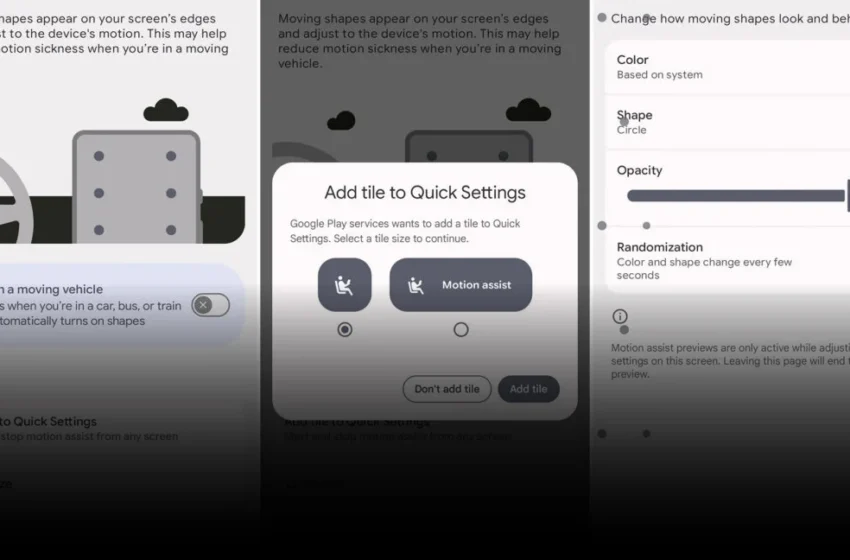
A simple overlay of moving dots to alleviate motion sickness is a smart, user-centric feature. Apple introduced Motion Cues with iOS 18 in 2024, deploying it to a vast, unified user base. Google, by contrast, began testing its functionally identical Motion Assist in 2024, yet it is only now, a full cycle later, trickling out to a select subset of Pixel phones running Android 17. This isn’t just a late arrival; it’s a stark demonstration of Android’s chronic fragmentation — a structural weakness that consistently prevents Google from delivering a cohesive, cutting-edge user experience across its own ecosystem.
The core concept is elegant: trick the brain by providing a visual anchor that synchronizes with a moving vehicle’s sensed motion, mitigating nausea. It’s a low-resource feature, a small triumph in accessibility and comfort. Yet, Google’s deployment strategy transforms it from a minor engineering challenge into a revealing case study of its platform’s inherent complexities. The very mechanism of its rollout—staged, via Play Services, limited to specific hardware and OS versions—betrays a deeper struggle for consistency that Apple simply does not face.
Play Services: Solution or Symptom?
Google Play Services is often lauded as the great unifier, allowing critical updates and features to bypass slow OEM adoption and carrier certification processes. In theory, it should accelerate feature delivery. In practice, as Motion Assist demonstrates, it can become another vector for uneven distribution. Users cannot simply download an app or update; they must wait for a server-side switch, tied to an unspecified schedule and specific device conditions. This isn’t unification; it’s a black box lottery.
Why is a feature that directly improves device usability for a significant portion of users — those prone to motion sickness — confined to a narrow band of Google’s own hardware? The official line would likely cite controlled testing, ensuring stability. But this explanation wears thin when facing Apple’s immediate, broad release of an equivalent feature. It’s difficult to avoid the conclusion that Google, despite its platform dominance, consistently struggles with the practical implications of its own OEM diversity, accumulating UX debt with every delayed, piecemeal rollout. This protracted approach not only frustrates users but also gifts Apple a narrative of superior platform consistency and user experience.
Battling Feature Parity in a Global Arena
This isn’t an isolated incident. Whether it’s advanced security features, new camera modes, or even seemingly fundamental UI enhancements, the Android ecosystem frequently sees a significant lag between Google’s announcement and widespread availability. While Android’s openness fosters innovation and device variety across different price points, it simultaneously acts as a drag on global feature parity. In markets across Asia, Africa, and Latin America, where Android reigns supreme, millions of users with non-Pixel devices or older Android versions may wait years, or never receive, features that are considered standard on rival platforms.
Google’s incentive for this controlled, Pixel-first rollout is clear: to differentiate its own hardware, bolster the Pixel brand as the vanguard of Android innovation, and gather data in a limited, controlled environment. However, this strategy ultimately hobbles the broader Android experience, creating a two-tiered system where only the most recent Pixel users get the full, latest benefits. It hands competitors like Apple a potent weapon: the ability to consistently deliver a seamless, uniform user experience the moment a new operating system version drops, without the labyrinthine delays endemic to the Android landscape. For a company that aims for universal access, its internal feature deployment often feels anything but.
