
The Invisible Sabotage: 17,000 Manipulated Antibodies Expose a Global Crisis of Research Integrity
- Tech
Arjun Vedanta
- 0
- 5 minutes read
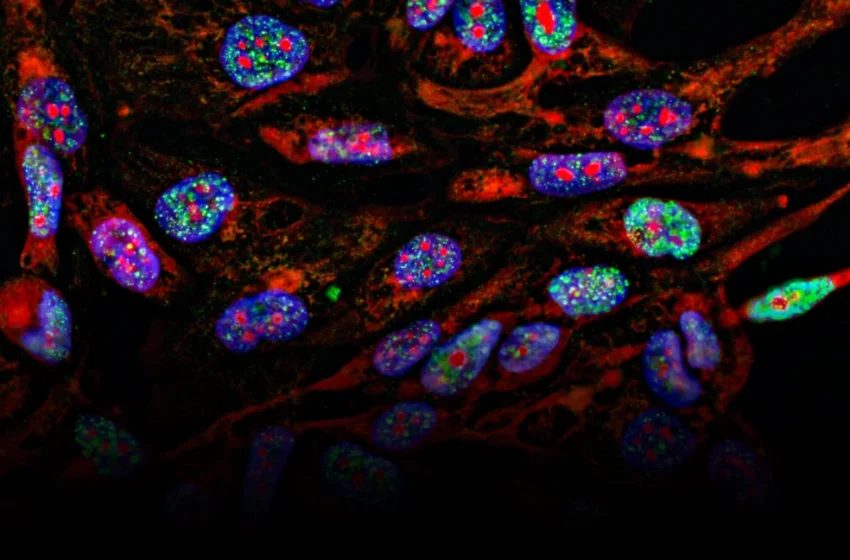
The Rot in Science’s Supply Chain
Over 17,000 commercially available antibodies, foundational reagents in biological research worldwide, are being marketed with manipulated performance data. This isn’t just an isolated incident of corporate malfeasance; it’s a seismic tremor beneath the very bedrock of scientific reproducibility and trust.
For years, a growing chorus of scientists has voiced concerns over the reproducibility crisis, a systemic failure to replicate published experimental results. Now, the discovery that the very tools used in these experiments are compromised adds a chilling new dimension. It points to a profound and systemic vulnerability in the global scientific supply chain itself.
The catalyst for this revelation came in May, when Reese Richardson, a post-doctoral researcher at Northwestern University, stumbled upon doctored images in antibody marketing materials. These weren’t subtle alterations; they involved blatant forms of image manipulation – everything from obscuring background noise to the wholesale copying and pasting of data to fabricate results. Such practices, if found in academic submissions, would swiftly lead to retraction.
Richardson’s initial finding spurred a deeper, more exhaustive search, which uncovered this staggering number of compromised products. Antibodies are crucial because they act as precise molecular keys, designed by the immune system to recognize and bind to specific proteins. In the lab, these keys unlock countless experiments, from identifying disease markers to understanding cellular pathways. Their integrity is non-negotiable.
Commercial Pressures Undermine Fundamental Science
The immediate question is: why? The drive to dominate a global, multi-billion-dollar market for research reagents, often coupled with lax oversight and a customer base that frequently lacks the resources for extensive reagent validation, creates a potent incentive for manufacturers to cut corners, or worse, outright fabricate data.
This isn’t merely a case of a few unscrupulous vendors; it’s a stark indictment of a scientific supply chain incentivized to prioritize speed and sales over the meticulous, often slow, validation processes that underpin credible research. While academic labs face intense scrutiny for data integrity, commercial suppliers appear to operate under a far lighter touch, despite selling the very materials upon which much of that academic research relies. The asymmetry is glaring.
Consider the researchers in labs from Singapore to Geneva, London to Tokyo. They order these antibodies, trusting the advertised performance, and integrate them into complex assays. When the results are inconsistent, the fault is often attributed to the experimenter, the cell lines, or the sample preparation, rarely the expensive commercial reagent itself. This introduces an insidious bias, pushing researchers down unproductive avenues and wasting precious funding.
The economic impact of the reproducibility crisis, already estimated in the billions of dollars annually due to failed experiments and wasted resources, will only compound. This episode highlights how deeply commercial pressures can infect the very foundations of scientific pursuit, far from the public eye and the usual scrutiny applied to consumer tech.
The Global Echo Chamber of Bad Data
The implications extend far beyond individual labs or even specific research fields. This isn’t a problem confined to Silicon Valley’s latest app glitch; it affects the basic tools that power drug discovery, disease diagnostics, and our fundamental understanding of human biology. When the foundational reagents are compromised, every discovery built upon them is cast into doubt.
It’s a structural flaw that demands attention from regulatory bodies and funding agencies worldwide. The onus of quality control cannot solely rest on individual researchers. There needs to be a robust, independent mechanism for validating these commercial products before they enter the research ecosystem. Without it, we are effectively building intricate scientific castles on foundations of sand, often unaware of the impending collapse.
This manipulation echoes through the scientific literature. How many published papers, seemingly robust and peer-reviewed, rely on data generated with these deceptively marketed antibodies? The scale of this problem means the problem isn’t just about avoiding future errors; it’s about potentially revisiting a significant portion of past research. The collective scientific endeavor relies on a fragile web of trust, stretching from the initial hypothesis to the final published paper. This revelation stretches that web to its breaking point.
It is a reminder that technological advancement in science is only as good as the ethical rigor of its supporting infrastructure. Unless global oversight and scientific ethics are proactively enforced throughout the commercial supply chain, the integrity of our collective knowledge will remain perpetually vulnerable.
