
Bentley’s Torcal EV: The Commoditization of Ultra-Luxury Platforms
- Electric Mobility
Arjun Vedanta
- 0
- 5 minutes read
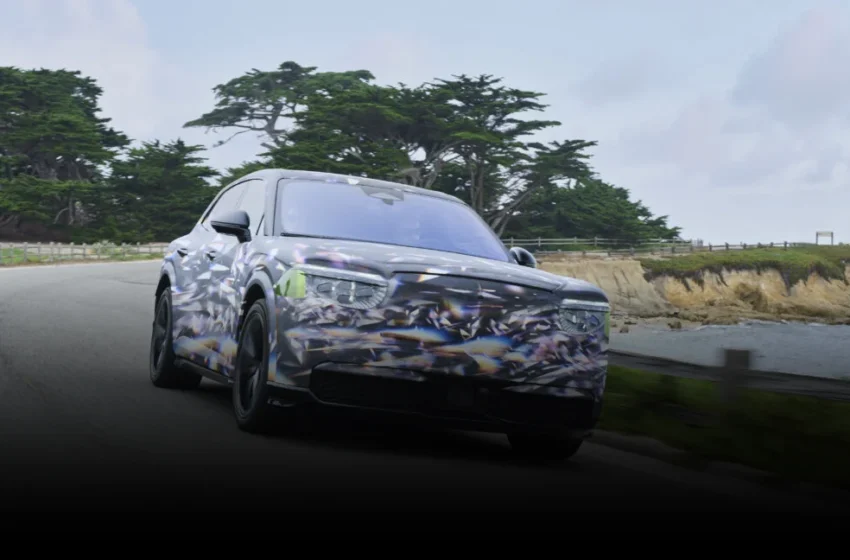
When ‘Bespoke’ Meets the Platform Economy
Bentley will soon unveil its first fully electric vehicle, the Torcal, marking a significant transition for a marque synonymous with handcrafted opulence and engineering distinctiveness. But peel back the dazzle camouflage and the promised torrent of
1,000 newton-meters of torque
, and a more subtle, yet profound, shift becomes apparent. The Torcal, despite its Bentley badging, shares substantial core engineering with the Porsche Cayenne EV. This underlying convergence, while pragmatic, exposes a central contradiction in the ultra-luxury automotive sector: how does a brand sell unique provenance when its foundational technology is increasingly a shared commodity?
The move to electric is not entirely new for Bentley; plug-in hybrids already dot its lineup, even displacing the mighty W12 in the Continental GT. Torque, after all, is a Bentley hallmark, and electric motors deliver it effortlessly. Yet, the Torcal’s very existence, built on a platform that will also underpin a Porsche, brings into sharp relief the challenges faced by prestige automakers in the electric age. The promise of 300 miles EPA range (482 km) and
400 kW DC fast-charging
are excellent, but they are also increasingly standard metrics across premium EVs, not unique selling points for a vehicle that will undoubtedly command a seven-figure price in some markets.
Martin Page, the Torcal’s product line director, stated the vehicle would exceed
850 PS (838 hp/625 kW)
but that Bentley was “not chasing four figures.” This positioning is telling. It suggests a deliberate pivot away from raw, headline-grabbing performance numbers that often define the top tier of the EV market, particularly from rivals like Tesla or even Porsche’s own higher-spec models. The incentive here is clear: Bentley aims to retain its distinct ‘effortless power’ narrative without entering a horsepower arms race that would dilute its brand identity and potentially expose the shared hardware. It’s a delicate balancing act, attempting to differentiate through refinement and perceived exclusivity, rather than brute force. But at what point does perceived exclusivity become merely a highly polished skin over a familiar skeleton?
The European Strategy of Shared Architectures
This trend is not isolated to Bentley. Volkswagen Group, which owns both Bentley and Porsche, has long championed platform sharing across its diverse portfolio, from humble Volkswagens to high-end Lamborghinis. With the advent of electric powertrains, this strategy is only intensifying. EVs inherently offer packaging efficiencies, as noted by the Torcal being shorter than a Bentayga while maintaining similar interior volume. This allows for greater design freedom and internal commonality. However, for brands like Bentley, whose entire mystique is built on a legacy of singular engineering and uncompromising luxury, the shared underpinnings present an existential challenge.
Consider the broader context. While American startups like Lucid Motors or Rivian build their platforms from the ground up, European automotive giants are consolidating. Mercedes-Benz, BMW, and Audi are all investing heavily in modular EV architectures that will serve multiple models across various brands. This approach streamlines development costs, accelerates time-to-market, and allows for economies of scale previously unimaginable for niche luxury segments. For Bentley, leveraging the advanced battery and motor technology developed by Porsche saves billions in R&D and manufacturing setup. But it also means that the core driving experience—the feel of the torque delivery, the weight distribution, the fundamental handling characteristics—will necessarily carry some of the Porsche DNA, regardless of how much Bentley engineers refine the suspension or calibrate the steering.
Defining Luxury in an Electric, Modular World
The true test for Bentley, and indeed for all ultra-luxury marques adopting shared EV platforms, will be their ability to redefine luxury in a world where fundamental performance metrics are increasingly homogenized. The Torcal’s success will hinge not on its 850 PS output or its shared
400 kW charging capability
, but on the intangibles: the scent of the leather, the tactile quality of the switchgear, the soundproofing that isolates occupants from the outside world, and the sheer visual presence of the car. These are the elements that can still be genuinely bespoke, allowing Bentley to craft an experience that transcends mere specifications.
However, the industry is moving towards a future where software, rather than hardware, increasingly defines the user experience. If the underlying operating system and core digital features are also shared, the distinctiveness erodes further. The integration of advanced driver-assistance systems (ADAS) and infotainment—often developed at a group level—poses another layer of commoditization. For a brand like Bentley, whose heritage is rooted in mechanical prowess and artisan craftsmanship, navigating this digital convergence while preserving an authentic, differentiated luxury proposition is the ultimate paradox. The Torcal isn’t just Bentley’s first EV; it’s a litmus test for how much shared engineering a truly luxury brand can absorb before its identity becomes an exercise in trim levels.
