
Bentley’s Quiet Rebellion: The Unspoken Battle for Luxury Performance in the EV Era
- Electric Mobility
Arjun Vedanta
- 0
- 5 minutes read
The Public Narrative vs. The Private Whisper
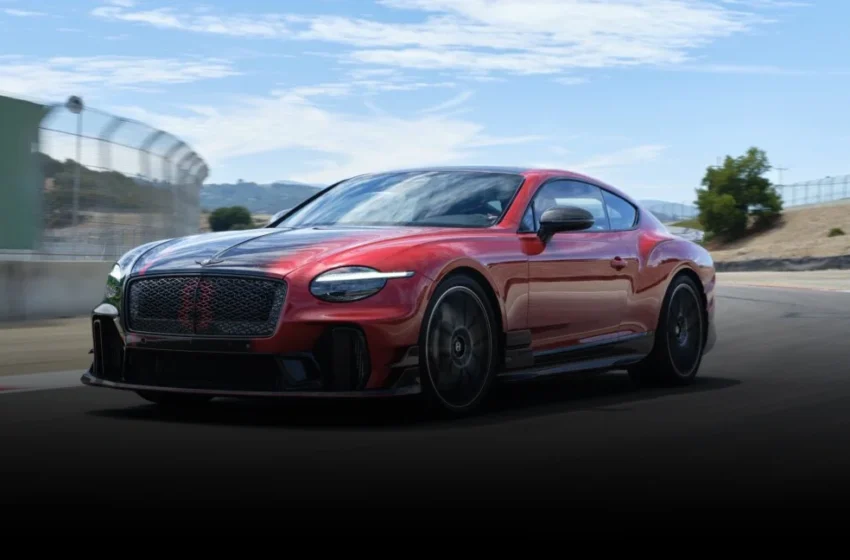
While the automotive press, myself included, fixates on Bentley’s imminent Torcal EV and the strategic pivot towards sustainability, a more telling development quietly emerges from Crewe: a hypothetical, stripped-out performance car, engineered with a defiant disregard for hybrid power, all-wheel-drive, or even rear seats. This isn’t a product announcement; it’s an internal monologue from engineers tasked with charting the future, but perhaps also mourning the past.
Bentley’s public posture is clear: embrace electrification. The new Continental GT, now with V8 plug-in hybrid power, is touted as a step forward, and the Torcal EV is positioned to attract a new generation of buyers seeking luxury fused with environmental responsibility. The narrative centers on sustainability becoming as core to the brand’s character as its high-end fit and finish. This transition, from the thunderous W12 engines to quieter, more efficient powertrains, is presented as an evolution, a necessary adaptation.
Yet, behind closed doors, some of Bentley’s ‘boffins’ are pondering a starkly different machine. A car without the additional mass of battery packs, without complex hybrid systems, and critically, without the all-wheel-drive that has characterized every new road-going Bentley since the turn of the century. This exploration suggests a yearning for a purity of driving experience, a focus on raw power-to-weight ratio and chassis dynamics over the sophisticated, insulated ride of modern luxury. It’s a conceptual nod to a visceral, almost analog past, even as the company marches toward a digital, electric future. Luxury automotive identity is at stake.
Engineering Soul in the Age of Mandates
Why would a team, whose brief is increasingly defined by reducing carbon footprint and managing battery density, entertain a concept that flies in the face of these directives? This isn’t merely about market research; it’s about the very soul of automotive engineering. The allure of a direct, unadulterated machine, free from the weight and complexity of modern hybrid systems and electronic torque vectoring, speaks to a deeply ingrained purist sensibility.
This internal monologue isn’t just about exploring options; it’s a rearguard action against the inevitable. It signals a potential internal brain drain if the pure, mechanical engineering challenge is entirely supplanted by software integration and electrical architecture. For these engineers, the joy often lies in the elegant interplay of mechanical components, the tangible sensation of power transferred directly to the road through two driven wheels.
The subtle leak of this internal thought experiment serves a dual purpose. On one hand, it’s a validation for core enthusiasts who fear the homogenizing effect of electrification – a quiet promise that the spirit of driving engagement is not forgotten. On the other, it’s a potential hedge: an exploration of what ‘performance’ could mean if the industry were to pull back from a total electrification mandate, or if a niche for unadulterated performance cars persists. It is an exploration of legacy, a test of how much of a brand’s essence can be stripped away before it ceases to be itself.
The Broader Implications for High-End Automakers
Bentley is not alone in grappling with this conundrum. Across the luxury automotive landscape, brands are facing an identity crisis. How do you preserve the ‘soul’ of a performance car when government regulations and market pressures dictate a silent, electrified future? Brands like Ferrari and Lamborghini are carefully balancing their iconic internal combustion engine heritage with the urgent demands for plug-in hybrids and eventual full EVs.
The risk is not just losing a specific engine note or gear shift; it’s about losing the visceral connection, the tangible feedback that defines a driver-centric luxury experience. Will future high-end buyers truly want the engagement of a stripped-down, two-wheel-drive machine, or will they prioritize seamless digital integration and effortless, silent power delivery? The conceptual stripped-down Bentley hints at a growing anxiety within the industry: the potential for a future where all luxury EVs, regardless of badge, converge on a similar set of attributes.
The irony is palpable: a brand built on the immense power and presence of large-displacement engines is now contemplating minimalist simplicity as a form of rebellion against its own mandated electric future. This isn’t just about what cars Bentley will build; it’s about what kind of company Bentley becomes when it does, and whether the engineers who built a century of legends will still find their passion in a world increasingly stripped of raw, mechanical drama. This is the core of the automotive electrification paradox.
