
NASA’s Mars Pivot: Helicopters Ascend as Rover Strategy Recedes
- Space
Arjun Vedanta
- 0
- 4 minutes read
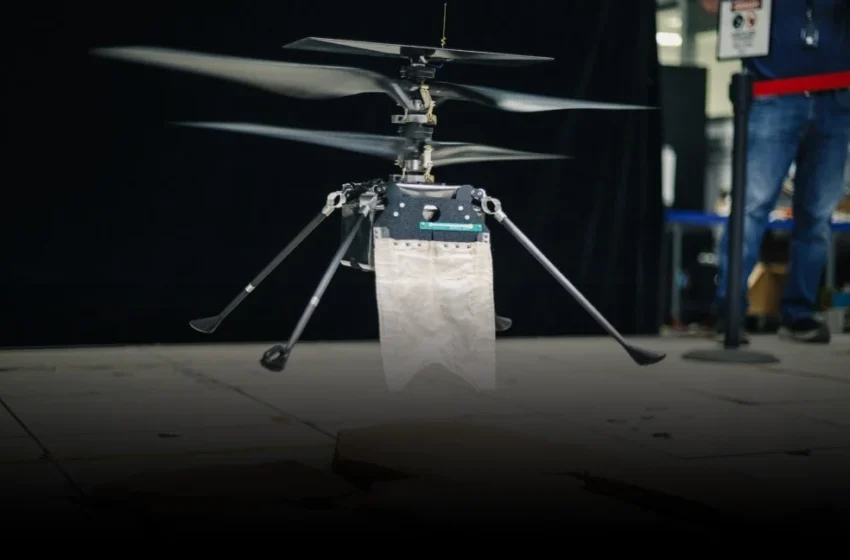
NASA’s Sudden Shift from Rovers to Rotorcraft
For an agency whose planetary exploration strategy has long been defined by the methodical crawl of rovers and the stationary vigil of landers, NASA’s latest pivot on Mars feels less like evolution and more like a tactical retreat. The news that for the first time in over three decades, there are no firm plans for new landers or rovers on the Red Planet is significant. Instead, the agency’s near-term focus has abruptly shifted to aerial drones, culminating in the ambitious SkyFall mission: a fleet of three helicopters targeting a late 2028 launch.
This isn’t merely a technological upgrade; it’s a dramatic reorientation of priorities. The successful, experimental flight of the Ingenuity helicopter in 2021 clearly demonstrated the potential of atmospheric flight on Mars. Yet, the subsequent immediate leap to an entire fleet within an aggressive launch schedule, for projects that reportedly didn’t even exist six months prior, raises questions about the strategic depth of this decision. This isn’t the carefully phased transition one typically expects from a behemoth like NASA; it’s a sprint, suggesting underlying pressures are at play.
The Pragmatic Path: Repurposed Tech and Reactive Innovation
The SkyFall mission is not a standalone venture. It’s slated to ride to Mars alongside the Space Reactor-1 “Freedom” mission, an initiative primarily focused on demonstrating nuclear electric propulsion in deep space. Crucially, SR-1 Freedom, with an estimated cost of $2.1 billion, involves repurposing the core module of the canceled Gateway lunar space station. This detail is more telling than any press release fanfare.
Repurposing a canceled lunar project for a new Mars mission underscores a deep-seated incentive: NASA needs to demonstrate continued progress and innovation for Mars exploration, but perhaps without the political and fiscal capital for entirely new, greenfield heavy-lift lander programs. This strategy allows the agency to project an image of forward-thinking agility—pioneering drone technology, demonstrating advanced propulsion—while simultaneously managing resource constraints. It’s a pragmatic solution, but one born from necessity, not necessarily from a strategic desire to entirely abandon the deep, localized scientific analysis that rovers provide. The question becomes: who ultimately benefits from this framing? NASA benefits by maintaining a narrative of leadership in space exploration and securing continued budgetary allocation, even if it means consolidating disparate initiatives into a single, high-profile package.
Uncharted Trajectories: Long-Term Implications for Mars Science
While the prospect of agile aerial reconnaissance is undeniably exciting, the shift away from new lander and rover missions carries significant long-term implications for our understanding of Mars. Surface missions offer unparalleled opportunities for in-situ scientific payload analysis, drilling for subsurface samples, and extensive, multi-year observations of geological processes. Helicopters, while capable of covering vast terrain quickly and accessing areas previously unreachable, are limited in their payload capacity and duration compared to their terrestrial counterparts.
This rapid pivot contrasts sharply with the measured, multi-decade approaches of other space agencies like ESA and CNSA, which continue to invest heavily in diverse lander and rover concepts. The skepticism here is warranted: is NASA exchanging comprehensive, granular data collection for a more superficial, albeit spectacular, aerial survey? The danger is that this quick, cost-effective solution could inadvertently hollow out the agency’s long-term capabilities for truly groundbreaking surface-based planetary exploration, diverting expertise and funding away from the complex engineering required for future sample return missions or human exploration precursors. While the elegance of autonomous flight systems and advanced robotics is undeniable, the deeper strategic architecture of Mars exploration demands more than just headline-grabbing tech demonstrations. It requires a sustained, diverse portfolio of missions that can withstand the shifting sands of political mandates and budgetary pressures.
