
NASA’s Starliner Bet: Exposing the Fragility of Commercial Space Dependency
- Space
Arjun Vedanta
- 0
- 5 minutes read
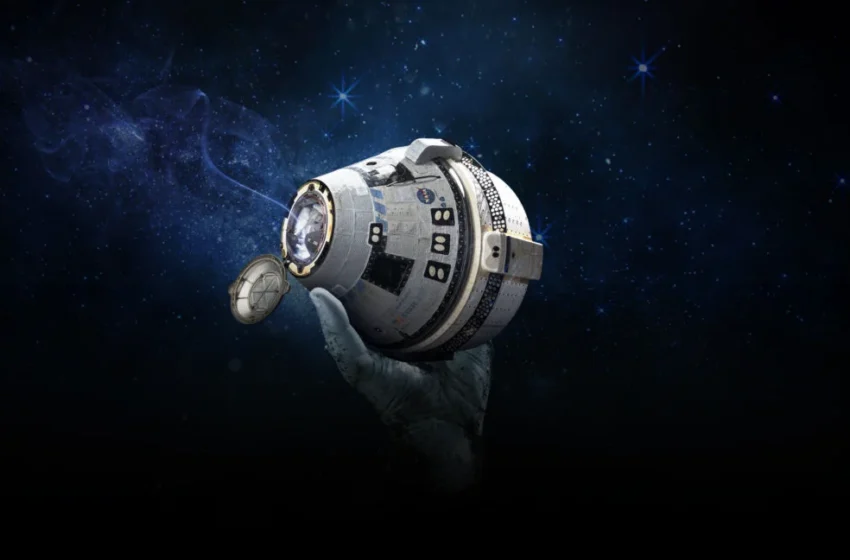
The Cost of Commercial Reliance
NASA is preparing to funnel more resources into Boeing’s beleaguered Starliner spacecraft program, not as a vote of confidence, but as an uncomfortable admission of systemic vulnerability. The space agency will order two additional Starliner crewed missions, subsidize fixes for its persistent thruster issues, and support its certification on a new launch vehicle. This sudden, substantial investment is a direct consequence of SpaceX signaling its intent to retire the Crew Dragon vehicle by 2030, if not sooner — leaving NASA with a critical vacuum in its routine astronaut transportation to Low Earth Orbit.
This isn’t a story about competition driving innovation; it’s a stark illustration of how commercial dependency can expose a space agency to the strategic whims of private enterprise. For years, the
Commercial Crew Program
was championed as a triumph of public-private partnership, promising resilient access to
LEO
through diversified providers. Yet, the moment one of those providers chooses to pivot, NASA finds itself shoring up the other, demonstrably less reliable, option. The agency is now forced to double down on a system with a
checkered record
precisely because its primary, successful system is being strategically withdrawn.
Boeing’s Bailout and SpaceX’s Pivot
Boeing’s Starliner has been a well-documented saga of delays and technical mishaps. From software glitches that nearly led to mission failure to persistent valve and thruster problems that have stalled its operational debut, the program has consistently struggled to meet expectations. Despite these hurdles, NASA’s commitment remains. The agency’s decision to order more missions and help fund the necessary repairs for Starliner’s problematic thruster systems suggests an urgency born of necessity, not merit.
This move provides Boeing with a critical lifeline, maintaining its relevance in
manned spaceflight
at a time when its reputation has taken significant hits across its aerospace divisions. For Boeing, the incentive is clear: continued government contracts guarantee revenue and buy time to resolve engineering challenges that, under truly competitive market pressures, might have led to a less forgiving outcome. It’s a peculiar kind of market force when the failing competitor gets a direct cash injection to ensure the market still exists.
Meanwhile, SpaceX’s decision to sunset Crew Dragon is less about abandoning NASA and more about a calculated strategic pivot towards its true prize:
Starship
. Crew Dragon, while incredibly successful, is fundamentally a LEO ferry. Starship, by contrast, is designed for lunar and Martian missions, capable of lifting unprecedented payloads and serving as the foundational
space infrastructure
for humanity’s expansion beyond Earth. Retiring Crew Dragon allows SpaceX to redeploy engineering talent, manufacturing capacity, and financial resources towards Starship’s ambitious development, freeing them from the long-term, perhaps lower-margin, commitment of continuous LEO crew transport. This isn’t a problem for SpaceX; it’s a reallocation of ambition.
The Illusion of Redundancy and Future Risks
The original promise of the Commercial Crew Program was to foster competition and provide NASA with multiple, independent pathways to orbit, ensuring redundancy after the Space Shuttle’s retirement. This current situation, however, exposes that redundancy as an illusion. With Crew Dragon exiting the stage, NASA is left with a single, less-than-ideal commercial option. Should Starliner encounter further significant issues, or if Boeing decides, like SpaceX, that LEO crew transport isn’t its primary strategic objective down the line, NASA will face an even more critical access gap.
The agency’s reliance on these companies for basic astronaut transportation highlights a structural vulnerability. While outsourcing was meant to free NASA to focus on deep space exploration, it simultaneously made the agency beholden to commercial priorities and timelines. The implicit assumption was that commercial partners would always view these LEO ferry services as enduring, high-priority revenue streams. SpaceX’s move reveals that this assumption was flawed, demonstrating that a company’s strategic roadmap can supersede its commitments within a government partnership, particularly when a more ambitious, capital-intensive vision like Starship emerges.
The long-term implication is clear: NASA must reconsider how it structures its relationships with commercial partners, especially for mission-critical capabilities. True redundancy cannot hinge on the indefinite commitment of commercial entities whose business models are inherently dynamic. This latest development with Starliner isn’t just about ensuring a spacecraft flies; it’s about confronting the uncomfortable reality that for all the rhetoric of competition, NASA’s pathway to orbit remains a managed dependence.
