
SpaceX’s On-Pad ‘Surgery’ Highlights New Era for Crewed Spaceflight Reliability
- Space
Arjun Vedanta
- 0
- 10 minutes read
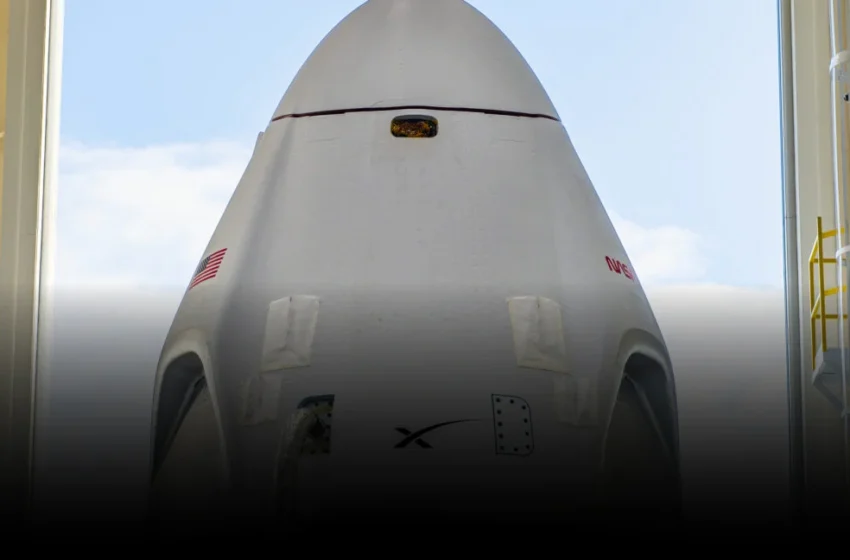
SpaceX recently launched a four-person crew to the International Space Station after an extraordinary on-pad repair of its Dragon spacecraft, an event signaling a shift in operational flexibility for human spaceflight. This precise “surgical intervention” to replace a propulsion valve demonstrates SpaceX’s distinctive agile engineering culture, which is increasingly vital for the demanding cadence and reusability goals of American space endeavors. The ability to diagnose and fix complex issues directly on the launchpad, rather than rolling back the entire vehicle, significantly impacts mission readiness and cost-effectiveness.
The crew-4 mission, originally scheduled for mid-September, saw a temporary hold-up when a “balky valve” was discovered within the Dragon spacecraft’s propulsion system, according to SpaceX’s announcement. Rather than a lengthy rollback to a processing facility, the issue was tackled directly at Space Launch Complex-40 at Cape Canaveral Space Force Station, Florida. Technicians reportedly cut into a propellant line to access and swap out the faulty component, a level of in-situ repair once almost unthinkable for a human-rated vehicle just days before launch. This quick turnaround allowed the Falcon 9 rocket to lift off at 11:10 am EDT (15:10 UTC) on Thursday, delivering its astronauts to orbit nine minutes later for their six-month expedition on the ISS.
The “Surgical” Precision of Spacecraft Repair Redefines Readiness
The decision by SpaceX to perform what they described as a “surgical intervention” on the Dragon spacecraft’s propulsion system stands out. This wasn’t a minor tweak; it involved cutting into a critical propellant line to replace a valve. Such an intricate repair, performed just ahead of a crewed launch, reflects a significant level of confidence in their engineering and procedural agility. In traditional aerospace, identifying a critical component failure this late in a launch campaign for a human-rated vehicle would almost certainly lead to a full rollback from the pad, an extensive disassembly in a clean room, and potentially months of delay.
This incident underscores SpaceX’s unique approach to rapid iteration and problem-solving. Their ability to quickly diagnose the specific issue and then execute a complex repair in a high-pressure, time-sensitive environment showcases operational maturity. It’s a testament to the integrated design of their systems and the proficiency of their technical teams, blurring the lines between factory-floor assembly and launchpad operations. This agility contributes directly to maintaining aggressive launch schedules, a cornerstone of SpaceX’s business model and NASA’s ISS resupply and crew rotation needs.
Operational Agility: A Game-Changer for Reusability and Cadence
The repair has broader implications for the economics and tempo of spaceflight. SpaceX’s Falcon 9 first stages are already renowned for their reusability, often launching multiple times within weeks. The Dragon capsule, too, is designed for multiple flights. However, for a crewed vehicle, any major anomaly traditionally triggers a much more conservative and time-consuming resolution process. The on-pad valve replacement dramatically compresses the timeline for anomaly resolution, allowing missions to proceed with minimal disruption.
This capability is paramount for NASA, which relies on commercial partners like SpaceX to regularly ferry astronauts and cargo to the International Space Station. Maintaining a high flight cadence is not merely about efficiency; it’s about sustaining a continuous human presence in low Earth orbit and meeting research objectives. The swift resolution of the valve issue ensured the crew could reach the ISS as planned, demonstrating the robust operational flexibility that underpins the public-private partnership for US human spaceflight.
Comparing traditional aerospace anomaly resolution with SpaceX’s agile approach highlights the evolving landscape:
| Aspect | Traditional Aerospace Anomaly Resolution | SpaceX’s On-Pad Approach (Crew Dragon) |
|---|---|---|
| Typical Action for Critical Fault | Vehicle rollback from pad, extensive disassembly in Horizontal Integration Facility or Vehicle Assembly Building. | In-situ diagnosis and repair directly on the launchpad. |
| Repair Environment | Controlled clean room, specialized facilities, often off-site. | On-pad, subject to environmental conditions, requiring specialized procedures. |
| Time Impact | Weeks to months of delay; significant impact on launch schedule. | Days to weeks of delay; minimal impact on overall launch cadence. |
| Logistics & Resource Burden | High: Requires complex transport, re-stacking, multiple facilities. | Lower: Focused resources on specific problem area on-site. |
| Underlying Philosophy | Emphasis on maximum testing, full system checks before integration; conservative in-flight anomaly response. | Iterative design, rapid prototyping, strong emphasis on operational recovery and on-the-fly problem-solving. |
What This Means for Future Human Spaceflight and Deep Space Missions
What this “surgical” repair capability means for future deep-space endeavors, particularly for SpaceX’s ambitious Starship program, cannot be overstated. Missions to the Moon and Mars will involve unprecedented levels of complexity, demanding self-sufficiency and the ability to repair systems far from Earth. The lessons learned from fixing a critical component on the Dragon spacecraft at Cape Canaveral directly apply to the concept of repairing systems on a lunar outpost or a Mars transit vehicle.
Future deep-space missions will necessitate a departure from the “launch it perfectly and hope it works” paradigm. Instead, a robust capability for in-space maintenance, troubleshooting, and even component replacement will be crucial. SpaceX’s demonstrated ability to perform complex, rapid, on-site repairs is a foundational step toward building the resilience required for sustained human presence beyond Earth orbit. This evolution in operational philosophy will be key to America’s leadership in the next phase of space exploration, leveraging innovative private sector solutions for national objectives.
The Federal Aviation Administration (FAA) oversees commercial launch safety, and NASA ensures astronaut safety on crewed missions. These agencies work closely with SpaceX to ensure that such agile repair protocols meet stringent safety standards. The successful launch after the repair indicates a level of regulatory and partner confidence in SpaceX’s methods.
Balancing Innovation with Inherent Risk
While SpaceX’s agile repair methods offer significant advantages, they also highlight the inherent risks of pushing the boundaries in spaceflight. Each “surgical” intervention, no matter how precise, introduces new variables and challenges in validation. This balancing act between rapid innovation and rigorous safety standards is a continuous process for the entire industry. However, the successful outcome of this particular repair demonstrates a carefully managed risk profile, backed by extensive testing and robust engineering protocols.
The detailed communication between SpaceX and NASA during such anomaly resolution is critical. It ensures that all parties are confident in the integrity of the repaired system before committing to a human launch. This collaborative oversight is essential for fostering trust in commercial space operations and for advancing the capabilities of US space technology safely.
Key Takeaways:
- SpaceX’s on-pad repair of a Dragon spacecraft propulsion valve before a crewed launch demonstrates unprecedented operational agility for human spaceflight.
- This “surgical intervention” highlights a significant shift from traditional aerospace anomaly resolution, enabling faster mission turnarounds and improved schedule reliability.
- The capability to execute complex repairs in-situ is crucial for the future of highly reusable spacecraft and ambitious deep-space missions like those planned for Starship.
- SpaceX’s approach, supported by regulatory bodies and NASA, balances rapid innovation with stringent safety standards, strengthening US leadership in commercial space.
- This incident showcases the maturity of SpaceX’s engineering and operational processes, setting a new benchmark for resilience in crewed spaceflight.
What was the nature of the repair on the SpaceX Dragon spacecraft?
SpaceX performed a “surgical intervention” to replace a balky valve within the Dragon spacecraft’s propulsion system. This involved cutting into a propellant line directly on the launchpad at Cape Canaveral to access and swap out the faulty component.
Why is an on-pad repair significant for human spaceflight?
An on-pad repair is significant because it allows critical issues to be resolved quickly without rolling back the entire vehicle, traditionally a time-consuming and costly process. This enhances mission readiness, maintains launch cadence, and reduces delays for crewed missions to destinations like the International Space Station.
How does this repair capability impact SpaceX’s future missions?
This repair capability underpins SpaceX’s strategy for rapid reusability and operational efficiency, especially for its Dragon capsules. For future ambitious endeavors like Starship missions to the Moon and Mars, the ability to perform complex, rapid, and on-site repairs will be essential for mission success and sustained human presence beyond Earth.
Does NASA approve of such agile repair methods for crewed flights?
Yes, NASA works closely with SpaceX on all crewed missions to ensure safety standards are met. The successful launch following this on-pad repair indicates that NASA, alongside regulatory bodies like the FAA, had confidence in SpaceX’s engineering, repair protocols, and the integrity of the system before the astronauts launched.
