
Starlink V3 Satellites Deployed: How Starship’s Success Reshapes US Broadband
- Tech
Arjun Vedanta
- 0
- 9 minutes read
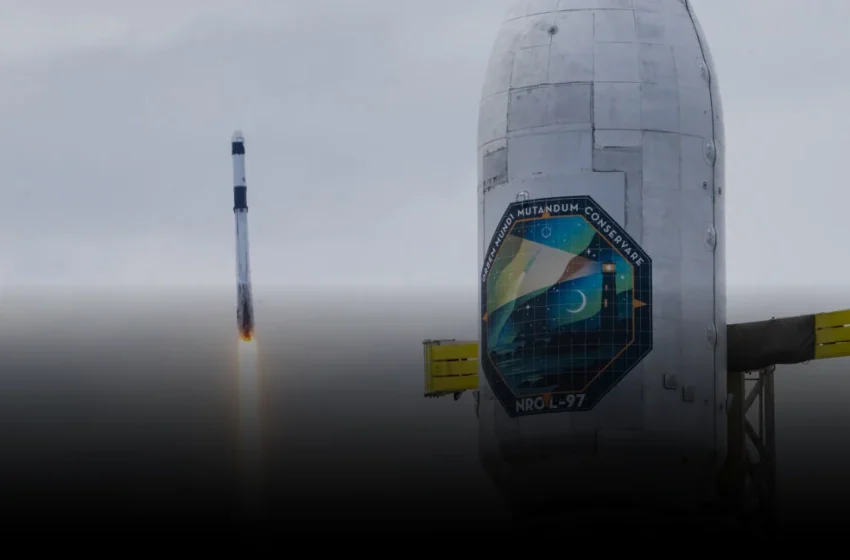
SpaceX’s Starship successfully reaching low-Earth orbit and deploying 26 next-generation Starlink V3 satellites marks a pivotal moment for US internet access. This achievement not only validates Starship’s heavy-lift capabilities but fundamentally redefines Starlink’s potential to deliver high-speed, low-latency broadband to millions of underserved Americans, accelerating the closure of the nation’s pervasive digital divide.
The deployment of these advanced satellites, following Starship’s 14th flight and its first full orbital success, significantly boosts Starlink’s network capacity and efficiency. For US consumers and businesses, particularly in rural and remote areas where traditional fiber or cable infrastructure is scarce, this means a tangible leap in internet performance. It also intensifies competition within the US broadband market, pushing established providers to innovate while raising new discussions about space sustainability and regulatory oversight by bodies like the FCC.
Starship’s Orbital Triumph and the Dawn of Starlink V3
The journey to this orbital milestone for Starship has been extensive, marked by 14 flight attempts before achieving its full mission success. Previous flights brought the colossal rocket 99 percent of the way to orbit, halted only by stringent safety protocols designed to prevent the enormous vehicle from becoming stranded in space. This recent success, therefore, represents a critical validation of SpaceX’s engineering prowess, demonstrating the vehicle’s readiness for its intended purpose: deploying large constellations of satellites.
Crucially, this flight wasn’t just about Starship reaching orbit; it was about the payload it carried. The successful deployment of 26 Starlink V3 satellites signals a major upgrade for SpaceX’s burgeoning satellite internet service. These next-generation satellites are significantly larger and more capable than their predecessors, the V1.0 and V2 Mini satellites that currently form the backbone of the Starlink constellation.
While specific technical details remain proprietary, industry analysts anticipate that Starlink V3 satellites feature enhanced antenna arrays, higher power output, and advanced inter-satellite laser links. These improvements are vital for increasing the network’s overall throughput and reducing latency, directly benefiting users on the ground with more reliable and faster connections. The ability of Starship to deploy such a large number of these larger, heavier satellites in a single launch accelerates Starlink’s expansion plans exponentially.
What Starlink V3 Satellites Mean for American Broadband
For US consumers and businesses, the advent of Starlink V3 translates into concrete improvements in broadband service, especially for those located in regions long neglected by traditional internet service providers. The digital divide in America remains a significant challenge, with millions lacking access to reliable, high-speed internet necessary for education, remote work, telemedicine, and economic participation.
The increased capacity of V3 satellites means Starlink can serve more subscribers per satellite, reducing network congestion during peak hours. Furthermore, the enhanced laser inter-satellite links allow for data to travel through space at the speed of light, bypassing terrestrial fiber bottlenecks and providing a lower-latency experience. This is particularly impactful for applications requiring quick response times, such as online gaming, video conferencing, and cloud computing.
Here’s a comparison of the general expected benefits of V3 satellites compared to previous generations:
| Feature | Previous Starlink Satellites (V1/V2 Mini) | Starlink V3 Satellites (Expected) |
|---|---|---|
| Size/Mass | Smaller (approx. 570-800 kg or 1,250-1,760 pounds) | Larger (significantly heavier, enabling more tech) |
| Capacity per Satellite | Good, but subject to peak congestion | Substantially increased, higher user density support |
| Inter-Satellite Links | Mostly laser-linked (V2 Mini), but V1 relied on ground stations | Advanced, more numerous laser links for improved routing |
| Power/Throughput | Adequate for current demand | Higher power output, significantly boosting throughput |
| Ground Coverage | Wide, but with density limitations | Denser coverage, more efficient spectrum use |
These upgrades are not merely incremental; they represent a fundamental shift in Starlink’s ability to compete with terrestrial options. For rural Americans, this could mean an end to the frustrating limitations of slower DSL or expensive, data-capped satellite options that have been the only choices available.
Navigating the New Frontier: US Market Impact and Orbital Challenges
The enhanced capabilities of Starlink V3 satellites are poised to intensify competition within the US broadband market. With superior performance and the capacity to serve a larger user base, Starlink positions itself as a more formidable alternative to incumbent cable, DSL, and fixed wireless providers. This increased competition could drive down prices, improve service quality, and accelerate broadband deployment across the country, especially in areas targeted by government initiatives like the Broadband Equity, Access, and Deployment (BEAD) program.
However, this rapid expansion also introduces challenges, particularly concerning orbital congestion and space sustainability. Launching hundreds, and eventually thousands, of larger V3 satellites means a significant increase in the number of objects orbiting Earth. This raises concerns among space agencies, astronomers, and other satellite operators about:
- Space Debris: The heightened risk of collisions, which could generate more debris and endanger operational satellites and human spaceflight.
- Orbital Traffic Management: The need for more sophisticated systems to track and manage the increasing volume of satellites to prevent conjunctions.
- Light Pollution: The reflective surfaces of large constellations can interfere with astronomical observations, a point of contention for the scientific community, particularly in the US.
- Spectrum Management: The Federal Communications Commission (FCC) plays a critical role in allocating and managing spectrum to prevent interference between different satellite systems and ground-based communications.
SpaceX has publicly committed to responsible orbital practices, including designing satellites for deorbiting at the end of their lifespan. However, the sheer scale of the Starlink constellation demands ongoing vigilance and collaboration with regulatory bodies and international partners to ensure the long-term viability of space for all users.
The Road Ahead for Starlink and US Connectivity
The successful deployment of Starlink V3 satellites by Starship marks a significant inflection point for US connectivity. Looking ahead, Starlink’s role could expand beyond direct-to-consumer broadband. The low-latency, high-capacity network could serve as vital backhaul for 5G cellular networks in remote areas, enabling wireless carriers to extend their reach without costly fiber builds. It also holds potential for specialized applications, such as connecting IoT devices in agriculture, logistics, or even supporting secure communications for government and defense agencies.
As Starship matures and its launch cadence increases, the pace of Starlink V3 deployment will accelerate, further solidifying Starlink’s position as a critical infrastructure provider in the US. This trajectory will undoubtedly foster innovation across the entire telecom sector, forcing both terrestrial and satellite competitors to adapt and enhance their own offerings. The implications for bridging the US digital divide are profound, promising better access for millions.
Key Takeaways for US Tech Professionals and Enthusiasts:
- Starship’s successful orbital launch and V3 deployment signal a significant leap in Starlink’s network capabilities.
- Starlink V3 satellites promise enhanced speeds, lower latency, and higher capacity for underserved US regions.
- This advancement will intensify competition in the US broadband market and accelerate digital inclusion efforts.
- Increased satellite deployments necessitate careful attention to orbital debris management and spectrum regulation by the FCC.
- Starlink’s expanded capabilities could support 5G backhaul, IoT, and other critical infrastructure needs across the United States.
What makes Starlink V3 satellites different from previous generations?
Starlink V3 satellites are expected to be significantly larger and heavier than their predecessors, enabling them to carry more advanced technology. This includes enhanced antenna arrays for higher bandwidth, increased power output, and improved inter-satellite laser links to provide faster speeds and lower latency directly to US users.
How will Starlink V3 impact rural internet access in the US?
The deployment of Starlink V3 satellites promises a substantial boost to internet access in rural and remote American areas. Their increased capacity means Starlink can serve more subscribers per satellite with higher performance, directly addressing the digital divide where traditional broadband infrastructure is often unavailable or inadequate.
What are the primary concerns with the large-scale deployment of Starlink V3 satellites?
The main concerns revolve around orbital congestion and space sustainability. The increased number and size of these satellites raise fears about potential collisions, the generation of space debris, light pollution affecting astronomy, and the need for robust regulatory oversight from bodies like the FCC to manage spectrum and ensure safe orbital operations.
