
AI’s Open-Source Challenge to Adobe: Artcraft Threatens Proprietary Creative Software
- Software
Arjun Vedanta
- 0
- 11 minutes read
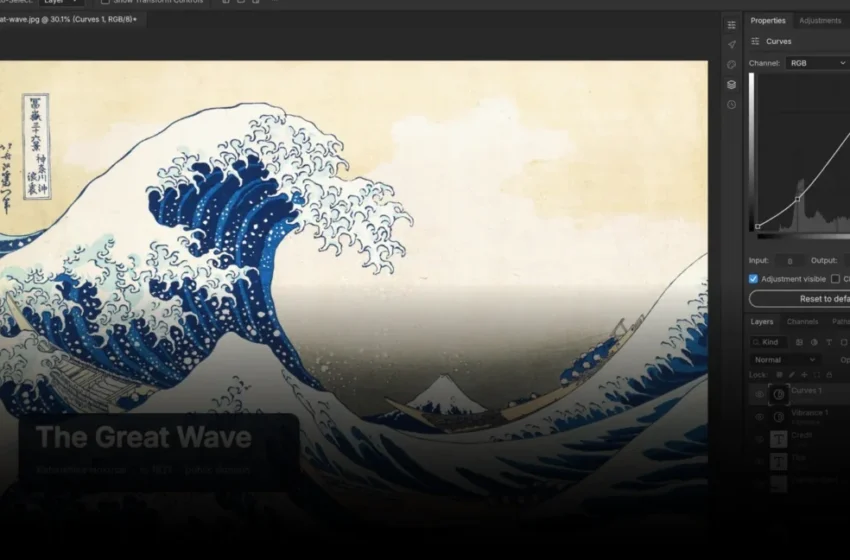
Developer Brandon Thomas, through his Artcraft project, is leveraging Anthropic’s Claude Opus 5.5 to engineer a suite of open-source applications designed as direct, ‘clean-room replacements’ for Adobe’s dominant Creative Suite, presenting a profound challenge to proprietary software and potentially democratizing professional creative tools for American artists and businesses.
This initiative directly addresses a long-standing pain point for countless US creatives, freelancers, and small agencies grappling with Adobe’s hefty subscription costs and closed ecosystem. For years, the Creative Suite has been the industry standard, making its mastery essential but financially demanding. Thomas’s audacious goal, to replicate Photoshop, Illustrator, Premiere, Lightroom, After Effects, InDesign, and Acrobat Pro with open-source alternatives, embodies a sentiment increasingly vocalized in the tech community: that the era of proprietary, closed-source software, particularly with the advent of advanced AI development tools, may be nearing its end. If successful, Artcraft could significantly lower barriers to entry for aspiring professionals and provide much-needed competition in a market long dominated by a single player.
Artcraft’s Bold Play: AI-Powered Reverse Engineering Takes Aim
Artcraft, initially conceived last year as a ‘controllable AI for artists’ focused on precise post-generation editing for AI-crafted images and videos, recently unveiled a significant pivot. Over the weekend, the project debuted a comprehensive suite of seven open-source applications. These apps are specifically engineered to mimic the user interface, tools, and overall functionality of Adobe’s most ubiquitous creative programs, promising a near-identical user experience without the proprietary lock-in.
Brandon Thomas announced on Reddit earlier this week that he utilized Anthropic’s Claude Opus 5.5, a powerful large language model, as the core engine for this ambitious undertaking. The methodology involves creating ‘clean-room replacements’ – a rigorous software development process where new code is written from scratch, based solely on observable functionality, without any direct access to or copying of the original proprietary code. This approach aims to avoid intellectual property infringement by ensuring independent creation of the replicating software. The applications are being developed in Rust, a modern systems programming language known for its performance and safety, with WebAssembly versions also available for seamless browser-based use, extending accessibility even further.
While Thomas himself acknowledges the current ‘super early alpha’ state of the software, facing initial scrutiny and valid criticisms on platforms like Hacker News regarding current shortcomings, he expresses unwavering confidence. His vision is a future where Artcraft achieves functional parity with Adobe’s offerings, providing a robust, free, and community-driven alternative that could reshape the landscape of digital creativity.
The Adobe Empire: Why This Matters for US Creatives
Adobe’s Creative Suite has long been the undisputed heavyweight champion of professional creative software in the United States. From graphic designers in New York City to filmmakers in Hollywood and marketing teams in Silicon Valley, its applications are deeply embedded into workflows across virtually every creative industry. However, this dominance comes at a cost, both literally and figuratively. The shift to a subscription-only model for its Creative Cloud suite, while providing regular updates, has placed a continuous financial burden on professionals, especially freelancers and small businesses.
A full Adobe Creative Cloud subscription can cost upwards of $60 per month, or around $720 annually, for an individual user. For a small studio with five designers, this quickly escalates to over $3,600 per year, a significant operational expense that can be prohibitive for startups or independent artists. This financial barrier restricts access to industry-standard tools, potentially stifling innovation and limiting opportunities for emerging talent in the US creative sector. Furthermore, the proprietary nature means users are locked into Adobe’s ecosystem, with limited control over their software’s evolution or potential for custom modifications.
Artcraft’s emergence as an open-source alternative offers several compelling benefits. First and foremost is the elimination of subscription fees, making professional-grade tools accessible to anyone with an internet connection. Secondly, the open-source model fosters a community-driven development process, where users can contribute to bug fixes, feature requests, and even code enhancements, potentially leading to more responsive and tailored software. This paradigm shift could democratize creative production, allowing a broader range of American voices and visions to enter the professional arena without the initial capital outlay associated with proprietary software licenses.
Legal and Ethical Minefields: The ‘Clean-Room’ Approach
The concept of ‘clean-room reverse engineering’ is central to Artcraft’s legal strategy and crucial for its long-term viability in the US market. This method involves creating new software that replicates the functionality of existing software, but crucially, without ever directly examining or copying the original proprietary source code. One team observes the behavior of the proprietary software (the ‘dirty room’), documenting its inputs, outputs, and processes. A completely separate team (the ‘clean room’), with no access to the original code or the dirty room’s internal observations, then develops new software based solely on these external functional specifications.
This careful distinction is vital under US intellectual property law, particularly copyright. Copyright protects the expression of an idea, not the idea itself, or the functional aspects of software. Therefore, while copying Adobe’s specific lines of code would be a clear infringement, independently creating software that performs the same functions, but with entirely new code, generally falls outside the scope of copyright protection. This principle has been tested and upheld in various landmark US court cases involving software interoperability.
However, the line can be fine. Accidental similarities in non-functional aspects, or the perceived copying of specific design elements that go beyond pure functionality and might be considered ‘look and feel’ or trade dress, could still invite legal challenges from a company with Adobe’s resources. The ongoing success of Artcraft will hinge not only on its technical prowess but also on its meticulous adherence to these ‘clean-room’ principles to navigate the complex legal landscape of software intellectual property in the United States.
Beyond Artcraft: The Broader Shift in AI Open-Source Software
Artcraft is not an isolated incident but rather a striking example of a burgeoning trend: the increasing role of artificial intelligence in accelerating and enhancing open-source software development. Large language models like Anthropic’s Claude Opus 5.5 and OpenAI’s GPT series are transforming how code is written, debugged, and even conceived. They act as powerful co-pilots, capable of generating boilerplate code, suggesting architectural patterns, identifying potential vulnerabilities, and even translating design specifications into functional programming constructs.
This AI-driven acceleration has profound implications for the entire software industry. It significantly lowers the entry barrier for developers, enabling smaller teams or even individual contributors like Brandon Thomas to tackle projects of immense complexity that would have been unfeasible just a few years ago. The ability of AI to interpret high-level requirements and generate functional code in languages like Rust or Python means that the bottleneck in software development is shifting from manual coding to intelligent design and rigorous validation.
This shift extends beyond creative tools. We are witnessing AI-assisted open-source projects emerging in areas like scientific computing, cybersecurity, and enterprise resource planning. This collective movement challenges established software vendors across various sectors, prompting them to re-evaluate their business models, pricing strategies, and innovation cycles. The future software landscape for US businesses and consumers will likely be characterized by a greater proliferation of high-quality, free, and adaptable open-source options, powered by increasingly sophisticated AI development tools.
What’s Next for Artcraft and US Creative Professionals?
While Artcraft’s potential is immense, its journey from ‘super early alpha’ to a truly viable professional alternative to Adobe is fraught with challenges. The most immediate hurdle is achieving comprehensive feature parity. Adobe’s Creative Suite boasts decades of development, integrating a vast array of specialized tools, robust performance optimizations, and extensive third-party plugin ecosystems. Replicating this functionality, especially across seven complex applications, requires immense dedication and sustained development effort. Bug fixing, performance tuning, and ensuring cross-platform compatibility will be critical.
The success of any open-source project also heavily relies on community engagement. Artcraft will need to cultivate a vibrant ecosystem of developers, testers, and users who contribute to its growth, provide feedback, and help build out its capabilities. This community-driven approach is a double-edged sword: it offers tremendous scaling potential but also requires strong leadership and effective coordination to maintain focus and quality. For US creative professionals, the question remains when Artcraft will reach a maturity level where it can reliably support professional workflows, including compatibility with existing file formats and seamless integration with other tools they use.
Ultimately, Artcraft represents more than just a new set of creative apps; it’s a litmus test for the future of proprietary software in an AI-powered world. Its progress will be closely watched by US tech enthusiasts, venture capitalists, and incumbent software giants alike, as it could signal a significant rebalancing of power in the digital creative economy, offering a glimpse into a future where high-end tools are universally accessible and continuously shaped by their users.
Key Takeaways
- Artcraft is an AI-powered open-source project aiming to replicate Adobe’s Creative Suite functionality using Anthropic’s Claude Opus 5.5 and Rust.
- It challenges Adobe’s proprietary dominance, offering a potentially free alternative for US creatives burdened by subscription costs.
- The project employs ‘clean-room reverse engineering’ to navigate intellectual property laws, a critical aspect for its legal standing.
- Artcraft represents a broader trend of AI accelerating open-source development, potentially disrupting established software markets.
- While currently in ‘super early alpha,’ its success could democratize professional creative tools and foster community-driven innovation.
What is Artcraft?
Artcraft is an open-source software project developed by Brandon Thomas that aims to create functional replicas of Adobe’s popular Creative Suite applications, including Photoshop and Premiere. It leverages advanced AI, specifically Anthropic’s Claude Opus 5.5, to facilitate the development of these ‘clean-room replacements’ in Rust, making professional-grade tools accessible without subscription fees.
How does Artcraft challenge Adobe?
Artcraft directly challenges Adobe’s long-standing dominance by offering free, open-source alternatives to its costly proprietary software. This initiative aims to lower the financial barrier for US creatives, freelancers, and small businesses, fostering competition and potentially providing users with more control over their software’s development through community contributions.
Is Artcraft legal?
Artcraft employs ‘clean-room reverse engineering,’ a development methodology designed to replicate functionality without copying original proprietary code, which is generally considered legal under US copyright law. However, navigating the nuances of intellectual property, especially concerning ‘look and feel,’ will be a critical ongoing legal consideration as the project progresses.
When will Artcraft be ready for professional use?
Currently described as ‘super early alpha,’ Artcraft is still in its initial stages of development and is not yet ready for professional, production-level use. It faces significant challenges in achieving full feature parity, robust performance, and extensive bug fixes compared to Adobe’s mature offerings. Its readiness for professionals will depend on sustained development, community contributions, and rigorous testing.
