
Pentagon’s Warning Lights Up Regulatory Debate for US Prediction Market Tech
- Government & Policy
Arjun Vedanta
- 0
- 10 minutes read
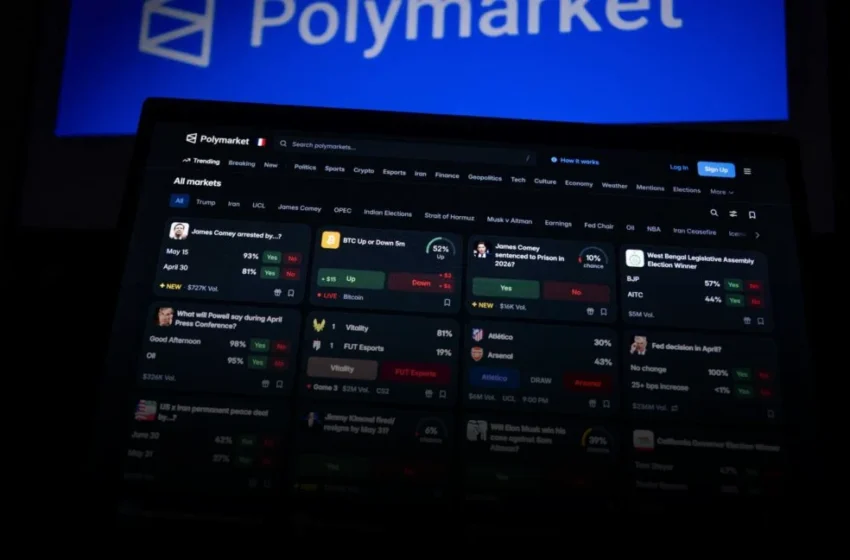
Defense Secretary Pete Hegseth recently issued a stark warning against military personnel using nonpublic information on prediction markets, signaling a significant intersection of national security concerns and the burgeoning US fintech landscape. The Pentagon’s stance highlights how even unclassified information, when aggregated on these platforms, could offer critical intelligence to adversaries, prompting a serious reevaluation of ethical boundaries and regulatory oversight within the American prediction market industry.
Hegseth’s October 20 memo, recently published by CBS News, targeted senior Pentagon leadership, Combatant Command leaders, and Defense Department field activity directors. Its subject line bluntly stated, "Do Not Compromise Military Operations for Personal Financial Gain," underscoring the severe risks associated with potentially leveraging sensitive military knowledge for personal profit. This directive not only addresses a clear ethical breach but also casts a long shadow over the future development and adoption of prediction market technologies in the US, particularly concerning how they handle sensitive data and avoid becoming vectors for intelligence gathering.
The Intersection of National Security and Algorithmic Markets
Prediction markets are sophisticated platforms where users wager on the outcome of future events, ranging from political elections and economic indicators to scientific breakthroughs and, controversially, geopolitical events or military actions. These platforms operate on the principle that collective intelligence, aggregated through betting odds, can often provide more accurate forecasts than traditional polling or expert analysis. For instance, a market might offer odds on whether a specific missile defense system will be deployed by a certain date or if a major defense contract will be awarded to an American aerospace firm.
Secretary Hegseth’s core concern, articulated in his memo, is that "Any perception that military actions or classified information are being used for personal financial gain erodes public trust, undermines national security, and provides invaluable intelligence to our adversaries." He explicitly noted, "Even if the information used is unclassified, its aggregation and pattern analysis by adversaries could reveal critical insights into our intentions, capabilities, or timelines." This statement points to a sophisticated understanding of how seemingly innocuous data points, when combined and analyzed through market behavior, can paint a strategic picture for foreign intelligence agencies, turning prediction platforms into unwitting intelligence conduits.
For the American tech community, this raises questions about the data aggregation capabilities built into many modern applications. Decentralized finance (DeFi) platforms, including some prediction markets, often emphasize transparency and open data, a philosophy that clashes directly with national security imperatives requiring strict information control. The Pentagon’s warning forces developers and platform operators to consider not just the legality of their services, but their potential for unintended consequences in a geopolitical context.
A Double-Edged Sword: Innovation vs. Risk
The allure of prediction markets for tech innovators and data scientists is undeniable. They offer a unique mechanism for forecasting, often outperforming traditional methods. Companies like Kalshi, a CFTC-regulated prediction market based in the US, have sought to legitimize and popularize the concept by focusing on verifiable, objective events. The idea is that these markets can distill diffuse knowledge into concrete probabilities, useful for businesses, policymakers, and researchers.
However, the risks highlighted by Hegseth are severe and multifaceted. Beyond the direct misuse of nonpublic information by military personnel, there’s the broader issue of market dynamics itself. If enough individuals with privileged, even unclassified, insights place bets, the shifting odds could become a leading indicator for adversaries. Imagine market odds suddenly favoring a specific outcome regarding troop movements or technology deployments – such shifts could be interpreted by sophisticated state-sponsored actors as high-confidence signals of upcoming events.
The Secretary’s memo directly states, "Prediction markets that allow wagering on sensitive geopolitical events or military actions are of particular concern." This indicates that the Department of Defense is not merely worried about classified leaks, but about the collective wisdom of thousands of individuals, some of whom might possess valuable, non-public context. The very mechanism that makes prediction markets powerful for forecasting also makes them a potential national security vulnerability.
This dilemma forces a reckoning for American tech companies. While the drive for innovation and the pursuit of new market efficiencies are hallmarks of the US tech sector, the imperative to protect national security and uphold public trust must take precedence. The Pentagon’s warning is a clear signal that the regulatory and ethical landscape for these platforms is rapidly evolving.
Regulatory Scrutiny and the Future of US Prediction Platforms
The regulatory environment for prediction markets in the United States has historically been complex and somewhat ambiguous. The Commodity Futures Trading Commission (CFTC) generally regulates futures and options markets, and some prediction markets have successfully sought CFTC approval to operate by framing their offerings as "event contracts" rather than pure gambling. However, the legal distinction between a legitimate financial instrument and an illegal gambling operation often comes down to specific contract design and underlying event characteristics.
Hegseth’s directive is likely to intensify regulatory scrutiny across the board. Lawmakers and government agencies may now look more closely at how these platforms are structured, what events they allow wagering on, and what data they collect and publish. This could lead to calls for stricter Know Your Customer (KYC) requirements, enhanced data privacy protocols, and perhaps even limitations on the types of geopolitical or military-adjacent events that can be listed on US-based platforms.
The implications for tech entrepreneurs developing decentralized prediction markets, often designed to operate with minimal central oversight, are particularly challenging. These platforms might find themselves under pressure to implement greater control mechanisms or face significant legal headwinds. The challenge lies in balancing the ethos of open, permissionless innovation with the critical need for national security safeguards, especially when dealing with data that, in aggregate, can be highly sensitive.
| Feature | Traditional Financial Markets | Prediction Markets |
|---|---|---|
| Asset Type | Stocks, bonds, commodities, currencies | Outcomes of future events |
| Primary Goal | Investment, hedging, capital formation | Information aggregation, forecasting |
| Regulatory Body | SEC, FINRA, CFTC | CFTC (for approved platforms), state gambling laws |
| Information Source | Company financials, economic data, news | Crowd wisdom, individual insights |
| Risk Profile (General) | Market volatility, credit risk | Event uncertainty, regulatory ambiguity |
Practical Takeaways for Tech Professionals and Industry Stakeholders
For US tech professionals and companies involved in the prediction market space, Hegseth’s warning serves as a crucial inflection point. The industry cannot afford to ignore the national security implications of its offerings. Moving forward, a proactive approach to compliance and ethical design will be paramount. This includes:
- Enhanced Due Diligence: Platforms must rigorously assess the potential for their markets to be exploited for intelligence gathering, even inadvertently. This might involve restricting certain types of geopolitical events or implementing stricter controls over user anonymity.
- Proactive Engagement with Regulators: Instead of waiting for new legislation, companies should actively engage with bodies like the CFTC, the Department of Defense, and other relevant agencies to help shape a regulatory framework that fosters innovation while safeguarding national interests.
- Ethical Design Principles: Developers should prioritize building platforms with built-in safeguards against the aggregation of sensitive information. This could involve exploring privacy-preserving technologies or dynamic content filtering based on national security concerns.
- Internal Compliance for Employees: Companies whose employees may have access to sensitive information, government or private sector, should reinforce internal policies regarding participation in all forms of speculative markets.
The Pentagon’s stern message is a wake-up call for the US tech sector. While prediction markets offer intriguing possibilities for aggregating information and forecasting, their potential misuse by adversaries, even through the aggregation of unclassified data, presents an unacceptable risk. The industry must now navigate a new reality where innovation must be carefully balanced with the critical demands of national security and public trust, likely leading to a more defined and potentially restrictive regulatory landscape in the years to come.
What are prediction markets?
Prediction markets are online platforms where users place wagers on the future outcome of specific events. These markets function by aggregating the collective intelligence of participants, with the odds reflecting the crowd’s perceived probability of an event occurring.
Why is the Pentagon concerned about military personnel using prediction markets?
The Pentagon is concerned that military personnel, even using nonpublic but unclassified information, could inadvertently reveal sensitive insights into military operations, intentions, or capabilities to adversaries. The aggregation of individual bets can create patterns detectable by foreign intelligence, thereby undermining national security.
How might this warning affect US tech companies developing prediction platforms?
This warning will likely lead to increased regulatory scrutiny and potentially new legislation for US tech companies operating prediction markets. Platforms may face pressure to implement stricter identity verification, restrict sensitive geopolitical events, and develop safeguards to prevent their services from becoming intelligence conduits.
