
Beyond Forceps: How AI and Advanced Imaging Could Transform Ocular Parasite Detection for US Agricultural Workers
- Artificial Intelligence
Arjun Vedanta
- 0
- 11 minutes read
The Unseen Threat: Why Advanced Diagnostics Matter for Ocular Health
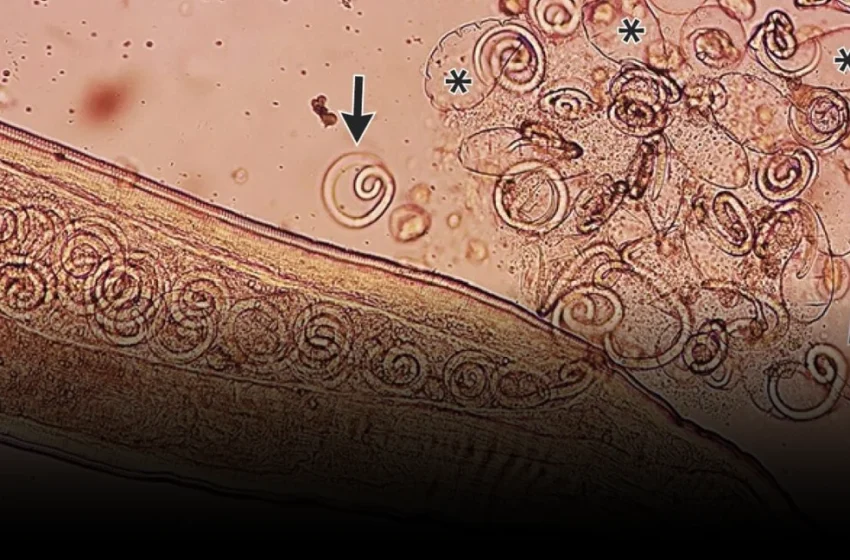
A disturbing case from South Korea, where a 71-year-old crop farmer endured two months of discomfort before doctors extracted 11 living roundworms ranging from 11 to 22 millimeters from his eyes, highlights a critical gap in early detection for rare, environmentally-linked ocular parasitic infections. While traditional methods ultimately resolved this specific medical emergency, the incident underscores the urgent need for advanced diagnostic technologies, particularly AI-powered imaging and sensor technology, to protect vulnerable populations, including America’s agricultural workforce, from similar severe health impacts.
The South Korean farmer’s ordeal, documented in a case report published in the New England Journal of Medicine, represents a terrifying scenario where a seemingly minor eye irritation escalated into a severe parasitic infestation. For two months, the man experienced redness, blurry vision, and the sensation of a foreign object in both eyes. Ophthalmologists eventually identified multiple mobile, whitish roundworms, noting enlarged blood vessels and corneal erosion. The timely extraction prevented the female worms, many of which were pregnant, from releasing larvae directly into his eyes, averting potentially catastrophic vision loss or further complications. This case, while geographically distant, serves as a stark reminder of the often-invisible biological threats faced by individuals whose professions bring them into close contact with natural environments, a reality shared by hundreds of thousands of agricultural workers across the United States.
The Diagnostic Blind Spot: Protecting America’s Agricultural Workforce
The US agricultural sector employs millions of individuals, many of whom work outdoors in conditions that can expose them to various zoonotic and parasitic agents. Unlike common occupational hazards, rare parasitic infections, especially those affecting the eyes, are often overlooked in routine medical screenings due to their infrequency and the ambiguity of early symptoms. The South Korean farmer’s two-month delay in diagnosis suggests that even with access to care, identifying such specific threats can be challenging for general practitioners or even ophthalmologists without highly specialized tools.
For US agricultural workers, barriers to timely diagnosis can be even greater, including limited access to specialized medical facilities in rural areas, language barriers, and a lack of awareness regarding unusual environmental health risks. The Centers for Disease Control and Prevention (CDC) continuously monitors zoonotic diseases, but the sheer diversity and rarity of some parasitic infections make proactive screening for every possibility impractical. This creates a diagnostic blind spot where subtle symptoms of a severe problem can go undetected for weeks or months, as seen in the South Korean case, leading to worse patient outcomes and higher treatment costs.
AI-Powered Imaging: A New Frontier in Ocular Diagnostics
Artificial intelligence offers a promising solution to bridge this diagnostic gap by enhancing the capabilities of medical imaging. AI algorithms can be trained on vast datasets of ocular scans, including images of healthy eyes and those affected by various conditions, from common infections to extremely rare parasitic infestations. This allows AI to identify subtle anomalies that might be missed by the human eye, particularly in the early stages of an infection.
For instance, an AI system could analyze high-resolution images of the conjunctiva or cornea, detecting minute changes in blood vessel patterns, tissue texture, or the presence of mobile objects that indicate parasitic activity. Such systems could potentially flag suspicious cases for immediate specialist review, significantly reducing the diagnostic lag witnessed in the South Korean farmer’s experience. Companies like Aeye Health and IDx-DR (now Digital Diagnostics) are already deploying FDA-cleared AI platforms for retinal screening, primarily for diabetic retinopathy. Expanding these platforms to include broader anomaly detection, including rare parasitic signs, represents a logical next step in their evolution.
How AI Enhances Ocular Examination
- Automated Anomaly Detection: AI can rapidly scan images for patterns indicative of inflammation, corneal erosion, or foreign bodies, often with greater consistency than human observers.
- Early Stage Identification: By analyzing subtle textural or vascular changes, AI may identify infections before visible symptoms become pronounced, allowing for earlier intervention.
- Risk Prioritization: AI can help prioritize patients requiring urgent specialist attention based on the severity and nature of detected anomalies.
- Data Integration: Combining imaging data with patient history and environmental factors to provide a comprehensive risk assessment.
Sensor Technology and Teleophthalmology: Expanding Access
Beyond static imaging, advancements in sensor technology and teleophthalmology offer further avenues for early detection, particularly for geographically dispersed populations like agricultural workers. Portable, high-resolution ocular cameras, often smartphone-attachable, enable basic eye examinations to be performed in remote field clinics or even by trained community health workers. These devices can capture images and videos that are then transmitted securely to ophthalmologists for remote review, a practice known as teleophthalmology.
This approach could be transformative for workers in rural areas of states like California, Florida, or Texas, where access to an ophthalmologist might require significant travel and time away from work. Integrated with AI, these portable systems could provide immediate preliminary analyses, identifying potential threats and guiding initial care pathways. The US Department of Agriculture (USDA) and the Occupational Safety and Health Administration (OSHA) could play a crucial role in promoting and subsidizing the deployment of such technologies, ensuring their accessibility to vulnerable worker communities. Future iterations might even see wearable sensors or smart contact lenses capable of continuous, non-invasive monitoring for changes in eye health, alerting users to potential issues before they become critical.
Comparing Diagnostic Approaches for Ocular Parasites
| Feature | Traditional Diagnosis (Clinician & Forceps) | Advanced AI & Imaging (Future Potential) |
|---|---|---|
| Initial Detection | Patient reports symptoms, clinician observes visible signs. Often delayed until symptoms are severe. | AI analyzes routine or portable imaging, potentially detecting subtle changes before patient experiences severe symptoms. |
| Speed of Diagnosis | Can be delayed due to symptom ambiguity, need for specialist appointments, and manual examination. | Rapid AI analysis of images; potential for real-time or near real-time alerts. |
| Accessibility | Requires access to an ophthalmologist and specialized clinic equipment. | Portable devices and teleophthalmology extend reach to rural/remote areas; AI can assist non-specialists. |
| Accuracy for Rare Cases | Highly dependent on clinician experience with rare presentations; potential for misdiagnosis or delayed diagnosis. | AI trained on diverse data could identify rare patterns, reducing reliance on individual clinician exposure to specific rare cases. |
| Intervention Point | Typically after significant discomfort or visible infestation, as seen in the South Korean case. | Potentially much earlier, minimizing discomfort, preventing advanced stages, and reducing invasive procedures. |
Navigating the Path to Adoption: Challenges and Opportunities
While the promise of AI and advanced imaging in ocular parasite detection is significant, several hurdles must be addressed for widespread adoption in the US. Data privacy and security, especially concerning sensitive medical images, are paramount and require robust regulatory frameworks aligned with HIPAA standards. Integrating these new technologies into existing healthcare infrastructure, which is often fragmented, will demand substantial investment and collaboration between tech developers, healthcare providers, and public health agencies.
Moreover, the cost-effectiveness of deploying specialized AI systems for extremely rare conditions needs careful consideration. A balanced approach would involve developing versatile AI platforms capable of detecting a wide range of ocular pathologies, with rare parasitic infections being one component. Pilot programs focusing on high-risk populations, such as agricultural communities, could demonstrate efficacy and refine deployment strategies, potentially supported by grants from the National Institutes of Health (NIH) or the National Institute for Occupational Safety and Health (NIOSH).
Training for healthcare professionals on how to utilize and interpret AI-assisted diagnostics will also be crucial. Technology should serve as an augmentation to, not a replacement for, clinical expertise. The goal is to empower clinicians with better tools for early detection, freeing them to focus their expertise on complex diagnostic interpretation and patient care.
Conclusion: A Proactive Vision for Ocular Health
The harrowing account of the South Korean farmer underscores that even in the 21st century, rare biological threats can lead to prolonged suffering and potential permanent damage when detection systems fall short. For the US, this serves as a compelling impetus to accelerate the adoption and development of advanced diagnostic technologies in ophthalmology. By strategically deploying AI-powered imaging, sophisticated sensor technology, and expanding teleophthalmology services, we can move towards a more proactive and equitable healthcare system that safeguards the vision and well-being of all Americans, especially those in high-risk professions like agriculture.
- Advanced diagnostic technologies, particularly AI and enhanced imaging, are crucial for early detection of rare ocular parasitic infections.
- The South Korean case highlights a diagnostic gap for environmentally-linked threats, relevant to US agricultural workers.
- AI can analyze ocular images to identify subtle anomalies, improving speed and accuracy of diagnosis.
- Portable sensors and teleophthalmology can extend expert eye care to remote or underserved agricultural communities.
- Challenges like data privacy, cost, and integration require strategic planning and collaboration for widespread adoption in the US healthcare system.
What are ocular parasitic infections?
Ocular parasitic infections are rare medical conditions where parasites, such as worms or their larvae, infest the eye or surrounding tissues. These infections can cause symptoms like redness, irritation, blurry vision, and in severe cases, lead to significant vision impairment or loss if not diagnosed and treated promptly. They are often linked to environmental exposure, particularly in areas with poor sanitation or specific agricultural practices.
How can AI assist in detecting eye parasites?
AI can assist in detecting eye parasites by analyzing high-resolution images of the eye, such as those from fundus cameras or optical coherence tomography (OCT) scans. AI algorithms can be trained to recognize subtle patterns, inflammatory responses, or even the presence of the parasites themselves, which might be missed by the human eye during a standard examination, especially in early or unusual presentations.
What role does teleophthalmology play in rural health?
Teleophthalmology plays a vital role in rural health by enabling remote eye care consultations. It allows patients in underserved areas to have their eyes examined using portable imaging devices operated by local health workers, with the images then transmitted to ophthalmologists in distant urban centers for diagnosis and treatment recommendations. This significantly reduces barriers to access, such as travel time and cost, improving health outcomes for rural populations including agricultural workers.
