
Deep Antarctic Salinity Shift Threatens US Coasts, Fisheries, and Climate Stability
- Government & Policy
Arjun Vedanta
- 0
- 9 minutes read
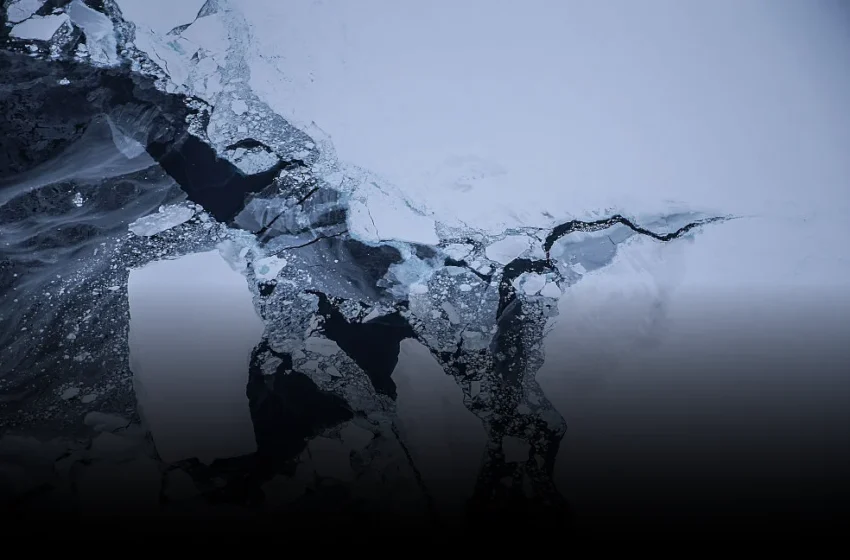
The rapid salinization of a vast deep-ocean layer encircling Antarctica, observed since 2016, poses a critical and under-recognized threat to the stability of global ocean currents, directly impacting US coastal ecosystems, fisheries, and weather patterns. This unprecedented shift in the Southern Ocean’s Antarctic Intermediate Water (AIW) signals a fundamental disruption to Earth’s climate system, with far-reaching consequences for American communities and industries.
For decades, scientific observations had indicated a trend of freshening waters in parts of the Southern Ocean, largely attributed to melting ice. However, recent findings, published by researchers including co-author Bishakhdatta Gayen of the University of Melbourne, reveal a dramatic and swift reversal: a sharp increase in salinity within the AIW. This layer, extending from approximately 2,300 to 4,000 feet deep (700 to 1,200 meters), is a crucial artery for distributing heat, carbon, oxygen, and nutrients across the planet. Its altered chemistry could destabilize the intricate dance of ocean currents that regulate climate worldwide, making the challenge of understanding and adapting to climate change even more complex for the United States.
The Unprecedented Salinity Shift in the Southern Ocean
Scientists have documented a significant and abrupt increase in salinity within the Antarctic Intermediate Water (AIW) since 2016, reversing a decades-long trend of freshening. This deep ocean layer, which spans from roughly 2,300 feet (700 meters) to 4,000 feet (1,200 meters) below the surface and rings the Antarctic continent, is a vital component of the Earth’s oceanic circulation, according to researchers. The speed of this change is particularly alarming, unfolding over mere years rather than the millennia typically associated with such profound oceanic shifts in Earth’s history.
The AIW plays a pivotal role in the global ocean conveyor belt, a complex system of currents that transports water, and consequently heat, carbon, and nutrients, across vast distances. Originating in the Southern Ocean, it spreads northward into the Indian, Pacific, and Atlantic Oceans, reaching even across the equator. As Bishakhdatta Gayen, a co-author of the research, highlights, this deep-water mass is fundamental for the distribution of essential elements that sustain marine life and influence atmospheric conditions globally. A sudden increase in its salt content, driven by rapid changes in Antarctic sea ice dynamics, means this massive water body is now denser than before, impacting its movement and interaction with other ocean layers.
How Does Deep Ocean Change Near Antarctica Impact US Shores?
The salinization of the Antarctic Intermediate Water (AIW) might seem geographically distant, but its repercussions can ripple across the globe, directly affecting the United States. Ocean currents are interconnected; changes in one region can trigger cascading effects in others. The AIW’s increased density and altered flow could influence the strength and stability of major global currents, including the Atlantic Meridional Overturning Circulation (AMOC), a critical system that transports warm water northward into the North Atlantic, significantly influencing European and North American climates.
A weakened or altered AMOC could have profound implications for US weather patterns. For instance, a reduction in the AMOC’s strength has been linked to more intense heatwaves in Europe and changes in rainfall patterns across the US East Coast. Furthermore, disruptions to these deep-water currents can alter the distribution of heat within the ocean, potentially leading to more frequent or severe marine heatwaves along US coastlines, which devastate local fisheries and coastal ecosystems. US agencies like NOAA closely monitor these global oceanic shifts due to their significant economic and ecological impact on American livelihoods.
Key potential impacts on US shores:
- Altered Weather Patterns: Changes in deep ocean currents can influence atmospheric moisture transport, affecting precipitation, drought, and extreme weather events in coastal and inland regions of the U.S.
- Marine Heatwaves: Disruptions to global heat distribution could lead to more frequent or prolonged marine heatwaves off US coasts, stressing marine life and commercial fishing stocks.
- Fisheries Disruption: Changes in temperature, oxygen levels, and nutrient availability due to altered currents directly impact fish migration, breeding grounds, and overall productivity for vital US fisheries, from the Pacific Northwest salmon to Gulf Coast shrimp.
Altered Carbon & Nutrient Cycles: A Silent Threat to US Ecosystems
Beyond influencing ocean currents, the Antarctic Intermediate Water (AIW) plays a crucial, though often overlooked, role in regulating the Earth’s carbon cycle and distributing vital nutrients. As the AIW travels across the globe, it acts as a significant conduit, transporting dissolved carbon dioxide from the atmosphere into the deep ocean, thereby helping to mitigate global warming. It also carries oxygen and nutrients essential for marine ecosystems, fueling phytoplankton growth, the base of the ocean food web.
An increase in the salinity of the AIW can alter its capacity to dissolve and transport gases like oxygen and carbon dioxide, as well as critical nutrients like nitrates and phosphates. Higher salinity can lead to changes in water density, affecting how well it mixes with other layers and how effectively it can sequester carbon in the deep ocean. This, in turn, can have direct implications for biological productivity. A less efficient carbon sink means more carbon dioxide remains in the atmosphere, exacerbating climate change. For US coastal waters and offshore ecosystems, a shift in nutrient delivery from global currents could starve or over-enrich local environments, leading to harmful algal blooms, oxygen-depleted dead zones, and significant disruptions to commercial and recreational fishing industries.
Monitoring and Mitigation: What’s the US Role?
Understanding and responding to the rapid salinization of the Antarctic Intermediate Water (AIW) necessitates a concerted effort, with the United States playing a crucial role in enhanced oceanographic monitoring and climate research. The complexity of these deep-ocean changes demands more sophisticated tools and data. Investment in advanced autonomous underwater vehicles (AUVs), deep-sea buoys, and satellite-based remote sensing technologies is essential to gather the continuous, high-resolution data needed to track these shifts accurately. US institutions like the National Oceanic and Atmospheric Administration (NOAA) and academic research centers are at the forefront of such efforts, but sustained funding and international collaboration are vital.
From a policy standpoint, the implications of a destabilized global ocean conveyor system underscore the urgency of robust climate action. While direct mitigation of deep-ocean salinity is not feasible, addressing the root causes of climate change – primarily greenhouse gas emissions – remains the most impactful strategy. The US’s commitment to reducing carbon footprints, investing in renewable energy infrastructure, and developing climate resilience strategies will be paramount. Furthermore, integrating these complex oceanographic insights into national and state-level coastal management plans is crucial for protecting vulnerable communities and industries from the cascading effects of a changing global ocean.
Understanding and mitigating the profound implications of Antarctic Intermediate Water salinization requires:
- Enhanced Ocean Monitoring: Deploying and maintaining a comprehensive network of deep-ocean sensors and observational platforms to track salinity, temperature, and current changes.
- Interdisciplinary Research: Fostering collaboration between oceanographers, climatologists, and ecologists to model and predict the far-reaching impacts on global and regional scales.
- Informed Policy: Integrating the latest scientific findings into US climate policy, coastal management strategies, and international agreements to accelerate emissions reductions.
- Public Awareness: Educating American professionals and the broader public about the critical role of global ocean systems and the interconnectedness of seemingly distant climate phenomena.
What is Antarctic Intermediate Water?
Antarctic Intermediate Water (AIW) is a vast, cold, and relatively fresh water mass that forms near Antarctica. It sinks and then spreads northward at depths of approximately 2,300 to 4,000 feet (700 to 1,200 meters) into the Pacific, Indian, and Atlantic Oceans, playing a vital role in global ocean circulation and the transport of heat, carbon, oxygen, and nutrients across the planet.
How quickly is the Southern Ocean’s salinity changing?
Since 2016, researchers have observed a rapid and significant increase in the salinity of the Antarctic Intermediate Water (AIW) layer in the Southern Ocean. This shift is occurring over just a few years, a pace that dramatically reverses previous decades of freshening and is much faster than the millennial timescales typically associated with such major oceanographic changes.
What are the primary risks of Southern Ocean salinization for the US?
The primary risks for the US include potential disruptions to global ocean currents, such as the Atlantic Meridional Overturning Circulation (AMOC), which can alter US weather patterns, increase the frequency of marine heatwaves along American coasts, and severely impact vital fisheries and marine ecosystems by changing nutrient and oxygen distribution.
