
A Billion-Dollar Bet: How the National Air and Space Museum’s New Exhibit Fuels America’s Space Ambitions
- Space
Arjun Vedanta
- 0
- 10 minutes read
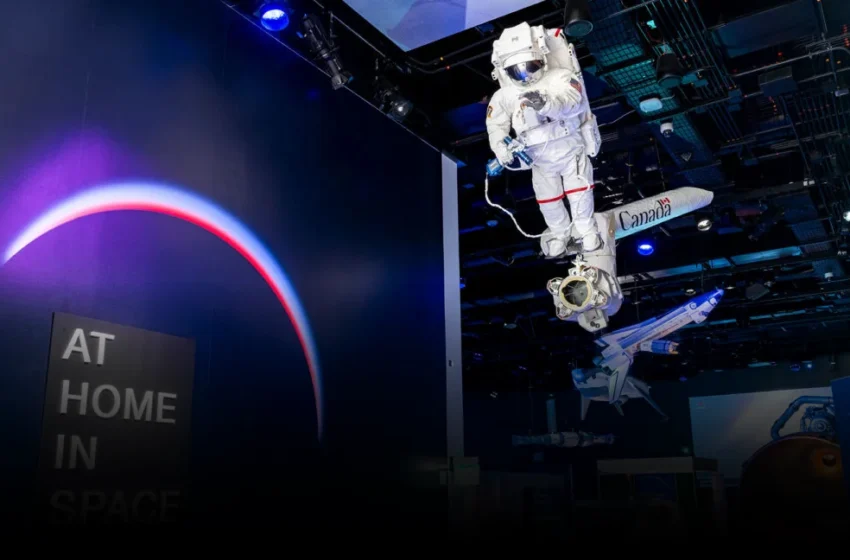
The completion of the Smithsonian’s National Air and Space Museum’s nearly $1 billion, seven-year renovation in Washington, D.C., and the debut of its ‘At Home in Space’ exhibition on October 30, signals a renewed national commitment to long-duration human spaceflight and future colonization. This significant investment isn’t just about preserving artifacts; it’s a strategic move to inspire the next wave of American engineers, scientists, and entrepreneurs critical to securing the United States’ leadership in the burgeoning space economy.
For American tech professionals and enthusiasts, this isn’t merely a cultural event; it’s a tangible representation of the nation’s ongoing, multifaceted commitment to expanding humanity’s footprint beyond Earth. The museum’s flagship building, a beacon of innovation and human achievement, now offers a modernized narrative designed to engage and educate. With its final exhibition, ‘At Home in Space,’ curated by Jennifer Levasseur, the institution directly addresses the challenges and triumphs of sustaining human presence off-world, framing ‘reaching orbit’ as a foundational step toward a broader spacefaring civilization. This narrative shift underscores a critical juncture in US space policy and private sector ambition, aiming to connect historical milestones with future frontiers.
‘At Home in Space’: More Than Just an Exhibit
The ‘At Home in Space’ gallery stands as the capstone of a monumental effort, a seven-year, approximately $1 billion endeavor that transformed the museum’s iconic building. Curator Jennifer Levasseur articulated the exhibit’s core mission: “Welcome to ‘At Home in Space’! This is the story of long-duration spaceflight in the last few decades. We generally call it ‘reaching orbit.'” This focus on sustained human presence in space moves beyond the initial thrill of exploration, delving into the practicalities of living, working, and thriving in the harsh environment of the cosmos. For US tech companies, particularly those in the commercial space sector, this framing is crucial. It validates their investments in technologies ranging from advanced life support systems and habitat modules to in-space manufacturing and resource utilization.
This exhibit is strategically timed, coinciding with a period of unprecedented activity in the US private space industry. Companies like SpaceX, Boeing, and Blue Origin are not just launching satellites; they are developing the infrastructure for permanent lunar bases, orbital habitats, and eventual Martian colonies. ‘At Home in Space’ serves as a public-facing testament to these ambitions, translating complex engineering challenges into accessible, inspiring stories. It contextualizes the massive investments by both NASA and private entities, illustrating why establishing a ‘home’ in space is not a distant dream but a tangible, achievable goal with significant economic and scientific ramifications for the United States.
A Billion-Dollar Bet: What It Means for American Tech and Innovation
The nearly $1 billion investment in the National Air and Space Museum’s renovation is more than just a refurbishment project; it’s a significant cultural and educational outlay that indirectly supports the American tech ecosystem. By modernizing and enhancing the storytelling around space exploration, the museum aims to capture the imagination of millions, especially younger generations. This directly feeds into the STEM (Science, Technology, Engineering, and Mathematics) pipeline, which is vital for maintaining US competitiveness in areas like aerospace, artificial intelligence, and advanced manufacturing.
Consider the ripple effects: a child inspired by a display of the International Space Station (ISS) might pursue a degree in aerospace engineering, ultimately contributing to a US-based space startup or a federal agency like NASA. The exhibit’s emphasis on long-duration spaceflight highlights critical areas for innovation:
- Life Support Systems: Advanced recycling, environmental controls, and biological systems.
- Radiation Shielding: Developing lightweight, effective materials for long-term crew protection.
- In-Space Manufacturing: 3D printing and robotic assembly to build structures with local resources.
- Autonomous Systems: AI-powered robots for maintenance, exploration, and construction.
These are not merely academic pursuits; they represent multi-billion-dollar market opportunities that US companies are actively pursuing. The museum’s curated narrative thus serves as a powerful, national-level marketing campaign for the future of space technology.
From Apollo to Artemis: Charting America’s Future in Deep Space
The narrative of ‘At Home in Space’ intentionally bridges the gap between the historical “race to the Moon” of the Apollo era and the current “return to the Moon and beyond” vision embodied by the Artemis program. While the exhibit focuses on the “last few decades” of orbital habitation, its underlying message resonates with America’s bolder ambitions for deep space. NASA, in collaboration with US private companies, is pushing towards establishing a sustainable human presence on the Moon as a stepping stone to Mars.
The Artemis program, for instance, relies heavily on commercial partnerships, with companies like SpaceX developing the Starship human landing system and others contributing to lunar Gateway station modules. The technologies showcased or alluded to in ‘At Home in Space’—from astronaut living quarters to scientific instrumentation designed for microgravity—are directly relevant to making these ambitious programs a reality. The exhibit effectively educates the public on the long-term strategic value of such initiatives, moving beyond flag-planting to genuine, sustained extraterrestrial settlement.
This broader context is crucial for American readers to understand the significance of the museum’s renewed focus. It’s not just about celebrating past glories, but actively shaping the future. The investment in the museum mirrors, in a cultural sense, the national investment in programs designed to keep the US at the forefront of space exploration and utilization. It’s a deliberate effort to solidify public support and understanding for complex, expensive, and long-term endeavors that will define America’s role in the 21st-century space race.
Forging the Next Generation of Space Innovators
The enduring legacy of the National Air and Space Museum has always been its ability to inspire. With the ‘At Home in Space’ exhibit, this role is amplified, particularly in fostering the talent necessary for America’s future in space. By showcasing the ingenious solutions developed for long-duration spaceflight, the museum presents a compelling case for careers in science and engineering.
Educational outreach and public engagement are paramount in building a robust pipeline of talent. The immersive experiences and detailed explanations within the renovated museum provide a hands-on introduction to the complexities of space exploration. This cultural infrastructure is just as important as research labs and launch facilities. It cultivates the foundational curiosity and passion that drive innovation, ensuring that American universities and companies continue to attract and develop world-class expertise in critical fields such such as:
- Aerospace Engineering: Designing spacecraft, propulsion systems, and habitats.
- Robotics and AI: Developing autonomous systems for exploration and maintenance.
- Materials Science: Creating new compounds for extreme space environments.
- Biotechnology: Understanding human health in microgravity and developing closed-loop ecosystems.
The museum, therefore, acts as a powerful, non-profit arm of the US space industrial base, silently recruiting and motivating the workforce of tomorrow. Its ability to frame challenging scientific and engineering problems as exciting opportunities is invaluable for sustained national progress in space.
What was the cost and duration of the National Air and Space Museum renovation?
The renovation of the Smithsonian’s National Air and Space Museum’s flagship building in Washington, D.C., took seven years to complete and cost nearly $1 billion. This extensive overhaul aimed to modernize the iconic institution and update its exhibitions.
What is the focus of the new ‘At Home in Space’ exhibit?
The ‘At Home in Space’ exhibition, which debuted on October 30, focuses on the story of long-duration human spaceflight over the past few decades. Curated by Jennifer Levasseur, it explores the challenges and innovations involved in establishing a permanent human presence in orbit and lays the groundwork for future spacefaring civilizations.
How does the museum’s renovation impact US space innovation?
The significant investment in the museum, particularly the ‘At Home in Space’ exhibit, aims to inspire future generations of American scientists and engineers. By highlighting the practicalities and challenges of living in space, it encourages interest in STEM fields critical to developing technologies for long-duration space missions, private space ventures, and programs like Artemis.
What role does the National Air and Space Museum play in US space ambitions?
The museum serves as a vital cultural and educational institution that complements federal and private sector efforts in space. It educates the public, fosters widespread interest in space exploration, and inspires the talent pipeline necessary for the United States to maintain its leadership in aerospace and contribute to the establishment of a spacefaring civilization.
Key Takeaways for America’s Space Future:
- The National Air and Space Museum’s nearly $1 billion renovation and its new ‘At Home in Space’ exhibit reflect a national strategic commitment to long-duration human spaceflight.
- The exhibit directly inspires future US talent in crucial STEM fields, essential for the American aerospace and private space industries.
- It serves as a public awareness campaign, linking historical achievements to ambitious programs like Artemis and fostering support for future lunar and Martian missions.
- The museum’s modernized narrative helps contextualize the vast investments made by both NASA and US private companies in developing the infrastructure for an off-world human presence.
- By focusing on ‘making a home’ in space, the exhibit emphasizes the technological and societal shift towards space colonization, solidifying America’s role in this frontier.
