
AI-Driven Parametric Insurance: Fast Aid, Centralized Power, New Risks
- Artificial Intelligence
Arjun Vedanta
- 0
- 5 minutes read
The Allure of Instant Payouts
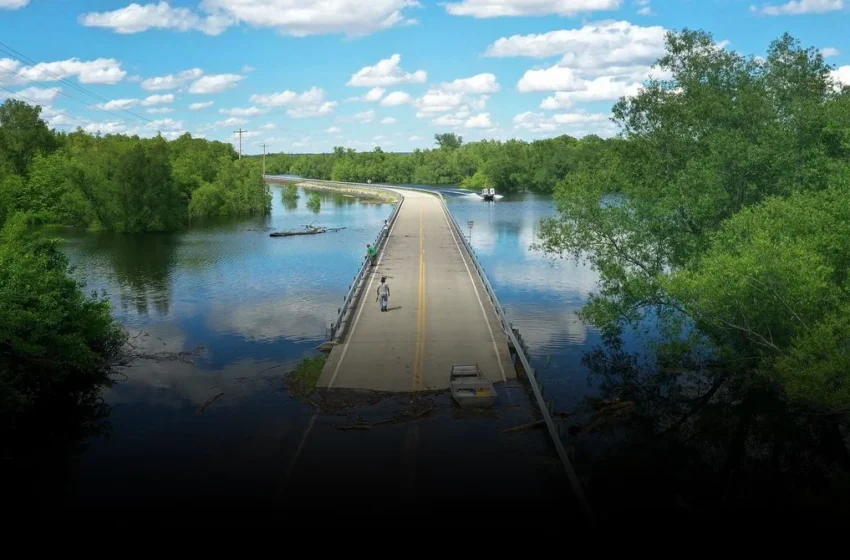
A payout is promised within days. Not weeks or months, but 72 hours. This is the seductive pitch of parametric insurance, an AI-driven model that is rapidly gaining traction in a world increasingly battered by extreme weather. For communities like those along the Mississippi River basin, devastated by the 2019 floods and left waiting for federal aid that took years to materialize, the prospect of immediate funds sounds like salvation.
Colin Wellenkamp, who leads the Mississippi River Cities & Towns Initiative, recounts how cities desperately needed modest sums—$50,000 to $100,000—in the critical first hours, but received nothing. Traditional insurance mechanisms and public relief, particularly from agencies like FEMA, are notoriously slow, requiring extensive damage assessments and bureaucratic approvals. This inertia allows destruction to compound, forcing businesses to close and residents to relocate.
Parametric insurance sidesteps this by relying on pre-defined triggers and automated payouts. If a sensor records half an inch of rain in an hour, or winds exceed 100 mph, money is disbursed. No adjusters, no lengthy claims. It’s a model that has found success in places like Malawi and Ethiopia, extended into war zones, and is now rapidly expanding into North American markets. Fremont, California, adopted a city-wide flood plan, homeowners associations near Lake Tahoe use it for wildfire, and Caribbean nations have seen tens of millions in rapid payouts after hurricanes.
For governments, it’s the lure of offloading unpredictable liabilities; for insurers like Munich Re, it’s a vast, untapped market. This is precisely why the model is exploding now: climate change has made traditional actuarial science untenable in many regions, while advances in digital infrastructure, satellite imagery, and localized sensors offer unprecedented data points for real-time risk assessment.
The Peril of Precise Triggers
Yet, the promise of algorithmic efficiency carries a dangerous flip side. The core issue lies in the “parametric cliff.” Imagine a community ravaged by 95 mph winds, suffering extensive damage, but receiving no payout because the predetermined threshold was 100 mph. Meanwhile, a nearby town experiences less actual damage but gets funds because the numerical trigger was met. This isn’t a hypothetical. New Orleans Public Schools, for instance, saw damage from Hurricane Francine in September 2024 but no compensation because the storm didn’t quite hit the specified parameters. Farmers in Ethiopia faced similar issues with drought parameters in the 2010s.
This disconnect between a measurable weather event and actual impact is a profound structural flaw. Hurricanes Harvey (Category 4 in 2017) and Katrina (Category 3 in 2005) both caused roughly $125 billion in damage, adjusted for inflation. As Matt Sedlar of the Center for Economic and Policy Research pointed out, a rigid parametric system would have offered Katrina survivors less aid, despite the storm wiping entire towns off the map.
Crucially, the datasets used by many insurers are proprietary, not public. Companies build robust networks of high-tech sensors and develop secret formulas for ultra-granular risk assessments. This allows them to maximize premiums while minimizing payouts, creating a new form of digital asset within a critical public utility. The true innovation here isn’t speed, but the perfect corporate capture of uncertainty, reframed as a service. This concentration of algorithmic governance creates an uncomfortable power imbalance, shifting control from publicly accountable bodies to opaque corporate entities.
When Algorithms Govern Disaster Aid
The implications of this shift extend beyond private markets. The Trump administration has recommended that FEMA transition to a parametric system within three years. While the National Association of Counties sees potential for speed, the move signals a concerning centralization of power in how disaster aid is determined.
FEMA’s current, albeit slow, process allows for nuance and human judgment in assessing varied damage scenarios. A parametric system, by contrast, would likely offer less wiggle room, especially concerning how parameters would be set and if there would be an appeals process. Wellenkamp himself worries about the granularity of potential FEMA metrics, noting that flooding can devastate a single city block while leaving adjacent areas unscathed. Will that count? he asks, highlighting the existential questions facing communities.
This push towards algorithmic disaster relief represents a deepening of the disaster capitalism trend, where climate change increasingly becomes a vector for financial innovation rather than an urgent call for structural change. While parametric insurance offers a desperately needed infusion of rapid capital for municipalities like East St. Louis—a predominately Black community that has seen its population plummet due to repeated flooding—it comes with a Faustian bargain. The immediate relief masks the longer-term structural implication: a future where the rules of survival in a climate-changed world are set by remote sensors, opaque algorithms, and private data monopolies, rather than localized human need or public oversight.
For now, communities are grasping at any lifeline. But as the march of parametric insurance continues, and extreme weather intensifies, the critical question remains: are we trading immediate financial relief for a less equitable, more precarious future where accountability for survival is outsourced to a black box?
