
Ancient Graves, Digital Futures: What a Dingo Burial Teaches Tech About Longevity
- AI Infrastructure
Arjun Vedanta
- 0
- 5 minutes read
The Ephemeral Nature of Digital Memory
A thousand years is an incomprehensible span in technology cycles, but it is a mere blink in the historical commitment some communities make to their most cherished assets. Recent archaeological findings from Australia, detailing an ancient dingo burial, offer a stark, unexamined counterpoint to the tech industry’s often myopic view of longevity, cultural memory, and the true cost of digital stewardship.
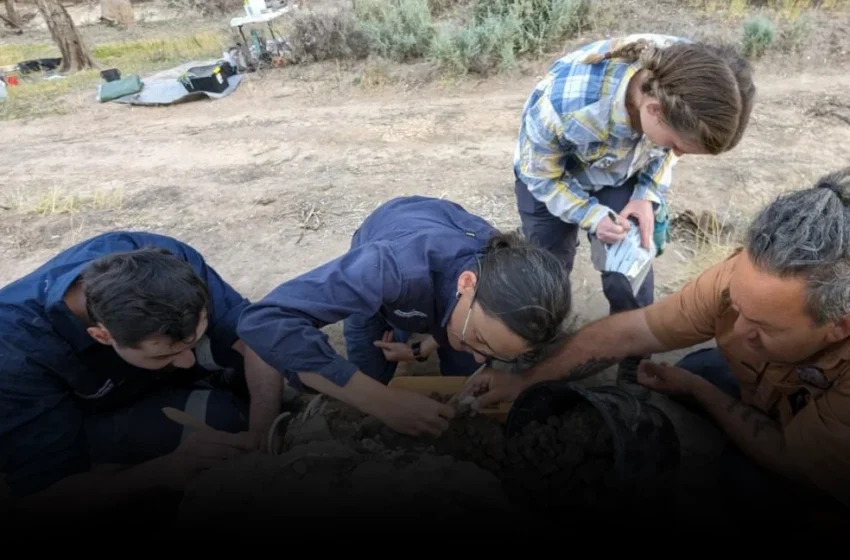
For centuries, the Barkindji people along Australia’s Baaka (Darling River) meticulously cared for a dingo’s grave. Excavated by archaeologists like Amy Way and discovered by Elder Uncle Badger Bates and Dan Witter, this millennium-old site in Kinchega National Park reveals a level of ceremonial regard and continuous upkeep usually reserved for human kin. The dingo, or garli, was not merely a pet; it was, as Way put it, ‘deeply valued and loved,’ an integral part of the community fabric, its memory sustained through generations of physical maintenance.
This profound dedication to a non-human companion’s resting place, sustained for over a thousand years, lays bare a critical contradiction in our modern digital age. We laud technological advances that generate vast oceans of data—from personal memories to scientific breakthroughs—yet we demonstrably fail to grasp, let alone execute, the long-term commitment required for its true preservation. We build digital cathedrals, but neglect their foundations.
Indigenous Wisdom and Data Stewardship
The digital realm, for all its vaunted speed and accessibility, is often a landscape of profound ephemerality. Software dependencies, proprietary formats, and rapid hardware obsolescence mean that data barely a decade old can become effectively unreadable without constant, proactive migration and emulation. Unlike a physical burial mound that subtly degrades but remains visible, a forgotten hard drive or an inaccessible cloud archive simply vanishes from consciousness, its contents rendered moot by technological progress.
Consider the staggering challenge facing cultural institutions worldwide: how to archive petabytes of digital art, historical records, and scientific research in a way that remains accessible a century from now, let alone a millennium. The incentive for tech companies, paradoxically, often leans towards planned obsolescence and subscription models rather than truly robust, future-proof stewardship. Why offer an eternal archive when a recurring revenue stream for perpetual migration is more profitable?
This isn’t merely about storage; it’s about context. The Barkindji people understood that maintaining the garli’s grave wasn’t just about protecting bones, but about sustaining a narrative, a relationship, and a communal identity. Our digital archiving, by contrast, frequently treats data as inert objects rather than living cultural artifacts, often stripping them of the very metadata and contextual frameworks that make them meaningful across generations. This is a crucial flaw in our approach to data governance.
Building a Digital Dingo Grave
The Barkindji’s enduring care for their dingo’s grave speaks to an intergenerational stewardship model that Silicon Valley, with its relentless pursuit of quarterly gains, would do well to study. It’s a testament to patience, collective responsibility, and a profound respect for memory that transcends individual lifespans. This isn’t just about maintenance; it’s about active cultural transmission, embedding the past into the living present.
In the tech world, ‘long-term strategy’ often means five years, perhaps ten. This short-sightedness results in fragmented digital landscapes, where projects are abandoned, data silos proliferate, and the promise of a collective digital heritage crumbles under the weight of commercial pressures and shifting priorities. We celebrate new algorithms and blockchain innovations for immutable ledgers, yet the *human* infrastructure—the communal commitment and shared values—necessary for their true, lasting impact often goes unaddressed. Perhaps the most skeptical observation one can make is this: a society that struggles to maintain its physical infrastructure, let alone its digital one, truly expects AI systems to inherit and interpret its sprawling, poorly organized digital legacy effectively. It’s a blind faith in technology to solve problems of human neglect.
What would it take to build a ‘digital dingo grave’ for our most precious data? It requires moving beyond simple backup solutions to developing robust, interoperable standards for digital preservation that anticipate future technological shifts. It demands investment in open-source archiving tools, decentralized storage models, and the creation of resilient data trusts that are governed by community interests rather than purely commercial ones. Imagine a future where AI, instead of merely processing transient trends, is ethically deployed to help interpret, contextualize, and proactively migrate digital heritage across evolving platforms, ensuring its legibility for the next thousand years.
This isn’t just about abstract data; it’s about the tangible cultural fabric of humanity in the digital age. Just as the Barkindji honored their garli with a burial mound that communicated deep affection and respect across generations, we must engineer our digital infrastructure with an equivalent understanding of its profound cultural and historical weight. The challenge isn’t technical, it’s existential: do we value our digital legacy enough to truly care for it, not just for ‘decades,’ but for millennia?
