
NASA’s Mars Orbit Contract: A $700M Test of Trust and Transparency
- Tech
Arjun Vedanta
- 0
- 5 minutes read
The Illusory Open Door of Space Procurement
The whispers around NASA’s latest Mars spacecraft solicitation are louder than any thruster burn, suggesting that the agency’s promise of a “full and open competition” is more performative than factual. For a program tied to the resurrection of the Mars Sample Return mission, a project that was recently shelved due to escalating costs and political headwinds, this procurement is not merely about launching hardware to another planet. It is, more critically, a crucible for the public’s faith in federal contracting and the very integrity of scientific exploration funding, especially when a staggering $700 million is on the table.
NASA’s official line, that this acquisition will proceed “as a full and open competition,” stands in stark contrast to the murmurings from industry insiders and former agency staff. These seasoned voices question whether any true competition is possible for a mission so deeply intertwined with past decisions and future political capital. The notion that any federal contract of this magnitude, especially one tied to a politically contentious mission, can genuinely be “full and open” is a charming fiction in the Beltway, but a critical failure point for engineering teams burning their bid-and-proposal budgets.
This is not just bureaucratic friction; it signals a deeper malaise. The agency’s incentive to frame this as an open competition is clear: to project an image of fiscal responsibility and fairness, thereby mitigating political backlash from the MSR cancellation. Yet, if key players perceive the outcome as predetermined, it wastes resources for other qualified aerospace firms and fundamentally undermines the principles of a meritocratic selection process, casting a long shadow over NASA’s internal governance and its commitment to scientific integrity.
Mars Sample Return: A Mission Held Hostage
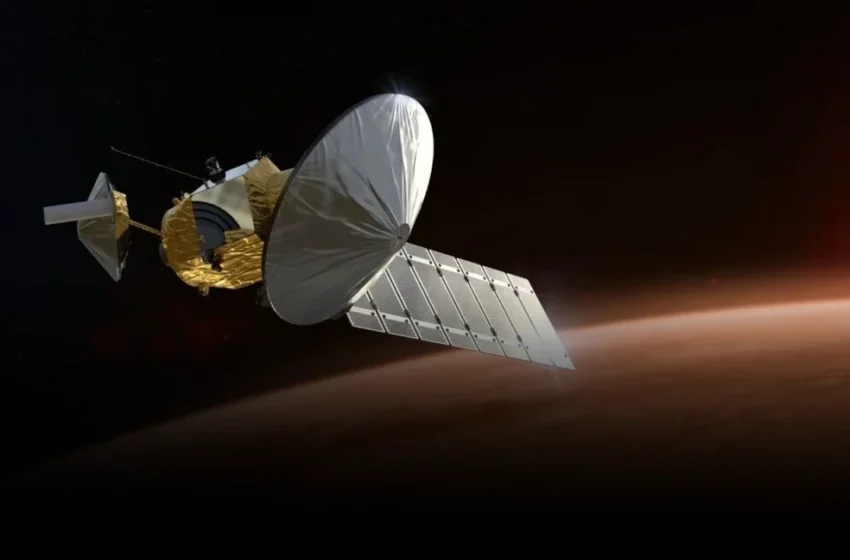
The contract’s primary objective — to develop a Mars-orbiting spacecraft acting as a communications relay — is a vital component of future Mars exploration. However, its stated potential to enable the Mars Sample Return (MSR) mission elevates its controversy. MSR, a complex and ambitious endeavor to bring Martian soil and rock samples back to Earth for scientific analysis, was recently deemed too expensive and too slow by independent review boards, leading to its effective cancellation or at least a significant rethink.
Now, this $700 million procurement appears to be a backdoor attempt to breathe new life into MSR, sidestepping the very criticisms that led to its previous demise. This maneuver forces the scientific community into a difficult position. They desperately want the MSR mission to succeed, given its enormous scientific potential to answer fundamental questions about the possibility of life on Mars. However, if that success comes at the cost of transparent, fair procurement processes, it sets a dangerous precedent, implying that critical scientific objectives can be held hostage to political expediency and pre-selected vendors.
The current situation creates a chilling effect across the space industry. Companies are forced to invest significant capital into proposals for a competition they suspect may be rigged, draining innovation from other potential deep-space or planetary science missions. This isn’t about fostering innovation; it’s about consolidating power and pathways.
Global Implications of Eroding Trust in Space Procurement
From an international perspective, the opacity surrounding NASA’s procurement processes has profound implications far beyond Washington. Space exploration is increasingly a collaborative effort, involving European Space Agency (ESA), Japan Aerospace Exploration Agency (JAXA), and others. When a lead agency like NASA signals a lack of transparency in a project so significant, it erodes the foundation of trust upon which future international partnerships are built.
Global partners contributing to shared missions or vying for related contracts watch closely. They see potential for political influence to override technical merit, which can make them hesitant to commit resources or share sensitive technologies in subsequent ventures. This isn’t just about a single Mars orbiter; it’s about the credibility of the entire American space program on the world stage, especially as new space powers emerge and a fresh lunar race begins.
The long-term damage of such a perception is quantifiable: reduced international investment, reluctance to form joint ventures, and a decline in the competitive drive that pushes the boundaries of aerospace technology. While $700 million is a substantial sum, the erosion of public and international trust—if this procurement indeed turns messy—represents a far greater, immeasurable cost to the future of space exploration and scientific collaboration.
