
Ancient Ice Reveals Humanity’s Unprecedented Power: The Urgent Call for Climate Tech Solutions
Arjun Vedanta
- 0
- 8 minutes read
Unveiling Earth’s Deep Climate History
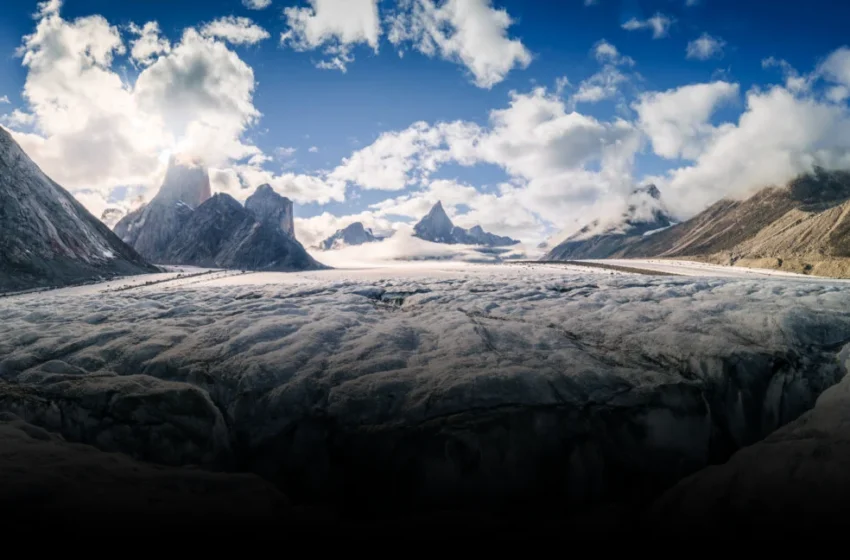
A recent study on the Barnes Ice Cap, a remnant of the vast Laurentide Ice Sheet, confirms that human-induced climate warming has dramatically altered Earth’s natural glacial cycles, halting a nascent ice age around 1960. This discovery is a stark reminder of humanity’s profound impact on planetary systems, underscoring the critical need for advanced technology and innovative solutions to address our altered climate trajectory.
The research, published in the journal Science, offers direct physical evidence that the Laurentide Ice Sheet, which once buried most of Canada under two miles (3.2 km) of ice and locked away approximately 262 feet (80 meters) of global sea level, reached its smallest size about 3,600 years ago. Crucially, the ice sheet then began re-expanding roughly 2,000 years ago, a phase interpreted by lead author Nicolás Young, a geologist at Columbia University’s Lamont-Doherty Earth Observatory, as the initial stages of a new glaciation. This natural process, however, was abruptly reversed around 1960 by human-caused climate warming, demonstrating an unprecedented level of human intervention in geological timescales.
The Technoscientific Lens on Paleoclimate
Understanding such deep climate history demands sophisticated scientific and technological tools. The ability to analyze the Barnes Ice Cap, the last surviving fragment of the Laurentide, relies on a confluence of modern glaciology, geology, and advanced data processing. Researchers utilize techniques like ice core analysis, which extracts cylindrical samples of ice that trap atmospheric gases and particulate matter from millennia past, offering a direct proxy for historical climate conditions.
Beyond physical samples, the study’s conclusions are built upon paleoclimate modeling, a field heavily reliant on high-performance computing and complex algorithms. These models reconstruct past climate states and predict future ones by integrating vast datasets—from glacial movements to atmospheric chemistry. US institutions like Columbia University and government agencies such as NASA and NOAA are at the forefront of developing these advanced computational frameworks, allowing scientists to piece together Earth’s intricate climatic puzzle with increasing precision.
| Era/Event | Approximate Timeframe | Key Characteristic |
|---|---|---|
| Laurentide Peak | Pleistocene Epoch | Covered most of Canada under 2 miles (3.2 km) of ice; locked 262 feet (80 meters) of sea level. |
| Smallest Size | ~3,600 years ago | Laurentide Ice Sheet reached its minimum extent during the Holocene. |
| Re-expansion Begins | ~2,000 years ago | Start of a natural glacial re-advance, interpreted as the opening of the next ice age. |
| Human-Caused Reversal | ~1960 | Industrial warming halted and reversed the natural glacial growth trajectory. |
The Anthropocene’s Undeniable Signature
The year 1960 serves as a powerful marker. It signifies the point at which the technological advancements and industrial activities of the modern era, particularly in the US and other developed nations, began to exert a planetary-scale influence. This era, often dubbed the Anthropocene, is characterized by human activity as the dominant force shaping Earth’s geology and ecosystems.
The rapid acceleration of greenhouse gas emissions from fossil fuel combustion—for energy, transportation, and manufacturing—since the mid-20th century has injected an unprecedented amount of CO2 and other heat-trapping gases into the atmosphere. This technological byproduct of our economic growth has now been shown to override natural climate cycles that have operated for millennia. For American readers, this highlights the profound responsibility that comes with our nation’s history as a major industrial power and a significant contributor to global emissions.
Technology as Mirror and Mitigator for US Climate Action
This discovery places an even greater imperative on climate tech solutions. Technology acts both as a mirror, reflecting the extent of our impact, and as a mitigator, providing the tools to correct our course. Remote sensing satellites, often developed and operated by US space agencies, continuously monitor glacial melt rates, sea-level rise, and atmospheric composition, providing real-time data crucial for policy decisions and future climate projections.
On the mitigation front, the US is a hub of innovation for renewable energy technologies. Advances in solar panel efficiency, wind turbine design, and grid-scale battery storage are critical for transitioning away from fossil fuels. Companies like Tesla, First Solar, and General Electric are constantly pushing the boundaries of what’s possible in clean energy generation and storage, offering viable alternatives to the energy sources that triggered this planetary reversal. Furthermore, emerging technologies such as carbon capture, utilization, and storage (CCUS) and direct air capture (DAC) are gaining traction, aiming to remove existing carbon dioxide from the atmosphere, though their scalability and cost-effectiveness remain significant challenges.
Driving Innovation and Policy in the US
The findings reinforce that technological progress, guided by informed policy, is our most potent tool against the climate crisis. In the US, initiatives like the Inflation Reduction Act, while not explicitly detailed in the source article, represent a significant federal investment in clean energy and climate resilience, stimulating domestic manufacturing and deployment of green technologies. This includes substantial tax credits for renewable energy projects, electric vehicles, and energy-efficient homes, all designed to accelerate the transition.
For US businesses, this creates both challenges and opportunities. Companies that embrace sustainable practices and invest in climate tech will likely see long-term benefits, not just in regulatory compliance but in market leadership and consumer preference. Venture capital firms are increasingly funding startups focused on everything from sustainable agriculture technology to advanced materials, recognizing the immense market potential in solving the world’s most pressing environmental issues.
Key Takeaways for Tech Professionals and Enthusiasts:
- Humanity’s Unprecedented Impact: The study definitively shows human technology and industrial output have overridden natural planetary cycles, even a looming ice age.
- Advanced Science as a Guide: Sophisticated paleoclimate research, aided by computing and remote sensing, is essential for understanding our past and current climate state.
- Critical Role of Climate Tech: Innovation in renewable energy, carbon capture, and sustainable practices is vital for mitigating human-caused warming.
- US Leadership in Solutions: American ingenuity and investment are crucial for developing and deploying the technologies needed for a sustainable future.
What is the Barnes Ice Cap?
The Barnes Ice Cap is a significant remnant of the Laurentide Ice Sheet, which was the largest ice sheet during the Pleistocene era. Located on Baffin Island in the Canadian Arctic, it serves as a crucial physical archive for studying past climate changes and glacial movements.
How did human activity reverse a natural ice age?
Human activity, primarily through the burning of fossil fuels since the mid-20th century, has rapidly increased greenhouse gas concentrations in the atmosphere. This industrial warming effect has been powerful enough to counteract and reverse the natural cooling trends that were beginning to drive the Earth toward a new glacial period, as evidenced by the re-expansion of the Laurentide Ice Sheet.
What role does technology play in addressing this reversal?
Technology is critical both for understanding the problem and for providing solutions. Scientific instruments and computing power allow researchers to reconstruct past climates and project future scenarios, while innovations in renewable energy, carbon capture, and sustainable infrastructure offer pathways to reduce emissions and mitigate the ongoing effects of human-caused climate change.
