
Anthropic’s ‘Trust Crisis’ Narrative: A Strategic Cloak for AI Regulatory Power
- Artificial Intelligence
Arjun Vedanta
- 0
- 6 minutes read
The Convenient “Trust Crisis” Narrative
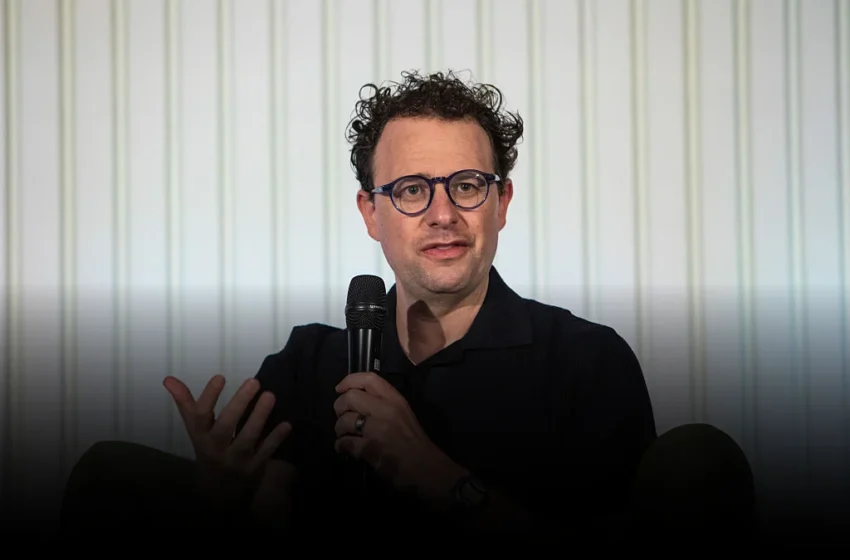
Dario Amodei, the CEO of Anthropic, insists the burgeoning public skepticism toward artificial intelligence is “fundamentally a crisis of trust,” a decades-long erosion of faith in institutions. This assertion, however, functions less as an honest assessment of public sentiment and more as a sophisticated strategic narrative, carefully deployed to shape the very regulatory landscape from which Anthropic stands to gain. The real crisis isn’t just about trust; it’s about control.
Investor Gavin Baker recently cornered Amodei, suggesting the Anthropic chief’s public warnings about AI’s existential risks have directly fueled the current backlash, particularly against crucial infrastructure like data centers. Amodei vehemently denies this, arguing his messaging balances risks and benefits, and that the public’s negative view of AI stems from a deeper, historical distrust of tech companies, governments, and corporations broadly. He even states the most accurate critique of AI companies, including his own, is their failure to deliver on grand promises.
This framing is profoundly convenient for Anthropic and other frontier AI labs. By universalizing the problem as a “crisis of trust” endemic to modern society, Amodei deflects direct responsibility for the current regulatory scrutiny back onto an amorphous, decades-old societal malaise. It shifts the blame from specific AI development practices or marketing hype to a generalized public cynicism, subtly positioning his company as a victim of inherited distrust rather than a contributor to its current form. Such a narrative allows the industry to dictate the terms of public discourse, rather than respond to legitimate concerns about their immense power.
The history of tech is replete with such moments: social media companies blaming misinformation on human nature, or platform giants attributing addiction to individual weakness. Amodei’s argument, that “ordinary people don’t trust companies, governments, or the tech industry and always suspect that we are cooking up some new way to screw them over,” resonates precisely because it contains a kernel of truth. Yet, it also neatly sidesteps the current, specific anxieties—from job displacement to the propagation of synthetic media—that large language models are actively generating, rather than merely inheriting.
Regulation: Shielding the Public, or the Players?
Amodei dismisses the “Silicon Valley shorthand” that equates regulation with regulatory capture, arguing it’s an “overly simplified picture of the world.” He contends that Anthropic’s policy proposals are carefully crafted to “disadvantage (slow down) frontier AI companies while *advantaging* smaller competitors.” This sounds laudable on the surface, a plea for fair play and genuine competition in a nascent, powerful industry. The crucial incentive here, however, is not just market equilibrium but the institutionalization of specific regulatory guardrails that only well-resourced, incumbent players like Anthropic can realistically navigate.
When Amodei asserts that “AI is *structurally* a technology that tends to concentrate power,” he isn’t wrong. The immense compute power required to train and operate state-of-the-art models inherently favors those with the deepest pockets. However, his proposed solution—carefully designed “rules of the road” that address “cyber/bio/alignment risks” while also constraining frontier companies—could easily lead to precisely the regulatory capture he claims to avoid. These rules, often complex and expensive to comply with, become formidable barriers to entry for smaller, less-funded startups.
The argument that open-weights models are “nowhere near a sufficient solution because they simply shift the concentration somewhat to those with the most compute and chip” is a shrewd move. It acknowledges the benefits of open-source AI while simultaneously justifying the need for high-bar regulation that extends beyond model weights. The result? A framework where safety and ethical considerations become intertwined with compliance costs, effectively cementing the competitive advantage of today’s dominant players under the banner of responsible innovation. This isn’t just about slowing down competitors; it’s about building a moat.
The Global Stakes of Silicon Valley’s Playbook
While the debate between Amodei and Baker plays out in the echo chambers of Silicon Valley and on X, the implications reverberate far beyond American shores. Regulators in Brussels, Singapore, and London are not merely observing; they are actively drafting their own frameworks, often with a more skeptical eye towards the self-regulation championed by US tech giants. The European Union’s AI Act, for instance, represents a more proactive, risk-based approach, directly challenging the industry’s preferred narratives about innovation versus safety.
The notion of a “crisis of trust” serves a different function in these international contexts. For US-based frontier AI companies, defining the problem as a lack of public faith rather than a lack of foresight allows them to advocate for “soft touch” governance that prioritizes their rapid development cycles. Yet, this American-centric approach often clashes with global expectations of AI ethics and accountability, where public protection is paramount and market concentration is viewed as a threat to democratic values. These conversations are less about consumer sentiment and more about digital sovereignty and economic control.
What Silicon Valley often misses, absorbed in its own internal dialogues, is how these nuanced arguments are perceived globally. To the rest of the world, Amodei’s intricate defense of Anthropic’s regulatory proposals risks looking like another iteration of industry leaders trying to write their own rules. The current flurry of AI governance discussions, from multilateral forums to national legislatures, represents a critical juncture. It is not just about mitigating abstract “risks” or restoring nebulous “trust”; it is about who holds the power to define the future of this foundational technology, and whether that power will be genuinely distributed or further entrenched in the hands of a select few. The outcome will shape not just the tech landscape, but geopolitical stability for decades.
