
Apollo 13’s Enduring Legacy: Milt Windler’s Crisis Management Principles for Modern Tech
- Tech
Arjun Vedanta
- 0
- 10 minutes read
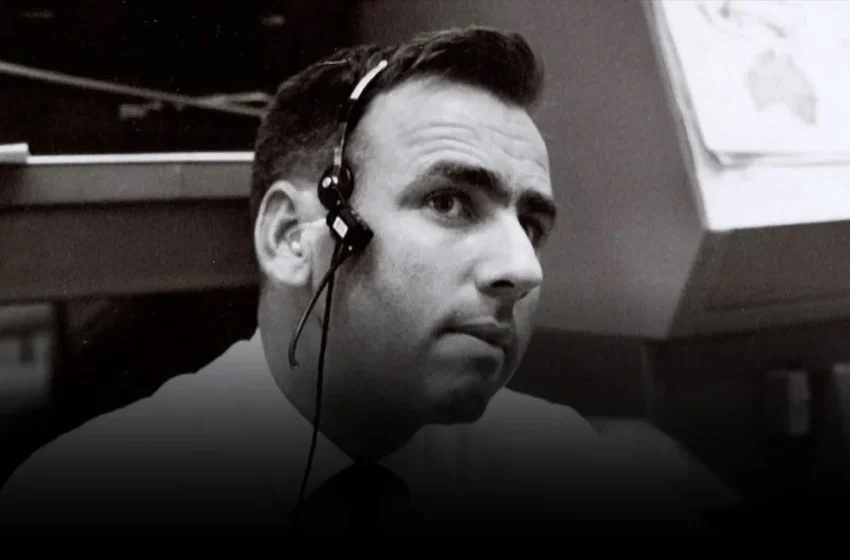
The recent passing of Milt Windler, a pivotal NASA flight director during the Apollo program and a key figure in the Apollo 13 rescue, underscores the timeless importance of disciplined incident management for the US tech sector. Windler’s leadership in the face of unprecedented engineering failure offers a foundational blueprint for modern tech professionals navigating system outages, cybersecurity breaches, and complex operational challenges.
Milt Windler, who died at 94, was one of four flight directors who orchestrated the round-the-clock efforts to safely return the Apollo 13 astronauts to Earth in 1970. This near-catastrophe, triggered by an oxygen tank explosion, transformed a lunar landing mission into a desperate struggle for survival, demanding real-time problem-solving and an unwavering commitment to engineering ingenuity. His career at NASA, starting with recovery operations for the Mercury and Gemini programs, and leading flights for Apollo 8, 10, 12, 14, 15, and the Skylab missions, cemented his role in establishing operational excellence that resonates powerfully in today’s high-stakes tech landscape.
The Apollo 13 Crucible: Forging Modern Incident Response
The Apollo 13 mission was a masterclass in incident response under extreme pressure, setting a benchmark for handling critical system failures. NASA’s famed Mission Control, under the guidance of leaders like Windler, demonstrated an unparalleled capacity for diagnostics, resource optimization, and rapid decision-making, a methodology that modern tech organizations strive to emulate.
When the ‘Houston, we’ve had a problem’ call came in, the Mission Control team immediately shifted from mission execution to crisis management. This involved isolating the problem, evaluating immediate threats, and devising on-the-fly solutions with extremely limited onboard resources. It was a live, global debugging session where human lives were the ultimate stake, forcing engineers to improvise with what they had, a scenario familiar to any SRE (Site Reliability Engineer) battling a production outage.
Today’s tech companies, from cloud providers like Amazon Web Services (AWS) and Microsoft Azure to major software-as-a-service (SaaS) platforms, frequently activate ‘war rooms’ or incident command centers when facing critical system failures. These modern operations draw directly from NASA’s playbooks, emphasizing rapid communication, clear roles, and data-driven diagnostic processes. The goal, as in Apollo 13, is to restore service, mitigate impact, and prevent recurrence, all under intense public and internal scrutiny.
What Lessons Does NASA’s Mission Control Offer Silicon Valley?
Milt Windler’s tenure at Mission Control underscored several principles that remain profoundly relevant for US tech professionals today:
Redundancy and Resilient System Design
Apollo 13 highlighted the absolute necessity of redundancy and designing systems that can withstand partial failures without total collapse. The damaged Service Module meant the Command Module’s systems were severely compromised, forcing the crew to use the Lunar Module as a ‘lifeboat’ – a testament to unforeseen secondary uses for built-in redundancy.
In modern tech, this translates directly to architectural patterns like multi-region cloud deployments, fault-tolerant distributed systems, and robust disaster recovery plans. Companies like Netflix, with its Chaos Engineering approach, actively test the resilience of their systems by injecting failures, learning from the lessons hard-won by missions like Apollo 13 to build inherently more stable and reliable services.
Empirical Problem Solving and Resourcefulness
Perhaps the most iconic example of Apollo 13’s ingenuity was the makeshift carbon dioxide scrubber, crafted from spare parts and duct tape, vital for purifying the air. This epitomized problem-solving with severe constraints, leveraging existing resources in creative, unconventional ways. While Windler was overseeing the mission as a whole, this ethos permeated every aspect of the rescue.
This resourcefulness is critical in the tech world when dealing with obscure bugs, legacy system issues, or unexpected hardware limitations. Engineers are frequently tasked with finding workarounds, patching vulnerabilities, or optimizing performance using non-ideal tools or existing infrastructure. The ability to innovate under duress, using available components, remains a prized skill in development and operations.
Clear Communication and Hierarchical Expertise
Mission Control operated with a precise communication protocol, where each flight controller was an expert in their domain, reporting to a flight director like Windler who synthesized information and made critical decisions. This clear hierarchy and communication structure prevented chaos and ensured coherent action.
Modern tech incident response platforms, such as PagerDuty or VictorOps, and internal communication tools like Slack or Microsoft Teams, aim to replicate this clarity. They define incident roles (e.g., Incident Commander, Communications Lead, Technical Lead), establish clear channels for updates, and ensure information flows efficiently to stakeholders. This structured approach, a direct descendant of NASA’s methods, is vital for coordinating diverse engineering teams during a crisis.
The Human Element: Leadership and Trust in a Crisis
Milt Windler’s role as a flight director was not just about technical oversight; it was about leadership. He had to coordinate hundreds of engineers and scientists, manage immense pressure, and inspire confidence in his team and the public. His ability to remain calm, focused, and decisive during the gravest of circumstances was paramount to the mission’s success.
In the high-pressure world of tech, particularly during major incidents, effective leadership is equally crucial. An incident commander must not only possess technical acumen but also the soft skills to manage stress, facilitate collaboration, and maintain morale. Fostering an environment of psychological safety, where engineers can report failures without fear of blame, is a key takeaway from NASA’s blameless post-mortem culture, which emphasizes learning over punishment.
Beyond the Moon: Apollo Principles in Everyday Tech Operations
The principles honed during the Apollo missions, and exemplified by leaders like Milt Windler, are foundational to several modern tech disciplines:
- Site Reliability Engineering (SRE): Emphasizes proactive monitoring, error budgeting, and rapid incident response, all rooted in NASA’s operational rigor.
- DevOps: Promotes collaboration between development and operations teams, echoing Mission Control’s integrated approach to problem-solving.
- Cybersecurity Incident Response: Follows similar protocols for detection, containment, eradication, and recovery, mirroring the methodical approach to the Apollo 13 anomaly.
The table below highlights key parallels between Apollo 13’s crisis management and modern tech incident response:
| Aspect | Apollo 13 Crisis Management | Modern Tech Incident Response |
|---|---|---|
| Diagnostics | Telemetry data, ground simulations, expert analysis. | Monitoring dashboards, log analysis, distributed tracing, AI-driven anomaly detection. |
| Communication | Strict voice loops, specialized consoles, flight director briefings. | Dedicated incident channels (Slack, Teams), status pages, stakeholder notifications. |
| Problem Solving | Empirical testing, resourcefulness, real-time engineering. | Blameless post-mortems, runbooks, automated remediation, war room collaboration. |
| Leadership | Flight directors coordinating expert teams. | Incident commanders, technical leads, communications leads. |
| Goal | Astronaut safety, mission recovery. | Service restoration, data integrity, user trust. |
Milt Windler’s legacy is a potent reminder that even with advanced automation and sophisticated tools, human ingenuity, disciplined crisis management, and robust leadership remain paramount in high-stakes technological failures. As the US tech sector continues to build increasingly complex systems, the foundational lessons from Apollo 13’s incredible rescue provide an enduring framework for resilience and operational excellence.
Key Takeaways
- Proactive resilience planning and redundant system architecture are crucial for mitigating tech failures.
- Empowering diverse expertise and fostering collaborative, empirical problem-solving accelerates incident resolution.
- Disciplined, clear communication protocols are essential for coordinating teams during a crisis.
- Resourcefulness and the ability to innovate with existing constraints remain vital engineering skills.
- Strong, calm leadership is indispensable for navigating high-pressure tech incidents and maintaining team morale.
Who was Milt Windler?
Milt Windler was a NASA flight director who played a critical role in the Apollo program, most notably as one of the leaders overseeing the rescue of the Apollo 13 mission in 1970. He also directed numerous other Apollo and Skylab missions, contributing significantly to America’s early space exploration efforts.
What was Apollo 13’s biggest tech challenge?
The biggest tech challenge of Apollo 13 was the real-time diagnosis and mitigation of a catastrophic oxygen tank explosion, which crippled the spacecraft’s power and life support systems. Engineers on Earth had to devise complex procedures and makeshift solutions, like purifying carbon dioxide, using extremely limited resources to bring the crew safely home.
How does Apollo 13 relate to modern tech incident response?
Apollo 13 established foundational principles for modern tech incident response, including the need for robust system redundancy, empirical problem-solving under pressure, clear communication hierarchies, and strong leadership. These methodologies are now core to practices like Site Reliability Engineering (SRE), DevOps, and cybersecurity incident management in the US tech industry.
