
Audi Q9: A Flagship SUV That Redefines Luxury or Dilutes Brand Identity?
- Tech
Arjun Vedanta
- 0
- 5 minutes read
The American Exception and Audi’s Concession
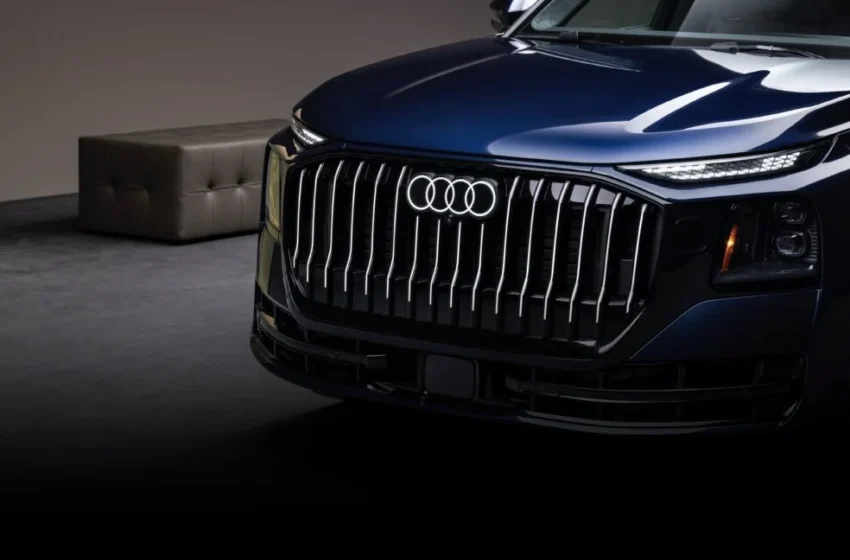
Audi, the venerable German automaker once synonymous with Vorsprung durch Technik and executive sedans, just declared its new global identity not through a revolutionary electric vehicle or advancements in autonomous driving, but with a colossal, petrol-powered SUV. The debut of the 2027 Q9, designed expressly to swallow American families and their cargo, is more than a mere product launch; it’s a telling signal of the brand’s strategic surrender in the global luxury automotive market.
This massive vehicle, measuring 209 inches long with a 123.5-inch wheelbase, dwarfs its predecessor, the Q7, and handily surpasses the footprint of its former flagship, the A8 sedan. The decision to position the Q9 as its new standard-bearer reveals a profound concession to the unique demands of the United States, a market singularly obsessed with supersized utility vehicles. While Europe and Asia increasingly pivot towards smaller, more efficient, and electrified transport solutions, Audi has doubled down on a premium segment pioneered by the Cadillac Escalade and now dominated by Mercedes-Benz GLS and BMW X7.
The incentive for this shift is clear, if cynical: immediate profitability and market share. Audi needs to maintain volume in its most lucrative region, and American consumer demographics continue to prioritize sheer physical presence and cargo capacity over almost any other attribute in their luxury purchases. This move benefits shareholders seeking reliable returns and a US dealership network eager for a competitive product. However, it implicitly sidelines long-term visionary leadership for short-term revenue, potentially hamstringing Audi’s ability to define its future on its own terms.
A Flagship Defined by Volume, Not Vision
Historically, an Audi flagship — specifically the A8 sedan — embodied the pinnacle of the brand’s engineering prowess, showcasing advanced materials, sophisticated powertrains, and an understated, progressive design language. The Q9, by contrast, suggests a different set of priorities entirely. Its selling points are its massive dimensions and the promise of a more capacious third row, gained from a wheelbase 5.6 inches longer than the Q7’s. These are practical, utilitarian attributes, not statements of technological supremacy.
The original article notes the Q9 “looked big in the studio, but it was less imposing than a Mercedes-Benz GLS or BMW X7.” This implies that even at its expanded size, Audi is still playing catch-up in the sheer ‘imposing’ factor, trying to visually shrink its bulk with “more curves and more subtle creases.” The notion that a vehicle primarily distinguished by its dimensions and its ability to compete directly with an Escalade in sheer bulk can genuinely uphold the global “Vorsprung durch Technik” ethos is, frankly, delusional. It’s a statement of pragmatic bulk, not visionary engineering.
This redefinition of ‘flagship’ signals an uncomfortable truth: for Audi, at least in the American context, the future of luxury appears to be less about innovation and more about occupying as much road as possible. While competitors like BMW and Mercedes also offer large SUVs, they typically maintain a parallel, high-tech electric counterpart or a top-tier sedan as a distinct, aspirational statement. Audi’s silence on an A8 replacement, elevating the Q9 by default, is a stark departure for its brand strategy.
The Long Shadow on Brand Equity
Audi’s commitment to the Q9 as its new standard-bearer, particularly without a clear, parallel commitment to an equally ambitious electric flagship, casts a long shadow over its brand equity internationally. In markets where environmental consciousness and urban efficiency are increasingly valued, a gargantuan internal combustion engine (ICE) SUV feels like an anachronism. How does this market positioning align with the broader automotive industry’s accelerating pivot towards electrification and decarbonization, particularly with the rapid growth of Tesla and numerous Chinese EV innovators?
The risk here is significant. By chasing American consumer demographics with a vehicle that prioritizes scale over cutting-edge sustainability or innovative powertrain solutions, Audi jeopardizes its appeal to a global audience increasingly discerning about a brand’s ecological footprint and forward-looking vision. What makes Audi distinctive if its pinnacle offering is simply a slightly more curvaceous version of what everyone else offers? The danger is not just stagnation, but a perceived retreat, morphing from an engineering leader into a follower of prevailing market fads. This strategic choice, while understandable for quarterly reports, dilutes the very essence of what made Audi a global premium brand in the first place.
