
Avian Jet Lag Study Offers Unforeseen Insights for US Autonomous Navigation and Circadian Tech
- Artificial Intelligence
Arjun Vedanta
- 0
- 11 minutes read
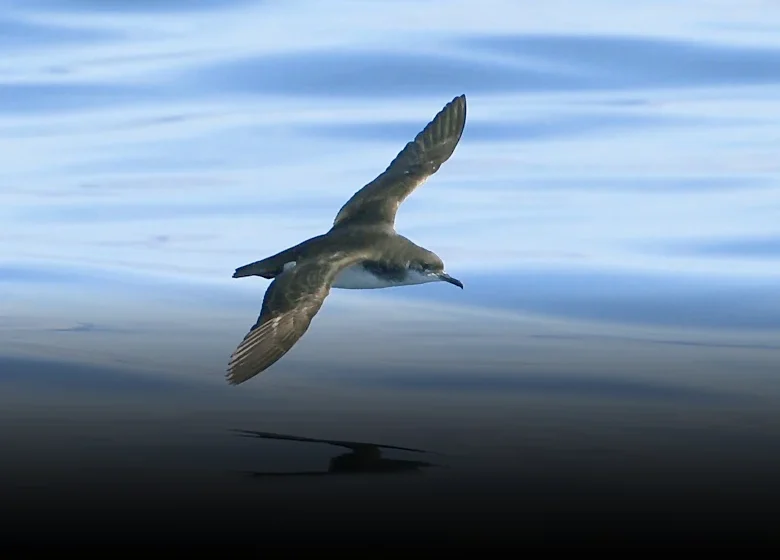
A groundbreaking Science study reveals that Manx shearwaters, seabirds navigating vast distances, experience jet lag, a discovery that unexpectedly illuminates the fundamental limits of biological timekeeping. This insight holds compelling implications for advancing US autonomous navigation systems, optimizing human performance in high-stakes logistics, and inspiring new biomimetic approaches in American aerospace and robotics research.
While seemingly a niche finding about wildlife, the research points to a universal vulnerability in biological clocks that even nature’s most accomplished navigators face. For American tech professionals and enthusiasts, this study underscores the complexity of reliable navigation and timing, pushing the boundaries of how we think about resilient systems, whether biological or artificial. It provides a unique lens through which to examine challenges in areas like GPS-denied navigation, long-duration autonomous missions, and human factors in aerospace and defense.
The Unexpected Challenge of Biological Clocks: When Seabirds Get Jet-Lagged
The core finding stems from a new study published in the prestigious journal Science, which observed Manx shearwaters, medium-sized seabirds that regularly fly hundreds of miles (kilometers) daily across the North Atlantic. These birds, roughly the size of a pigeon but with notably long wings, are closely related to albatrosses and typically nest in burrows on coastal islands, with about half their global population residing in Wales, according to lead author Patrick Lewin, a behavioral and sensory ecologist at the University of Oxford.
“Manx shearwaters are medium-sized birds, about the same size as a pigeon,” Lewin stated in the study’s announcement. “They are white underneath and black on top, but they have very long wings, and they are closely related to albatross.” The research discovered that when these birds traverse multiple time zones, their internal biological clock, or circadian rhythm, becomes desynchronized with the local time. This phenomenon, effectively avian jet lag, has a measurable impact: it skews their sun compass, a primary navigation tool.
The ability of an animal to navigate using the sun relies on its internal clock knowing the correct time of day. If that clock is off by several hours due to rapid west-to-east or east-to-west travel, the bird misinterprets the sun’s position, leading to navigational errors. This fundamental vulnerability highlights that even nature’s most evolved navigation systems are not immune to the disruptions of time zone changes.
Why US Technology Should Heed the Lessons of Avian Jet Lag
The implications of this biological discovery stretch far beyond ornithology, offering critical insights for several sectors within US technology. Understanding how a biological system handles time and navigation, and where its vulnerabilities lie, can inspire more robust engineering solutions.
Precision in Autonomous Systems
Modern autonomous systems, from military drones and self-driving vehicles to deep-sea ROVs and interplanetary spacecraft, depend absolutely on precise timing and accurate navigation. While GPS offers remarkable accuracy, it is susceptible to jamming, spoofing, or simply being unavailable in certain environments (e.g., underwater, in deep space, or in contested zones). This study on avian jet lag prompts a crucial question for US innovators: If a naturally evolved, highly effective biological navigation system can be thrown off by timing discrepancies, how resilient are our artificial counterparts to similar, albeit digital, forms of temporal disorientation?
Companies like Boston Dynamics and Tesla, alongside aerospace giants such as Boeing and Lockheed Martin, constantly push the envelope in autonomous capabilities. Learning how biological systems attempt to recalibrate, or fail to, offers a blueprint for designing more adaptive and robust navigation algorithms that can detect and compensate for internal timing errors or external environmental shifts without relying solely on external signals. Imagine drone swarms or logistics robots that can self-correct their internal clocks, much like a biological organism, to maintain spatial awareness even under adverse conditions.
Optimizing Human Performance and Readiness
Jet lag is not just an inconvenience for vacationers; it’s a significant operational challenge for US military personnel, commercial airline pilots, long-haul truckers, and NASA astronauts. The *Science* study provides a deeper, mechanistic understanding of how circadian rhythm disruption directly impacts a core function like navigation.
This biological insight could inform new strategies for mitigating the effects of jet lag on human performance. Research into the avian biological clock’s response to rapid time zone changes could potentially lead to advancements in chronotherapy, optimized work-rest cycles, or even bio-inspired pharmaceutical interventions aimed at resetting human circadian rhythms more efficiently. For US forces operating globally or essential personnel in 24/7 industries, enhanced understanding of these mechanisms could translate directly into improved readiness, safety, and operational effectiveness.
Biomimicry and the Future of AI Navigation
Biomimicry, the design and production of materials, structures, and systems that are modeled on biological entities and processes, is a powerful paradigm in US innovation. The avian jet lag study adds a nuanced layer to this approach. Instead of merely replicating nature’s successes, it encourages engineers and AI researchers to study nature’s *limitations* and *adaptive failures* as well.
The challenge of avian jet lag could inspire AI algorithms capable of monitoring their own internal state of ‘temporal coherence’ and making proactive adjustments. This is not about copying a bird’s brain but understanding the computational challenges of maintaining synchronicity with a dynamic environment while an internal clock is drifting. Such research could lead to more intelligent AI models that can better adapt to unexpected temporal shifts, sensor delays, or processing latency, making them more resilient in complex, real-world scenarios for applications ranging from smart city infrastructure to advanced robotics.
The Mechanisms at Play: Circadian Rhythms and Sun Compasses
At the heart of the *Science* study’s findings are two fundamental biological concepts: circadian rhythms and the sun compass. Circadian rhythms are roughly 24-hour cycles that regulate nearly all physiological processes in living organisms, including sleep-wake patterns, hormone release, and metabolism. These rhythms are synchronized by environmental cues, primarily light, through a ‘master clock’ in the brain.
Many migratory birds, including Manx shearwaters, possess an internal ‘sun compass’ that allows them to maintain a consistent heading by tracking the sun’s apparent movement across the sky. To do this accurately, the bird’s internal circadian clock must be precisely synchronized with the local time of day. If the bird’s internal clock believes it’s noon when it’s actually mid-morning (due to flying westward), it will misinterpret the sun’s position, causing it to fly off course. The study shows that this desynchronization is not a minor glitch but a significant factor impacting navigation, offering a valuable insight for any system that relies on accurate time-of-day information for orientation.
Bridging Biology and Engineering: A US Perspective
The research on avian jet lag exemplifies the profound insights that can emerge from interdisciplinary studies bridging fundamental biology and advanced engineering. In the United States, institutions like the National Institutes of Health (NIH) and the National Science Foundation (NSF) fund foundational biological research, often without immediate technological applications in mind. However, history repeatedly shows that such basic scientific discovery frequently forms the bedrock for future technological breakthroughs.
The data from studies like this could eventually feed into programs at agencies such as the Defense Advanced Research Projects Agency (DARPA) or the National Aeronautics and Space Administration (NASA), which actively seek novel approaches to complex challenges in navigation, autonomy, and human factors. Investing in understanding the intricacies of natural systems, even something as seemingly remote as seabird jet lag, can provide the unexpected conceptual frameworks necessary for next-generation US tech innovation.
| Avian Phenomenon (from study) | US Tech Implication / Challenge | Potential Benefit / Research Direction |
|---|---|---|
| Jet lag disrupts internal biological clock (circadian rhythm) | Autonomous systems relying on precise internal timing; human operators with shift work/travel | Developing adaptive algorithms for internal clock recalibration; optimizing human work/travel schedules for resilience |
| Disrupted clock skews sun compass navigation | GPS-reliant navigation vulnerabilities; need for robust alternative/backup systems for drones, robotics | Bio-inspired, resilient navigation systems less susceptible to single-point failures; improved environmental adaptability |
| Birds flying “hundreds of kilometers (many hundreds of miles) a day” | Long-duration autonomous missions (e.g., deep-sea ROVs, Mars rovers, long-haul drones); human endurance challenges | Understanding and countering cumulative timing/fatigue effects in prolonged operations; designing for sustained performance |
Conclusion: Navigating Future Frontiers
The discovery of jet lag in Manx shearwaters is far more than an interesting biological footnote. It’s a testament to the intricate dance between an organism’s internal timekeeping and its external environment, exposing a fundamental challenge that affects even the most adept natural navigators. For US technology, this research provides a powerful, albeit indirect, prompt to consider the temporal vulnerabilities inherent in both biological and artificial systems.
Key Takeaways:
- Avian jet lag reveals fundamental limits of biological navigation and circadian rhythm resilience.
- Insights gleaned could significantly enhance the development of more resilient US autonomous navigation systems.
- The study offers new perspectives for optimizing human performance and readiness in time-zone crossing and demanding operational roles.
- It fosters biomimetic approaches in AI and robotics, looking beyond mere replication to understand and compensate for natural system limitations.
- The research underscores the profound, often unexpected, value of basic biological discovery for advanced technological innovation.
What is avian jet lag?
Avian jet lag is the phenomenon where birds, like Manx shearwaters, experience a desynchronization between their internal biological clock (circadian rhythm) and the local time of their environment after rapid long-distance travel across multiple time zones. It’s analogous to human jet lag.
How does avian jet lag affect birds?
According to a new study in Science, avian jet lag causes a measurable skew in a bird’s sun compass, which it uses for navigation. This means that if the bird’s internal clock is out of sync with the actual time of day, it misinterprets the sun’s position and may fly off course.
Why is this relevant to US technology?
The study provides insights into the fundamental challenges of timing and navigation for both biological and artificial systems. For US technology, it can inspire more resilient autonomous navigation systems (e.g., drones, robotics), inform strategies for optimizing human performance in industries affected by jet lag (e.g., aerospace, military), and advance biomimetic approaches in AI by studying nature’s limitations.
What is a “sun compass”?
A sun compass is a natural navigation mechanism used by many animals, including birds, to maintain a consistent direction during travel. It relies on an internal biological clock to accurately interpret the sun’s position in the sky at any given time, allowing the animal to orient itself relative to its destination.
