
Beyond Pure Origins: Why Tech’s Foundational Fictions Are Crumbling, One Cell At A Time
- Tech
Arjun Vedanta
- 0
- 4 minutes read
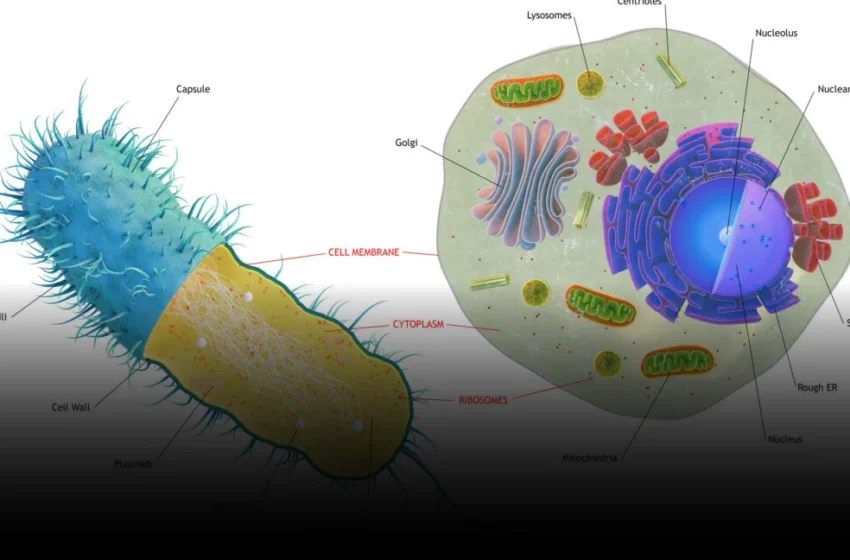
The illusion of discrete, singular origins—whether for complex life or complex software—is perpetually shattered by deeper scrutiny. The latest blow comes from an unexpected quarter: the very genesis of eukaryotic cells. For decades, the prevailing wisdom posited a relatively straightforward merger: an archaeal cell engulfed a bacterium, and that was that. The bacterium became the mitochondrion, and life’s complex blueprint was set.
However, recent insights have peeled back this comforting simplicity. What emerges is not a singular, foundational event, but a far more intricate, ongoing process. Scientists now suggest that our complex cellular ancestors didn’t just fuse once; they integrated genetic material in multiple, sustained waves from various bacterial sources. This wasn’t a static, singular incident but a continuous biological negotiation, a constant state of ‘code merge’ at the most fundamental level.
The Myth of Monolithic Beginnings
This re-evaluation of life’s origins, far from being a niche biological debate, holds a profoundly unsettling mirror to the technology sector. We, too, are perennially obsessed with the myth of the ‘pure’ origin: the clean slate, the greenfield project, the groundbreaking architecture conceived in isolation. Think of how many startups tout their ‘proprietary stack’ or how established firms cling to narratives of distinct innovation, downplaying the vast tapestry of open-source components, shared standards, and inherited infrastructure.
The enduring appeal of ‘pure’ origins in narratives of technological innovation often serves to obscure the messy, iterative, and highly dependent reality of development, particularly when venture capital seeks clear ownership. This insistence on ‘clean breaks’ and ‘novel frameworks’ often benefits early investors and founders seeking to claim sole dominion over new market segments, rather than acknowledging the pervasive, underlying dependencies that define modern software stacks. It’s a convenient fiction that makes for good pitch decks and IPO stories, but rarely reflects the truth of engineering.
Yet, like the complex cell, modern technology is an inherently composite entity. Our digital ecosystems are not built from a singular, unadulterated source, but are a sprawling, interconnected web of APIs, cloud infrastructure, containerized microservices, and layers upon layers of third-party libraries. Every software update, every new integration, every patched vulnerability represents another ‘gene transfer,’ another modification to a continuously evolving, hybrid organism.
Porous Architectures and the Integration Imperative
The biological discovery underlines that stability and complexity emerge not from isolation, but from controlled, continuous integration. This demands a profound shift in how we approach software development, cybersecurity, and even business strategy. If our foundational assumption is that systems are inherently porous, always absorbing and adapting external elements, then our focus must pivot from chasing elusive purity to mastering sophisticated dependency management and supply chain security.
Consider the recent vulnerabilities stemming from ubiquitous open-source libraries. These aren’t flaws in a ‘pure’ system; they are inherent risks in a system defined by its very ‘hybridity.’ The challenge isn’t to somehow prevent the ‘transfer’ of external code or services, which is both impossible and counterproductive to progress. Instead, it’s about rigorously auditing those transfers, understanding their provenance, and building robust mechanisms for resilience and rapid adaptation when new vulnerabilities are discovered.
Reconciling the Hybrid Reality
The lessons from cellular biology extend beyond mere architectural principles. They challenge our very perception of identity and evolution in technology. Just as eukaryotes are not ‘pure’ archaea or bacteria, but a new class born of radical collaboration, so too are today’s most powerful platforms products of relentless interoperability. No major technology company, no groundbreaking product, exists as a monolithic island; all are deeply embedded within vast, constantly shifting ecosystems.
Embracing this hybrid reality means moving past the romanticized notion of the lone genius crafting perfect code from scratch. It means acknowledging that innovation frequently blossoms at the junctures of diverse systems, through the intelligent integration of disparate ‘genetic’ material. The universe, from cells to silicon, seems to favor collaboration and continuous composition over isolation. The sooner the tech industry truly internalizes this foundational truth, the more resilient, secure, and genuinely innovative our future systems will become.
