
AcuRite’s App Blunder Exposes Deeper IoT Trust Crisis
- IoT
Arjun Vedanta
- 0
- 6 minutes read
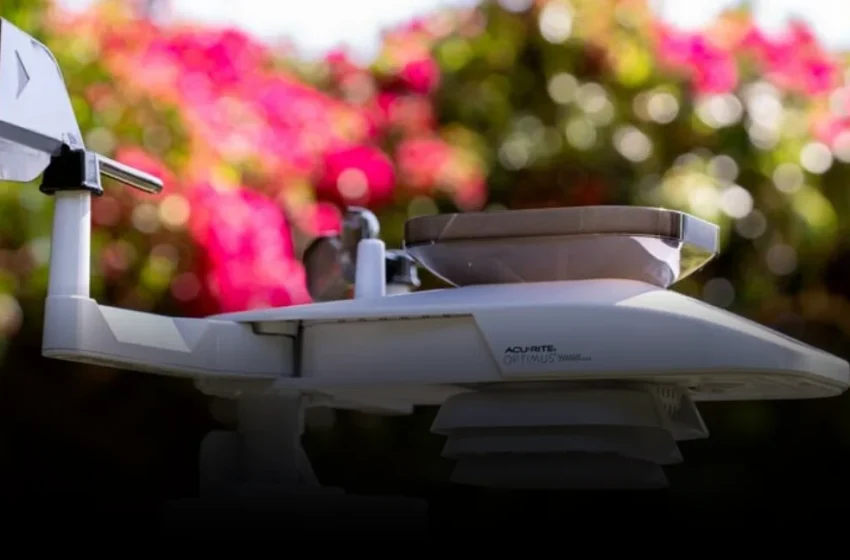
AcuRite’s recent, clumsy retreat on its planned My AcuRite app shutdown isn’t just an apology for missing features; it’s a stark admission that years of user loyalty count for less than a new-look interface. This incident, while specific to personal weather stations and home monitoring, exposes a wider vulnerability in the Internet of Things ecosystem, one that Silicon Valley reporters, often fixated on launch cycles, frequently overlook. It’s rarely about a bad app in isolation. It’s about a company telling its customers what they will use, not what they can use, fundamentally challenging the premise of digital ownership.
The company, known globally for its range of weather stations, rain gauges, and indoor thermometers, originally mandated that users migrate from the functional My AcuRite application by May 30. All connectivity and control would then shift to the newer, significantly less capable AcuRite NOW app, which became available recently. The backlash from its established user base was immediate and intense. Users, many of whom rely on these devices for practical home management and data logging, voiced “serious questions and concerns,” as AcuRite’s VP of product development, Jeff Bovee, later conceded to Ars Technica.
The issues with AcuRite NOW were not minor inconveniences. The new platform conspicuously lacked fundamental features present in its predecessor: the ability to rename multiple temperature sensors, report readings in non-integer values, or even access an online dashboard. Beyond these functional gaps, users further highlighted chronic problems uploading data to third-party weather sites and a generally poor interface with wasted screen real estate. This wasn’t an upgrade in any meaningful sense; it was a unilateral downgrade for a loyal customer base whose hardware relied entirely on this software conduit, confirming suspicions that “new” often doesn’t mean “better” for existing users.
The Illusion of Ownership in Connected Devices
This scenario isn’t an anomaly; it’s a persistent pattern echoing across the smart home sector and the broader landscape of connected devices. Companies increasingly prioritize what’s new and shiny over what’s proven and functional, often to the detriment of their installed base. The underlying incentive is clear: deprecating older, potentially more complex codebases reduces ongoing support costs, offers opportunities to unify platforms for future subscription models, or simply allows a clean slate for internal development teams aiming for a “modern” aesthetic. These motivations, while understandable from a corporate perspective, rarely align with the long-term utility expectations of consumers.
Such forced migrations highlight a troubling truth about modern IoT: users are often renters, not owners, of their device’s full functionality. The value proposition of a smart rain gauge or a connected thermometer diminishes sharply if its core capabilities can be arbitrarily stripped away by a software update or a mandatory app change dictated by a corporate decision. This dynamic creates a precarious dependency; your hardware’s utility is perpetually at the mercy of the manufacturer’s evolving business strategy or their ability to maintain competent software development without disruption.
Every forced software “upgrade” in the IoT space is less about improving the user experience and more about recalibrating the company’s balance sheet, often by externalizing internal development costs onto a captive user base. This skeptical observation becomes particularly salient when one considers the global market, where devices are purchased with an expectation of longevity that frequently clashes with the software industry’s “move fast and break things” ethos. The promise of the smart home, initially built on convenience and long-term utility, is steadily being undermined by companies treating software as a disposable layer rather than a core component of the hardware’s enduring value.
Rebuilding Trust Beyond the Software Update
AcuRite’s U-turn is a temporary reprieve, not a fundamental solution to this systemic issue. While Jeff Bovee’s acknowledgement suggests some responsiveness, the fundamental questions persist: why was a demonstrably inferior product pushed so aggressively? And what guarantees do users have that future “modernizations” won’t repeat this pattern of forced obsolescence and feature erosion? The incident underscores a critical need for greater transparency from IoT device manufacturers regarding software support lifecycles, explicit feature parity in new apps, and clear, non-disruptive migration pathways.
The global market, with its diverse regulatory landscapes and deeply ingrained consumer expectations for hardware longevity, cannot afford to ignore these issues. From Singapore’s ambitious smart city initiatives to Geneva’s precision agriculture IoT deployments, the reliance on stable, long-term software support for physical infrastructure is paramount. Companies like AcuRite, and indeed the broader smart home industry, must recognize that genuine brand loyalty is not built on slick interfaces or forced transitions, but on reliability and respect for the customer’s significant investment in connected hardware.
This episode serves as a powerful reminder: when a company dictates software rather than inviting its use, it not only alienates customers but also signals a deeper structural problem where hardware is merely a Trojan horse for an ever-shifting, centrally controlled digital experience. Consumers across continents are increasingly aware that purchasing a smart device implies a tacit agreement for sustained functionality. True innovation in the IoT space will come not just from new gadgets, but from business models that honor and protect genuine digital ownership, offering users control over their data and device longevity, rather than forcing them into a perpetual upgrade cycle that primarily benefits the vendor.
