
NASA’s DSN Success on Artemis II: A Temporary Fix for a Deep Space Bottleneck
- Tech
Arjun Vedanta
- 0
- 5 minutes read
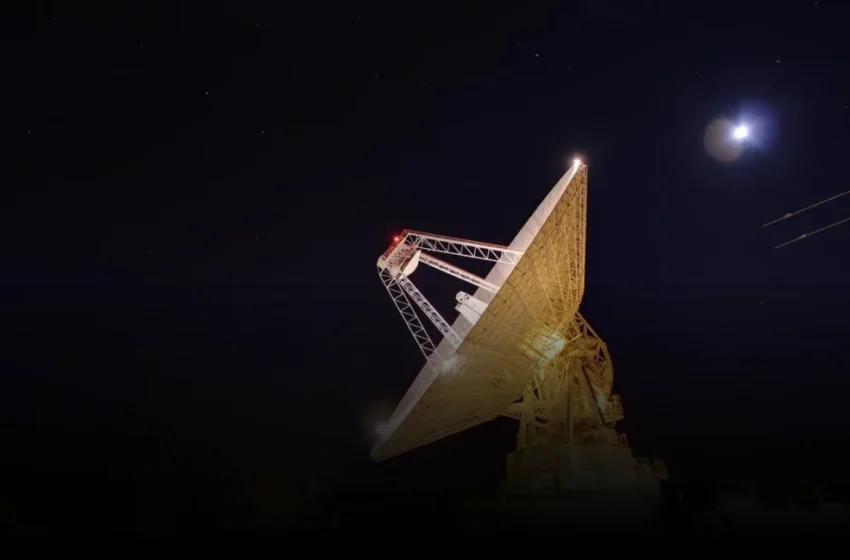
NASA’s Deep Space Network: A Pyrrhic Victory on Artemis II?
The Deep Space Network did not “work well” on Artemis II in the way many understand success. While NASA’s global array of communications antennas facilitated connection with the Orion capsule as it journeyed more than a quarter-million miles from Earth, the underlying narrative masks a deeper, unaddressed systemic challenge. This was less a triumph of robust infrastructure and more a strategic reduction of demand, temporarily sidestepping a looming deep space communications crisis that could cripple future human missions and critical scientific endeavors.
During the Artemis I mission nearly four years ago, the DSN struggled. Supporting the 25-day uncrewed Orion flight while simultaneously maintaining links to 40 robotic science missions, including the data-hungry James Webb Space Telescope and Mars rovers, pushed the network beyond its limits. Downlinks from these high-profile science assets were significantly reduced or delayed. This wasn’t a minor hiccup; it was a clear warning that the DSN, as currently configured, lacked the concurrent capacity to support both an ambitious human spaceflight program and its foundational scientific commitments.
Artemis II, launched on April 1, presented an even greater potential strain due to its crew of four, translating into an inherently higher demand for telemetry and voice communications. Yet, the mission duration was cut short – a mere nine days compared to Artemis I’s 25. Critically, Artemis II also carried significantly fewer CubeSats, small satellites that require their own tracking and telecom services. These adjustments were not incidental; they were tactical concessions that allowed the DSN to manage the load. To frame this as the DSN simply “working well” is to ignore the structural changes that enabled it, changes that are unsustainable for the long-term ambitions of the Artemis program.
The Illusion of Success and Unmet Demand
This managed success reveals a stark truth: NASA is actively modulating its deep space ambitions to fit the constraints of its aging ground station infrastructure. The agency’s data appetite for Orion on Artemis II was indeed higher, but the menu was drastically smaller. This isn’t innovation; it’s operational triage. What happens when Artemis III demands longer durations, greater distances, and a return to the Moon’s surface, all while simultaneously fielding a new generation of lunar landers, rovers, and habitats? The current strategy of reducing ancillary payloads and shortening mission timelines simply delays the inevitable reckoning.
The DSN’s original design, a marvel of Cold War engineering, primarily focused on episodic contact with a limited number of, albeit high-value, deep space probes. It was not built for a future where humans routinely traverse cislunar space, requiring constant, high-bandwidth communication for everything from medical telemetry to live video feeds and autonomous system updates. The incentive for NASA to present Artemis II’s communications as a success, despite the operational compromises, is clear: maintain public and political confidence in the Artemis program’s viability, securing continued funding without having to immediately confront a massive infrastructure overhaul. This framing conveniently shifts the focus from systemic limitations to mission-specific adaptations.
Consider the broader context: the sheer volume of data generated by modern spacecraft is exploding. The James Webb Space Telescope alone generates terabytes of data that need to be downlinked and processed. Mars Perseverance and Curiosity rovers, alongside numerous orbiters, are constantly sending back high-resolution imagery and scientific readings. Adding the continuous, high-priority demands of human spaceflight to this already strained network without significant upgrades is like trying to pour a river into a garden hose. The current approach is akin to declaring a road congestion problem solved by having fewer cars drive on a particular day, rather than building new lanes or alternative routes.
Beyond Ground Stations: A Distributed Future?
The long-term solution cannot be merely an incremental upgrade of existing DSN ground stations in Goldstone, Madrid, and Canberra. While some capacity improvements have been made, such as adding more dish antennas or improving signal processing, these are patches. True resilience and capacity for a multi-planetary future require a fundamental shift in how deep space communications are conceived and implemented. This means embracing technologies like optical communications, which promise orders of magnitude greater bandwidth than traditional radio frequency systems, and exploring concepts for a distributed deep-space relay network.
Imagine a network of dedicated communications satellites deployed in strategic orbits around the Moon and Mars, acting as relays to reduce latency and increase data throughput back to Earth. Such an architecture would offload much of the direct communications burden from the DSN, allowing it to focus on its primary role with robotic probes and providing critical redundancy. Commercial entities are already exploring similar concepts for lunar communications, offering a potential blueprint for NASA to integrate. However, developing and deploying such an extensive, interconnected infrastructure is a multi-decade, multi-billion-dollar undertaking.
The skeptical observation here is that by hailing the DSN’s performance on Artemis II as a success, NASA may inadvertently be delaying the urgent, fundamental investment required for a truly sustainable deep space communications backbone. The current strategy pushes the problem onto future missions, risking mission critical failures or, more likely, a continuous downscaling of scientific payloads to accommodate human exploration. Unless a bold, new architecture for deep space telemetry and bandwidth management is prioritized and funded, future celebrations of communications “success” will continue to be hollow victories, built on the quiet sacrifice of scientific discovery and the unspoken limitation of human ambition.
