
Beyond T. Rex: The Invisible Tech Fueling Scientific Breakthroughs
- Tech
Arjun Vedanta
- 0
- 4 minutes read
The Quiet Revolution in Scientific Instruments
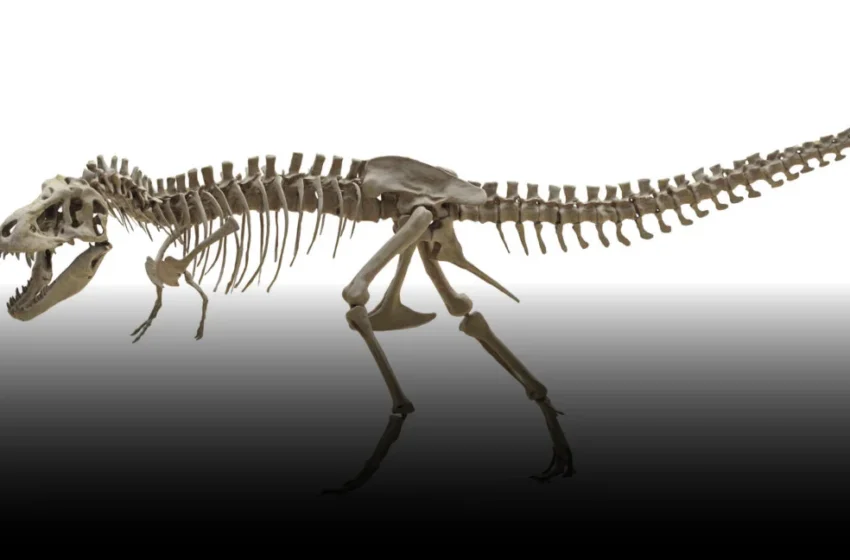
The Tyrannosaurus rex, long imagined as a cold-blooded behemoth lumbering through prehistory, has received a modern physiological update. New research, measuring its body temperature at an estimated 36° Celsius – strikingly similar to a modern elephant – doesn’t just reshape our understanding of a predator. It quietly showcases a profound, often overlooked advancement in the sophisticated analytical technologies now enabling such granular insights into the deep past.
While the tech press frequently fixates on the latest consumer gadgets or the dizzying valuations of software startups, a different kind of innovation is steadily transforming fields far removed from Silicon Valley’s orbit. This isn’t about generative AI or the metaverse; it’s about the precise, often bespoke, instrumentation that allows geochemists like Randon J. Flores and Robert A. Eagle at UCLA to perform what can only be described as forensic paleontology, leveraging methods such as dental thermometry to extract unprecedented data from fossils.
The headline — ‘T. rex ran as warm as an elephant’ — is compelling, certainly. But the true story for those watching the deeper currents of technology lies not in the biological revelation itself, but in the diagnostic prowess required to achieve it. This involves technologies that can discern subtle isotopic variations within ancient tooth enamel, a testament to decades of refinement in mass spectrometry and high-resolution imaging, far from the spotlight of mainstream tech narratives.
Reframing Ancient Life with Modern Data
For years, paleontologists have wrestled with the metabolic status of dinosaurs, relying on indirect evidence from bone microstructure or growth rates. Some theories posited endothermy, akin to birds and mammals, while others argued for a more varied, perhaps even ectothermic, thermal strategy across different lineages. The 36° Celsius finding for T. rex, derived from direct measurement of a specific fossil, provides a powerful data point that shifts this debate from speculative inference to empirically-backed understanding.
This level of precision fundamentally alters how we can reconstruct ancient ecosystems and physiology. It’s not merely a curiosity; it informs models of dinosaur behavior, energy requirements, and ecological roles. The methodological leap represents a significant upgrade to the paleontological toolkit, transitioning the discipline into an era where advanced chemical and physical analysis complements traditional morphological studies, creating a richer, more accurate tapestry of life millions of years ago.
The irony is often lost that while much of the tech industry chases the next ephemeral digital trend, the truly enduring breakthroughs in understanding our world frequently rely on physical instruments refined over decades, meticulously calibrated, and utterly unglamorous by Silicon Valley standards. This quiet sophistication in analytical chemistry and material science, pushing the boundaries of what can be learned from inanimate objects, deserves a closer look than it typically receives from reporters focused purely on consumer-facing applications.
The Unseen Incentives Driving Deep Science Innovation
Why does a university invest in such advanced infrastructure, and why do researchers dedicate careers to refining these obscure techniques? This kind of granular discovery, made possible by sophisticated instrumentation, isn’t just about satisfying academic curiosity; it’s a powerful statement of institutional capability, attracting top talent, securing competitive grants, and subtly repositioning fields like paleontology from speculative deduction to data-driven science. For UCLA, it enhances its reputation as a hub for cutting-edge biogeochemistry.
The incentive structure in deep science, particularly in the realm of advanced instrumentation, operates on different timescales and metrics than the venture capital-fueled world of apps. Here, innovation is measured in microns of precision, in the detection limits of trace elements, or in the ability to preserve invaluable samples. It’s a testament to long-term investment in fundamental research infrastructure – the unsung hardware and software that forms the bedrock of our scientific understanding.
Investment in this ‘invisible infrastructure’ of discovery, from advanced mass spectrometers to high-resolution microscopes and their accompanying analytical software, is crucial. It’s a reminder that while the attention economy rewards rapid iterations and viral sensations, the most profound insights into our past, present, and future often emerge from the patient, persistent application of advanced technology in laboratories far from the venture capital spotlight. This is ‘hard tech’ in its purest form, and it shapes our perception of reality in ways a new social media feature never could.
