
Beyond the Goldilocks Zone: Deep Earth’s Untapped Role in Exoplanet Habitability
- Special
Arjun Vedanta
- 0
- 4 minutes read
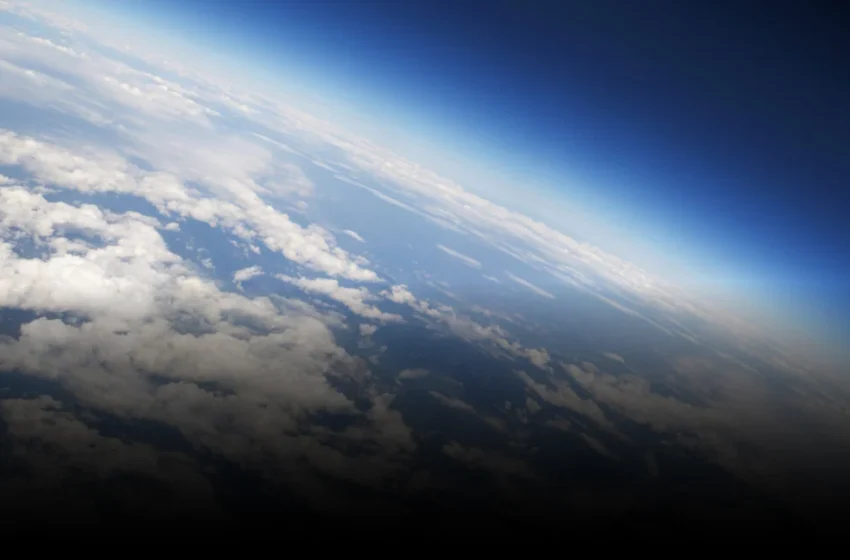
Deep Earth, Not Just Distant Stars, Dictates Breathable Worlds
While headlines regularly trumpet the discovery of liquid water on distant exoplanets, a new study quietly reminds us that a wet surface alone means little without the active planetary geology necessary to build and sustain a breathable atmosphere. The simplistic search for a ‘Goldilocks Zone’ – just the right distance from a star for liquid water – overlooks a far more fundamental determinant of life: the churn and grind beneath a planet’s crust.
New research led by Wei Shi of the Chengdu University of Technology offers compelling evidence that significant shifts in Earth’s atmospheric oxygen over a couple billion years were not solely the triumph of photosynthetic life, but crucially linked to changes in tectonic plate subduction. This isn’t merely an academic detail for Earth scientists; it’s a stark implication for astrobiology, suggesting that deep geological processes are as critical, if not more so, than stellar proximity in creating a truly habitable world.
We are consistently reminded that Earth’s oxygenated atmosphere is a colossal planetary achievement, a multi-billion-year project driven by myriad interacting systems. To reduce it to simple chemical reactions or the prolificacy of ancient microbes misses half the story. The solid Earth’s chemistry, specifically how it sequesters and releases elements, proves to be a dynamic, often overlooked, partner in this grand atmospheric evolution.
Tectonic Plate Subduction: The Mantle’s Atmospheric Pump
The mechanism described by Shi and colleagues points directly to tectonic plate subduction – the slow, relentless process where one plate slides beneath another into the Earth’s interior. The study suggests that changes in this geodynamic process correlate with past jumps in atmospheric oxygen levels. This isn’t just about oxygen being produced; it’s about oxygen *staying* in the atmosphere, escaping the rock cycle that can bind and bury it.
Think of it as a vast, planetary-scale chemical factory. As plates descend, they carry volatiles and reactive elements deep into the mantle. The interplay of these descending plates with the upper mantle influences redox reactions, effectively controlling the global oxygen budget over geological timescales. This mechanism provides a powerful counterpoint to the prevailing, often singular, focus on biological oxygen production as the primary driver.
For too long, the narrative of atmospheric evolution has been overly reliant on the biological. While photosynthesis certainly pumps out oxygen, the deep Earth decides how much of that oxygen survives to enrich the atmosphere rather than being locked away in rocks. This dynamic means that a planet’s internal engine is just as vital as its surface biosphere in determining its long-term habitability.
The Habitability Conundrum: Beyond Surface Water
Herein lies the profound consequence for exoplanet research: how many potentially habitable worlds are we misjudging because we’re not accounting for their geodynamics? The Goldilocks Zone concept, while useful for initial filtering, becomes dangerously reductive when not paired with a robust understanding of planetary interior processes. A planet orbiting in the habitable zone, even one with surface water, might be a sterile, anoxic rock if its subduction zones aren’t operating in a way conducive to atmospheric oxygenation.
The incentive to frame habitability purely through the lens of liquid water is strong; it simplifies observation and makes for compelling headlines. Yet, this renewed emphasis on deep planetary mechanics serves as a critical course correction for astrobiologists, redirecting focus and funding towards more complex modeling and observational strategies for truly Earth-like worlds. Simply put, detecting biosignatures on an exoplanet becomes a much more nuanced endeavor when you realise that its atmospheric composition is a product of its entire geological history, not just its current biology.
What most Silicon Valley reporters, focused on AI breakthroughs and quarterly earnings, invariably miss is this: the fundamental underpinnings of habitability itself are being redefined by planetary science. It’s not enough to find a distant world; we need to understand how it breathes. And for that, we need to look far deeper than its star or its surface water—right into its core.
