
Beyond the Lab Bench Humor: The Hidden Cost of Academia’s Pop Culture In-Jokes
- Blog
Arjun Vedanta
- 0
- 5 minutes read
The Allure of the Clever Title
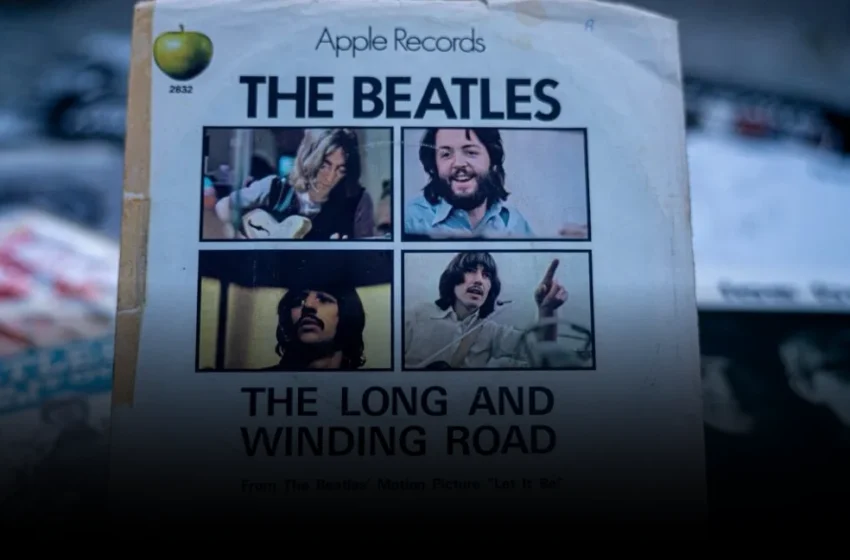
While the scientific community chuckles over ‘The lung and winding road’ or ‘Here comes the SU(N)’, the underlying dynamic of such cleverness reveals a deeper, less amusing trend in academic communication. A recent paper in PLoS ONE noted more than 3,000 instances of Beatles references alone in scientific literature, cataloging what appears to be a harmless, even charming, habit among researchers. Co-author Gabriel Budel of Delft University of Technology noted, “Some of these are genuinely brilliant.” He’s not wrong; the linguistic gymnastics required to twist a classic song into a Long COVID study title speaks to a certain wit. But beyond the intellectual high-five, this practice subtly reinforces an academic culture of in-group signaling that can hinder accessibility and obscure serious research in an increasingly competitive and public-facing scientific landscape.
This isn’t about stifling creativity or demanding every research paper be a dry, utilitarian report. It’s about recognizing the implicit messages sent when scholarly discourse, particularly in its public-facing elements like titles and abstracts, leans into esotericism. The practice mirrors the 2014 revelation by the Karolinska Institute scientists who had deliberately woven Bob Dylan lyrics into their papers for a long-running bet dating back to a 1997 Nature review. That internal game led to a 2015 study, documenting how deeply ingrained such practices were. The question isn’t whether it’s fun for the authors, but for whom else.
The Unseen Barrier of Scholarly Wit
These pop culture allusions, whether to The Beatles or Bob Dylan, act as an invisible barrier, a form of academic gatekeeping. For seasoned academics, spotting a pun or a subtle reference is an immediate signal of belonging, a nod to shared cultural capital and intellectual prowess. It says, ‘We’re clever, we’re cultured, and we’re part of the club.’ This creates an instant bond within specific research communities, fostering a sense of camaraderie that can be appealing in an often isolating profession. However, for a young researcher, particularly those from non-traditional backgrounds or non-Western institutions, deciphering these oblique references can be an additional, unnecessary hurdle. It adds another layer to an already complex scholarly language, making the field seem more exclusive than inclusive. The scientific community, especially its publishing arm, pays lip service to wider research dissemination and public engagement, yet these practices illustrate a fundamental misalignment between stated goals and actual execution.
Consider the broader implications for public understanding of science. In an era rife with misinformation and a pressing need for transparent scientific communication, burying critical research within an ironic or clever title risks alienating a lay audience. The average reader, even one following a publication like Ars Technica or The Verge, is unlikely to appreciate the intellectual contortion required to turn ‘Here Comes the Sun’ into a quantum computing paper on mathematical groups, ‘Here comes the SU(N)’. Instead, such titles can come across as self-indulgent, hinting at an ivory tower disconnect from the very societal challenges science aims to address. The incentive for scientists to continue this trend is simple: it’s an established, low-stakes way to signal intelligence and belonging to peers within a tight-knit academic publishing ecosystem, where securing grants and prestigious publications often relies on standing out within one’s immediate echo chamber.
Redefining Scientific Engagement in a Global Era
The argument for playfulness often centers on making science more approachable or memorable. But who is it truly approachable for? If the ‘joke’ requires a deep dive into specific subculture, the audience shrinks, not expands. A more effective approach to public engagement or making science memorable would involve clear, direct language and compelling narratives, rather than relying on inside jokes that assume a shared, often Western-centric, cultural foundation. The global nature of scientific collaboration and the increasing demand for publicly accessible research findings necessitate a re-evaluation of these traditional academic quirks.
The sharpest sentence in this entire discussion might be this: When the pursuit of intellectual cleverness overshadows clarity, science risks becoming its own secret society, alienating the very minds it needs to attract and the public it claims to serve. This isn’t just about avoiding a banned phrase or a double metaphor; it’s about the fundamental principles of communication. The goal of academic publishing should be to convey knowledge as effectively and broadly as possible. Any stylistic choice that impedes this, even if born of good humor, deserves scrutiny. As the digital age breaks down traditional barriers to information, academic institutions and publishers must decide whether they are truly committed to open science or merely performing an elaborate, high-brow pantomime for their internal delight.
