
NASA’s Emeritus Astronauts: A Strategic Shift to Retain Scarce Human Capital
- Government & Policy
Arjun Vedanta
- 0
- 5 minutes read
The Quiet Erosion of NASA’s Talent Pipeline
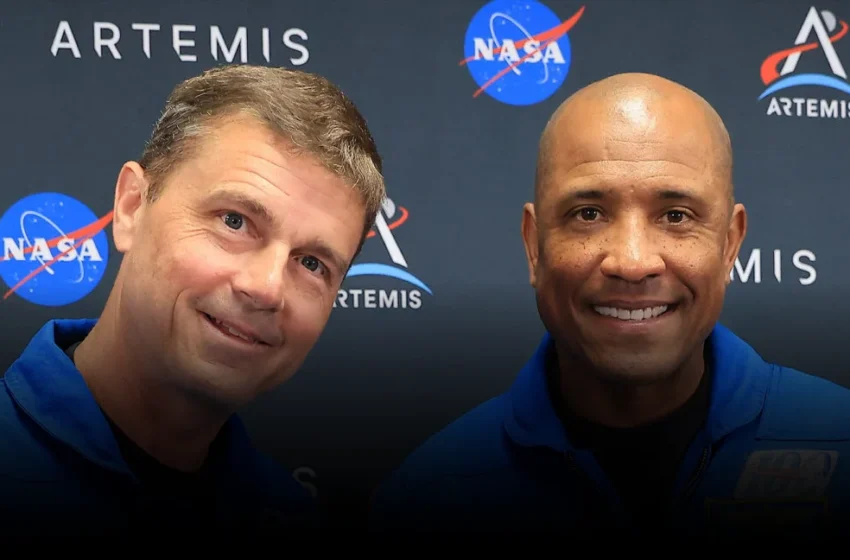
The establishment of an “emeritus” status for decorated astronauts like Reid Wiseman and Victor Glover is not merely a bureaucratic tweak to a retirement program; it is a clear, if understated, acknowledgment of NASA’s deepening struggle to retain its most valuable asset: specialized human capital. Five months after returning from their historic Artemis II mission, Wiseman and Glover, the commander and pilot, respectively, are now trailblazers not just in space, but in a new kind of career flexibility designed to keep them tethered to the agency. The official line implies a benefit for the astronauts, but the real story is what it signifies for NASA’s future talent strategy.
Historically, an astronaut’s departure from active flight status often meant a full transition out of the agency, taking with them decades of invaluable training, mission experience, and institutional knowledge. This new emeritus program, enabling Wiseman and Glover to continue supporting operations at the Johnson Space Center while pursuing outside opportunities, represents a critical pivot. It’s an attempt to staunch the slow bleeding of expertise that has become an increasingly pronounced challenge in an era dominated by a rapidly expanding commercial space sector.
The Lure of the Private Sector and a New Brain Drain
The incentive for this program is starkly clear: NASA needs its seasoned astronauts more than ever, yet faces unprecedented competition. For years, the traditional astronaut corps represented the pinnacle of aerospace careers, a singular path to the cosmos. That paradigm has shattered. Private space companies like SpaceX, Blue Origin, and Axiom Space now offer compelling, often more lucrative, avenues for space exploration and related leadership roles. These entities crave the precise blend of operational experience, engineering acumen, and high-stakes decision-making that only a veteran astronaut can provide.
Victor Glover’s observation to collectSPACE.com — that he asked NASA “not to use the term ‘retire’ as much,” even though emeritus is “technically a retirement program” — underscores this tension. It reflects a nuanced reality: astronauts are not simply retiring; they are being actively courted. NASA, by offering this hybrid status, acknowledges it cannot compete solely on salary or mission frequency with the burgeoning private sector. It must instead offer flexibility, a chance for its most experienced personnel to have their cake and eat it too — maintain ties to the agency and its public service mission, while also capitalizing on the demand for their skills in the commercial world.
This is where Silicon Valley-centric reporting often misses the mark. For years, discussions of tech talent have focused on software engineers migrating between startups and Big Tech. But the brain drain in specialized, high-consequence engineering, especially within government agencies, has profound national implications. Losing key personnel means a loss of critical operational memory, a slowing of knowledge transfer to the next generation, and a potential degradation of mission readiness. NASA’s move, therefore, is not about offering a cushy post-career gig; it’s a strategic defensive play to safeguard its core capabilities.
Artemis’s Future and the Cost of Institutional Memory
The Artemis program, with its ambitious goal of returning humans to the Moon and eventually Mars, relies heavily on the kind of deep operational understanding and risk mitigation expertise embodied by individuals like Wiseman and Glover. These aren’t just pilots; they’re system integrators, procedure developers, and human factors experts rolled into one. Their direct experience on critical missions, particularly the precursor flights to the Moon, is irreplaceable in a purely academic sense.
The skeptical observation here is this: is the emeritus program truly a proactive innovation to empower astronauts, or is it a reactive compromise designed to prevent a full exodus? While presented as an opportunity for individuals, it feels more like a structural implication of NASA’s diminishing monopolistic control over human spaceflight talent. The agency is now forced to adapt its traditional rigid employment structures to retain talent that has more options than ever before. It’s a pragmatic concession, not a visionary stride in human resources.
The long-term impact on the Artemis program is yet to be fully seen. Will a part-time engagement be sufficient to transfer the depth of knowledge required for missions of increasing complexity? Or will this become a normalized, almost expected, stepping stone for top talent, blurring the lines between government service and commercial enterprise to a degree that fundamentally alters the astronaut’s role? The answers will dictate not just how NASA manages its workforce, but how it, and by extension the nation, maintains its competitive edge in the new space race.
